Book Review by Somdatta Mandal
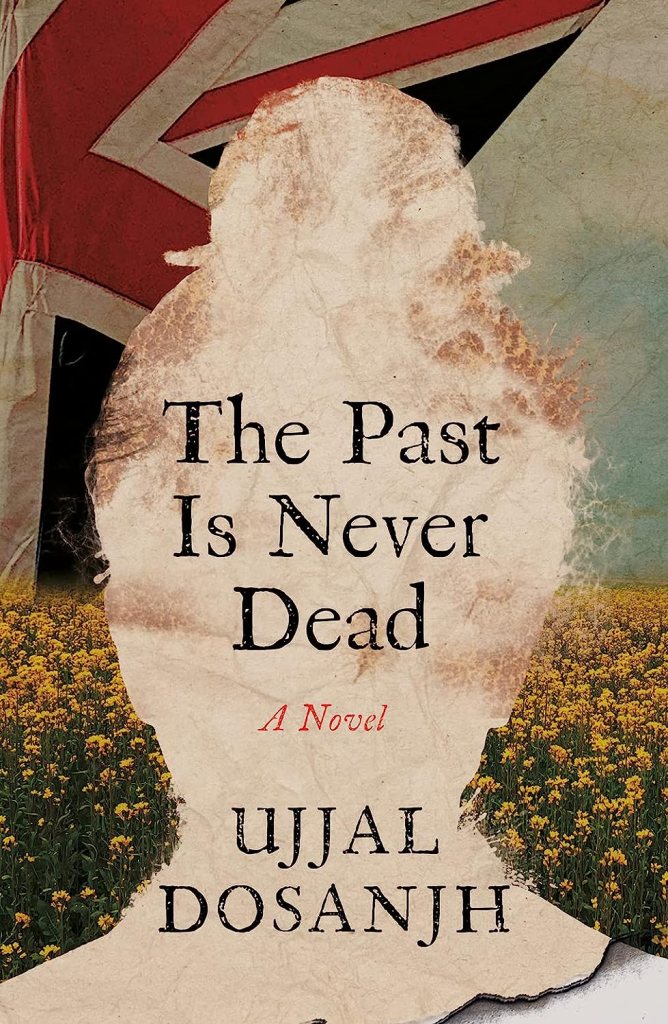
Title: The Past is Never Dead: A Novel
Author: Ujjal Dosanjh
Publisher: Speaking Tiger
Ujjal Dosanjh’s latest novel, The Past is Never Dead, sheds light on the stranglehold of caste on Punjabi Sikh immigrants in the UK – a unique perspective of caste violence in a faith outside of Hinduism, one that was born out of the noble teaching by Guru Nanak and his followers that every human being is equal in the eyes of God. Borrowing the prologue from William Faulkner’s famous statement, “The past is never dead. It is not even past,” Dosanjh makes it his project to challenge this idea about Sikhism, as he writes about a poor family that migrates to England soon after India’s independence in the hope of escaping the indignities of caste back home – only to be confronted by it again, and in the most horrifying ways possible, in a western foreign land, where caste is supposed to be an insignificant marker of identity.
In the year 1952, Kalu escaped Banjhan Kalan in Punjab’s Hoshiarpur for Bedford in the British Midlands, hoping to find a life of dignity that he had been denied because of his untouchable caste. He was in his late teens and had grown up believing in Sikhism’s tenet of equality preached by Guru Nanak and Ravidas, a principle the villagers never sincerely practised. They had maimed his father, accusing him of stealing a zamindar’s ox; they had thrown father and son out of a Quit India rally; they had mercilessly thrashed young Kalu himself for daring to enter a temple. He had never been allowed to forget—even by his schoolmates—that he was a Chamar, destined to skin dead cattle like his ancestors. His father Udho was determined to get his son out of this life of indignity and had said, “Son, I don’t want you to grow up a Chamar. You will never do what made my hands and feet like this.” Soon Udho borrowed money from a kind merchant, bribed the officials, got a passport and left for Britain.
England promised a new life of respect and opportunity. Udho laboured hard to give his son a college education and his wife a decent life that was denied to them back in India. The way Kalu and his mother ultimately bribed their way onto an earlier flight to escape from the powerful connections his propertied travel agents had, and who could create obstacles in their journey to Britain, speaks a lot about the plight of scores of rural people in the Punjabi villages who dreamt of building a new life in the West. But freedom was illusory. Kalu’s fellow expatriates had brought caste along when they came to that country, and he would be forced to adhere to its degrading rules just as he was in Banjhan.
Apart from the story of a rural Punjabi family’s search for better life, the novel is also a powerful depiction of the stranglehold of caste over Sikh immigrants in Britain. We have read about honour killings of Sikh women during the riots that took place after the Partition of India when family patriarchs forced their wives and daughters to jump into the well or commit suicide to avoid being kidnapped by the Muslims, but the horror behind the story of honour killing within the Sikh community in England based on caste differences is something terrifying. The construction of different gurdwaras in the same locality according to caste affiliations including local politics, enmity, and gruesome killings by the Jats, who considered themselves racially superior to the other Sikhs, expose the horror and obstinacy of caste even in the middle of the twentieth century, and is just unimaginable. Determined not to bend—as he had refused to do back home—Kalu fights back as he could not suffer indignity silently, but his resoluteness in the struggle puts him and his family at serious risk.
With many turns and twists in the storyline, including the abduction and death of his doctor wife, Kalu’s hair was shaved by his caste-hate-obsessed kidnappers as revenge for what they considered his audacity in describing a Jat’s daughter as mini bell unsuited to be married to his Jat friend. Eventually, he discards his hair; the act acknowledges the impotence of religion and religious symbols in the struggle for equality and against caste. In the end, through his indomitable will force, we find how Kalu manages to overcome all odds and contest for a MP seat in the Parliament as a Labour Party candidate under the name of Dr. Kalha Chamar — “He was done fleeing, escaping or dressing up caste in surnames, unshorn hair or turban.” The concluding paragraph of the novel which gives a positive message of hope for the future is worth quoting here:
“Angad made chai. Between the sips of chai, the humpbacked Banti, the limping Udho, the hairless Kalu and the adolescent Angad danced. When Robert, Janice and Gurbat knocked on the door to congratulate him, Udho Chamar and his son, Kalu Chamar MP, were standing with raised glasses, about to down neat double Johnnie Walkers.”
Though the story of Dosanjjh’s own life and the timeframe of the novel bear a lot of similarities with the incidents narrated in the story, he does not mention it to be an autobiography. Instead, he fills the novel with various other racist perspectives that the Sikhs in Britain still cannot steer clear of. So, he safely adds other issues and titles it “A Novel.” But how far some of the incidents narrated in the novel have moved him becomes clear when we read in an interview given to scroll.in where he states:
“It was emotionally quite exacting to write The Past Is Never Dead. The toll of the issues I wrote about has been a lifelong companion. Age has rendered me shameless enough for me to confess that I often cried as I wrote many parts of the novel…. The human incapacity to learn from the past astounds me. It aids us in veiling the past from ourselves and abets our continuing cruelty in the name of dumb tradition and comatose culture.”
The novel is surely worth reading and is strongly recommended as it pays tribute to the courage and tenacity of the human spirit and its capacity for hope despite all odds.
.
Somdatta Mandal, academic, critic and translator is a former Professor of English at Visva-Bharati, Santiniketan, India.
PLEASE NOTE: ARTICLES CAN ONLY BE REPRODUCED IN OTHER SITES WITH DUE ACKNOWLEDGEMENT TO BORDERLESS JOURNAL
Click here to access the Borderless anthology, Monalisa No Longer Smiles
Click here to access Monalisa No Longer Smiles on Kindle Amazon International
 Borderless