Categories
Interview

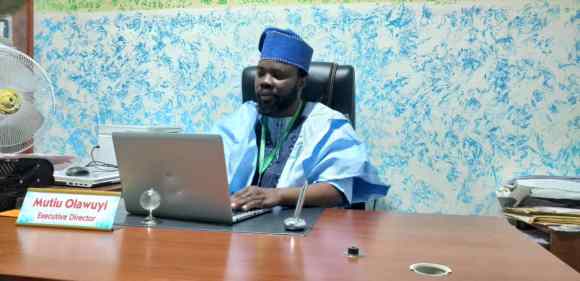
A Weaver of Borderless Dreams: Mutiu Olawuyi

Mutiu Olawuyi in conversation with Mitali Chakravarty

He is a maker of dreams for writers – a man who believes in dreams that are woven in words and multimedia across the world. He connects writing with multimedia, not just by writing and YouTube screenings but also by putting upcoming writers on his television show to battle out challenging questions about how literary development affects the world. He looks for writers with a sense of social responsibility and awareness. The extent of his work is huge. Meet this personality extraordinaire — Mutiu Olawuyi (popularly called the Jungle Poet) an international award-winning poet (2013 World Poetry Empowered Poet Awardee, Canada); Honorary Professor of International Art Academy, Volos Greece; World Poetry Cultural Ambassador (2014, Vancouver – Canada); and Master of Literary Innovation (2019 – World Poetry Conference, Bathinda Punjab, India).

He is the producer and host of ArtFlakes on CBA TV, the Voice of East Africa and he is also the Editor-in-Chief of Parkchester Times and MCR newspapers (Print and Online) based in Bronx, New York, USA.

He has authored numerous books of poetry (Among them are American Literary Legends and Other Poems [2010], Thoughts from the Jungle [2012], 9/11 Poetry [2012], and The Journey to the Archangels [2013]) and has edited numerous international anthologies, journals and magazines.

Mutiu is a teacher, English language and literature curriculum developer, freelance writer/editor, literary critic, inventor of a new form of poetry called 9eleven (a poem of 9 lines written with 11 syllables) and the first writer of a story without verb – The Blotted Pawpaw (published 2013 by Bharat College in India). He is also an editor for The Criterion International Journal in English based in India. 

Mutiu has some of his poems, short stories and research papers published  in online and offline journals and magazines in India, Ireland, England, Canada, Greece, Nigeria and USA. Finally, some of his works have been translated to Arabic, French, Esperantos, Malayalam, Telugu and Hungarian. In this exclusive Mutiu takes us on a journey through his creative world.

Mitali: Why and when did you start ArtFlakes? What is the intent of this program?

Mutiu: ArtFlakes is a TV Show initiated primarily to give voice to creative writers around the globe. It was established to project literary works of art on the screen. I am pleased to say it is the only TV show on earth where global issues are explored through creative and literary lenses of writers across every corner of the world. Moreover, I believe creative works like poetry and prose shouldn’t be restricted to papers and pens alone. Those inkers shouldn’t always be placed behind the camera; they deserve to be projected on the screen too.

Mitali: How did you come up with the idea?

Mutiu: The idea came up when I was brainstorming with the managers of CBA TV on the best way to make the station unique among all its competitors, especially in the Horn of Africa. And it was actually Ridwan Adelaja, a creative member of the media team at the studio, who came up with the name, after hearing the concept.

Mitali: How many writers have you interviewed in Artflakes? What do you see as its future?

Mutiu: The show actually kicked off on air on January 25, 2019 with a review of the literary works of Mohamed Ibrahim Warsame, popularly known as Hadraawi, a renowned Somali colonial and neo-colonial literary activist, who used his poetic prowess to eliminate Siyad Barre from power, and thereafter lyrically called for reconciliation and unity among the Somalis in the region after the civil war that ousted President Barre out of power.

This was co-explored with Abubakar Isiaka Ubaji (aka Eazy), a vibrant unsung Nigerian literary critic and poet. Thereafter, we started using our literary binoculars to explore critical issues in African societies. So we ended up exploring the world of people in Kenya, Ethiopia, Uganda, Djibouti, Republic of Sudan, South Sudan, Malawi, Rwanda, Tanzania, Zambia, Nigeria, Ghana, Senegal, South Africa and Bostwana through the review of works of African writers like Ngugi Wa Thiong’o, Sembene Ousman, Ama Atah Aidoo, Helon Habila, Ifrah Monsour, Gaariye, Nadifa Mohamed, Cristina Ali Farah, Tayeb Salih, Bessie Amelia Head, and many others.

By the end of 2019, I decided to move beyond Africa and change the style of anchoring the show by contacting the creative writers directly, instead of just reviewing their works on the screen with my regular guest, Eazy. So I started with the Greek literary world via an interview with a Greek poet and physicist, Professor Chryssa Velissariou. And so far I have covered the literary world of the United States/New World, India, Philippines, China, Yugoslavia, Indo-Singapore, Sweden, Liberia, and Pak-America by voyaging through the world of authors like Elizabeth Castillo, Bengt O Björklund, Wang Ping, Catherine Zickgraf Christopher Merill, Dustin Pickering, Ibrahim Honjo, Sonnet Mondal, Jernail Singh Anand, Patricia Jabbeh Wesley and of course, Mitali Chakravarty, the borderless Asian poet and literary activist.

 Mitali: Don’t embarrass me Mutiu – do not see myself as an activist really. But let us get back to you. You teach. You write. You do television shows twice a week. Where do you find your time and energy?

Mutiu: Everything in life is all about passion. I am an edupreneur, creative writer and freelance journalist/editor – I own a college, serve as a consultant for universities in the areas of curriculum review for ESL (English as Second language) and Journalism, edit two newspapers in New York and teach ESP (English for Specific Purpose) courses at my institute and a postgraduate school of a university in the Horn of Africa. And don’t forget I also manage my college and the two media outlets in the United States, and even support the top management team of the TV station in key managerial decision making. But if you keenly look at all these responsibilities, you’ll notice that they all revolve around my passions – pedagogy, creative writing and modern media. So I always find time from no time to accomplish my missions in these key areas. My creative writings flow spontaneously, by the way.

Mitali: You call yourself a ‘Jungle Poet’. Why?

Mutiu: This is an interesting question. I first answered this question in a book I published in 2011 titled – Thoughts from the Jungle, a poetic presentation of African proverbs. If you interpret Jungle Poet denotatively, you’ll definitely get it wrong. Anyway, here is my connotative interpretation:

…The world was initially a jungle (i.e. a piece of land [of freedom] without borders) and it will finally end up becoming a jungle. Findings have shown that people who live in the jungle preciously preserve their cultural norms and values, and consequently live a better harmonious and healthy live – compared to people of the urban areas, where manipulation of nature is the order of the day. Connotatively, jungle therefore means “universal”, “aesthetic”, “naturalist” or borderless.

I guess, with this, you can now decode the reason for calling myself Jungle Poet (JP)…  

Mitali: You have written on many issues that affect mankind in general, even about violence against women in India. What about women in Africa? Do they face any violence any abuse? How do you see their condition in context of women in other parts of the world?

Mutiu: Yes, I have led several global literary advocacies against gender inequities and violence, and have published several international poetry anthologies on universal peace and love, plus protest against rape and domestic violence. But note that violence of all sorts is a universal issue. It’s not limited to India alone. Rape and other forms of domestic violence are also common in Africa, as they’re common in other Asian world, Mideast, Europe, Australia and America.

It’s true that some women have chosen to die in silence; they bury within themselves the wounds inflicted on them by their male counterparts. However, this abuse has been extensively curtailed in Africa these days, especially with the influence of politically strong African women activists and other activists against gender violence. Most women nowadays are “in-charge”. I mean they are “FULLY in charge”.

In fact, the case is becoming vice versa – some men these days are becoming victims of domestic violence, especially in Nigeria. This is why I personally believe that advocacy for gender equality is like a fairytale, because it’s an impossible dream. True activists fight for gender equity; not gender equality! 

Mitali: Africa is where mankind started its journey. Yet we know very less about Africa, the different cultures it houses and your own culture. Educate us a bit about this.

Mutiu: You’re right. Anthropologists will tell you categorically that the journey of mankind started in Africa. It’s a continent with abundant natural resources and diverse cultural norms and values, with numerous socio-linguistic settings. Nigeria alone, for instance, has got over two hundred languages, and of course over two hundred socio-cultural groups, with a population of over two hundred million.

Apart from Ethiopia and Liberia, two countries that didn’t experience colonialism, African cultures started losing their values when they came in contact with the western colonialists, particularly the Britons, French, Portuguese and Italians. Influence of Arab colonialists couldn’t go beyond the Abyssinian territories in the Horn of Africa, whose leaders were major suppliers of slaves to the Arab world.

The assimilation and indirect rule system put in place in West Africa by respective French and British colonialists, who initially disguised with the three B’s (Business, Bible and Bullet) to cajole and conquer African kings, swiftly aided the establishment of the colonialists’ socio-political and economic dominance.  And they diplomatically sealed their presence even after the abolition of slave trade and colonialism in the continent. They handed over power to their puppets when leaving Africa and since then, they’ve been major determinants of the socio-economic and political systems in the continent. Our key resources are managed by out imperialists, safeguarded for them by their boot-lickers, our so-called power-drunk leaders.

This long-term dominance has therefore dramatically affected African cultural heritage. It’s pathetically diminishing. Even some African traditional rulers, nowadays, invest heavily in the West, surprisingly with resources gathered indirectly from their subjects. You can see there a serious problem – what do you expect the younger generation to do after seeing their elders still licking the foot of the West? It’s sad to disclose to the borderless literary world that African cultures are dying day by day. Most Africans nowadays now live either an Arab or a Western lifestyle. Most of the youth have proudly lost the understanding of the core aspects of their local languages to foreign tongues. It’s really, really pathetic!

Mitali: You have a huge repertoire of works. Tell us how and when your journey as a writer and creative person started?

Mutiu: I actually started with visual art, because I guess it’s hereditary. No one taught me how to draw, but one thing I knew was that my father was once a visual artist before he became an engineer and university instructor. So I picked up my inbuilt creativity from him since I was 6, and got more into creative writing when I got to high school. And the rest of my formal education pursuits have been in the area of creative writing, media and language pedagogy.

More importantly, my early childhood experience made me a poet, if you understand what I mean. You know, poetry is medicinal; it heals wounds within; wounds that pharmaceutical products can’t cure. But to be candid, I can vividly say I started serious creative writing about 24 years ago, when I realized I couldn’t find other way out to solve my personal domestic challenges… So I resorted to offloading my heavy thoughts poetically on papers.

I have had numerous poetry publications to my credit especially on socio-cultural, political and economic issues like gender violence, socio-economic disparities, culture, peace, love and unity among human race. I have also collaborated with several great and passionate creative minds within Africa and beyond Africa, especially from countries India, England, the United States, Greece, Romania, France, Cyprus and more.

I have co-edited global literary anthologies with passionate creative writing giants and pedagogues like Denise Dee Sweet and Kirsten Hemmy (both from USA), late Madan Yayati Gandhi (India), Chryssa Velissariou (Greece), Sunil Sharma and Jernail Singh Anand (both from India), Stephen Billy Olajide (Nigeria), Kathy Figueroa (Canada), Mario Melendez (Italy), Lucette Bailliet (Australia)  and the likes.

Essentially, as an explorer and true creative mind, particularly in the world of English language and literature, I got to a stage in my literary journey where I was no longer satisfied with myself just a poet or short story writer alone; I was tired of following the rules established by so-called renowned writers in the past, so I decided to try my hand in unique literary innovations.

This led to creating in 2011 a new form of poetry called 9eleven (a poem of nine lines written with eleven monosyllabic words), and likewise writing a story without a verb in 2013 called The Blotted Pawpaw, which was first published in the same year in an academic journal in India. I actually initiated the latter to debunk syntacticians like Noam Chomsky and McHalliday who believe that a sentence is incomplete without a verb. Now with my story, we can obviously change the conventional rule of sentence structure from Sentence = (Subject) + Verb + (Object) + (Adjunct/Complement) to Sentence = (Subject) + (Verb) + (Object) + (Adjunct/Complement). Mission accomplished, right? Hahaha…

Note also that I later joined the media fraternity mainly because I was tired of the mainstream media operators, who are paid to report and show to the rest of the world nothing good in my continent Africa and Asia.

I was tired of being misrepresented in paper and on screen. So I realized that my universal peace advocacy will be fruitless without changing the narratives through the media. I found out that everything good is reported about the West in the Western media with global presence, but the reverse is the case when dealing with media reports from Asia and Africa.

Where then is the objectivity in the global ethics of journalism? Who is deceiving who? And you know the worst and most unfortunate part of this is that the key figures in charge of the media in these two continents have been brainwashed to believe that media market is lucrative only when you focus heavily on negative happenings in the society.

The finance report that shows extreme poverty in Congo or Rwanda or health issues and war in Liberia or Seirra Leon, but no finance to cover homelessness and abject poverty in Mississippi, and the Bronx in the United States or even the “mighty” London. This is nonsense! This narrative has to change…

Our people in the media must know the truth – we must fairly project every situation in our society – positive and negative, and be given the chance to see the other side of the so-called developed countries.  I am the voice and the true descriptor of myself and I cannot allow anyone to define me. Never! Enough of using media for creative racial, religious, and socio-cultural divisions among human race! We should also know that the same media can be used for creating peace, unity in diversity, and projecting socio-economic realities…

Mitali: What was it like growing up in Nigeria and how far do you think you have journeyed? Where do you see yourself, your show and your writing in the future?

Mutiu: Nigeria is a great nation; a nation of hardworking and entrepreneurial people.  I was actually raised in a metropolitan city of Ilorin and spent almost a half of my life there, before relocating to other cities in the south east and south west. In 2009, I became a foreigner in my homeland because I jetted out of the country, and since then, I only returned thrice as a stranger who spent only maximum of three months in his fatherland.

Everything I left had changed completely – both human and materials. The most shocking part of these changes was seeing our young men and women becoming so inferior that they no longer cherished their natural skin – they had opted for body bleaching creams and soaps, all in the name of being “white”.  It’s sad, right? So so sad… This is what you get when your school syllabi are designed to suit only “Western” standard; and not indigenous standard.  On the other hand, infrastructural development had taken over most cities in Nigeria, except for few places unfortunately handled by greedy politicians.

Anyway, as an ambitious person, I believe in the next couple of years I would have been able to set up independent platforms for unsung creative minds around the world through digital/electronic media. This, I believe, is one of the best ways to speak directly to those in power and the masses. Fair share should be given to creativity as it is given to politics, science and technology through news, shows and documentaries. With my borderless mind, I can easily get it done by collaborating with like-minds in other parts of the globe.

Mitali: How diverse are the cultures in different parts of Africa, within the country and without? Has this influenced your writing?

Mutiu: Africa is a home of cultural diversity with over 1.3 billion people. Research, in fact, shows that the continent has more than 3000 different ethnic groups speaking more than 2000 unrelated languages. Likewise, most Africans practice a multiplicity of religions, including Islam, Christianity, Judaism, Hinduism, and numerous traditional religions attached to individual ethnic group.

This multilingual and multicultural nature of African continent has greatly influenced my writing. For instance as a writer, who has lived in different socio-linguistic settings within the continent, apart from Yoruba, Arabic and English, which are languages I acquired formally, I can proudly say, at least, I have basic understanding of five other African languages, which I use a lot in my poems and short stories. As a borderless writer too, I’m still learning languages like Chinese, Dutch and French for global intelligibility.

Mitali: You have written poetry on Apartheid. Is apartheid still an issue in Africa?

Mutiu: Not really. Apartheid has significantly faded away from Africa. Its remains could only be seen in the areas of gender, and caste/tribe. And they too are fading away gradually. I actually wrote the poem on apartheid to remind our younger generations about past happenings in Africa and its painful effects. This would make them comprehend it as an abomination.

Mitali: In some of the developing countries, we see a yawning gap between the rich and poor. Is that true of Africa too? Does literature in Africa take up these issues?

Mutiu: Every capitalistic society generally has one thing in common – the wide gap between the rich and the poor; the rich becoming richer and the poor becoming poorer. And it’s important to note here that the influence of American and Chinese politico-economic systems in Africa has made this a reality in the continent.

Does literature in Africa take up these issues?I’d say: Of course yes, it does. Some African creative writers like Wole Soyinka, Ngugi Wa Thiong’o, Olu Obafemi, John Pepper Clark, Ama Attah Aidoo, Sembene Ousman, Fatou Juka Jabang, Nana Grey Johnson and the likes are really trying to expose this in their writings. These are leading African literary figure who are tirelessly promoting the preservation of African culture through literature.

Young unsung African poets, playwrights and novelists too like Abubakar Isiaka Ubaji, Abullahi Jatta (The Kunta Kinte), Abubakar Ibrahim, Seun Sokoya, Ridwan Adelaja, Lekpele Nyamalon, Taofeeq Ogunperi, Nii-Ayi Solomon, Robert Ebi, Kinsley Nwadishi, Ndaba Sibanda, Darlignton Njobuewu, Kibrom Habtu, Muizat Kehinde Hameed, Alex O. Edevwie, Timileyin Olajuwon and the likes mostly pour their feelings on socio-economic and political decadence in the continent – perhaps because that’s the reality in their modern individual world.

But as far as I am concerned, I strongly believe in juxtaposition of socio-cultural revitalization and politico-economic revelation in creative writing. Our ideas shouldn’t be caged in one world alone. Creative writers are borderless. We should be able to link the past with the present in order to accurately and creatively capture and proffer solutions to future societal challenges.

Mitali: Is there a large body of African writers writing in English? What are the themes they like to address?

Mutiu: There are several country-based established associations of creative writers in Africa. Some of these are managed by people of academia, so voices of young or old less academic Africans are not really heard there. However, there are also numerous platforms available online (especially social media literary groups) that connect African writers together – regardless of age, academic or socio-economic background. Most African writers nowadays focus their works on socio-political and economic issues like relationship, deception, corruption, poverty and fraud.

Mitali: Have you travelled to all the countries your work has travelled to?  Has your travel affected your writing?

Mutiu: As a proud borderless writer with keen interest in universal peace and love, I can only say boldly that I have, of course, travelled physically and digitally to a lot of countries within Africa and beyond. This is why I could write about socio-cultural and economic issues in India, Greece, Canada, the US, the UK, China, Middle East and of course various countries in Africa.

Categories
Interview

An Interview with a COVID 19 Virus

by Abdul Rashid Agawan

ARA: Well Mr Covid-19, it is said that you are born and brought up in Wuhan.

Covid-19: I don’t know exactly. Some say I was created by Zionists to reduce the world population. There is also an opinion that CIA has launched me to destroy Chinese economy, whereas USA blames that a Chinese lab has fathered me as a biological weapon. Muslims believe that Allah has created me to punish their enemies. Some vegans are of the view that I am an incarnation of God assigned to eradicate omnivores from the Earth. Really, not sure who I am? I remember that when I saw the world in my first encounter with it, I found myself stuck on a toilet wall in the Wet Market of Wuhan from where a lady vendor transmitted me to others and soon I have become almost omnipresent.

ARA: What is your mission?

Covid-19: I feel an internal urge to reform the world. I see how race, nationalism, religion and history are causing sufferings to vast majority of mankind. I see how a section of mankind is devastating nature, its own home. I am against divisive tendencies. Of course, I am against a mankind that failed to respect other kinds of the world. I don’t give value to nationalism. I don’t care for religious hypocrisy. I am not even bothered by masses who elect tyrants. I would like to teach them all a lesson or two.

ARA: You may perhaps agree that there is a natural diversity among people on the ground of race, geography, religion, history and the like.

Covid-19: In my view, they are all differently-one. A tree is a one unit though its roots, trunk, leaves, flowers and fruits appear differently. There is no doubt that mankind is one race with 99.9% common DNA. National boundaries are fictitious. All religions claim their origin from one supreme being. History is just a story book of the past. If they cannot be sure of a few months-long history of my origin then how can they passionately believe in their distant past, including prehistory. Alas! Man lives in his self-made illusion. I am forcing him to come out of this illusion.

ARA: How much you have succeeded in your mission?

Covid-19: First of all, I have prisoned the culprit – man – to further harm anyone or each other. Those who will unfollow my dictates, will suffer. With this global lockdown and two billion homebound prisoners, nature is reclaiming its space. Air has been purified. The rivers are clean. Animals are free to move. The green carpet of the earth is expanding. The ozone layer is healing. Crimes have come down. The shallowness of religious bigotry has been exposed. The ideological polemics are becoming redundant. So much so far.

ARA: But, millions of people are suffering, thousands are dying every day….

Covid-19: I am not to be blamed. It is their own chosen fate. They are free to adopt better system, better leader and better code of life. However, their greed is unparalleled  in nature and almost insatiable, which distracts them from taking a right decision. If man is diminishing thousands of species with billions of life forms in a year, he has no right to claim mercy. There is no one to weep for men.

ARA: What is your advice to people who care?

Covid-19: Man should develop a global system based on justice, freedom, dignity, mercy, equality, knowledge and brotherhood, not only within human society but transcending to all life forms on the earth. Everything has its due share in nature and that should be respected. Greed is catastrophic. Let man learn during my reign the lessons of caring and sharing. Let him break his shell of greed or face the consequences, as I am not going to rest until I fulfil my mission. If I fail, there are more like me in store to join the onslaught. As I have said, whatever is occurring represents a human choice. Man has an option to choose a pleasant future. He will, if he is wise as he claims.

Abdul Rashid Agwan is a social activist, political analyst and author of many books.

First published in Countercurrents.org

Categories
Interview

“There is a voice within me/ That will not be Still”

Nalini Priyadarshni in conversation with Anu Mahadev

An abuse victim in the past, Anu Mahadev is a poet based in New Jersey. She is a 2016 MFA graduate of the Drew University’s MFA program in Madison, NJ. With two poetry collections to her credit, Myriad (2013) and Neem Leaves (2015) Anu is a curious reader and lifelong learner. She is passionate and outspoken about issues such as domestic violence, girls’ education and independence, and depression/bipolar disorder. She loves music, languages, animals and long walks. She writes and edits at The Woman Inc., and Jaggery Lit, a literary magazine for Indian diaspora. In this exclusive, she responds to questions from feminist poet Nalini Priyadarshni.

Nalini: Thank you so much, Anu, for taking time to talk to Borderless Journal. I have enjoyed reading your poetry for its vivid imagery and the subtle imprints it leaves on one’s mind. If you have not been asked umpteenth time already, let me ask, why do you write poetry? What is your goal?

Anu: Thank you Nalini for this interview, and for reading and appreciating my work! To me, poetry has always been my favourite form of expression. I write simply because I have to. I am an introvert by nature, and writing is not just my outlet, but my raison d’être. It is not a “hobby”, but what I do, and I do it because I don’t know any other way to be. I do not have a far-reaching goal in mind but I do think it is important to keep the arts alive. If I can change the way people look at the world, through a different lens, by the power of the written word, I would be happy.

Nalini: When is a poem done for you?

Anu: I don’t think I have a fixed rule for that. I try not to wrap my poems with a pretty little bow at the end. I do believe in revising and editing though. The first draft is seldom my final piece. That’s something I had to change about my writing – my impatience. The teachers at my MFA program insisted on it, and drilled it into my habits. Sometimes I even revisit a poem 6 months later with a fresh pair of eyes, and I may have an epiphany! When I feel like I have conveyed what I want to, with just the right words, with economy, I consider it done. Less is more when it comes to my writing.

Nalini: How does a poem begin for you — with an idea, an image or a form? Let’s just say, what triggers a poem?

Anu: My poems are usually an emotional response to something that is happening around me. Either something I’ve heard or seen or felt – sensory triggers basically. Or a memory from a long time ago, that has morphed into something different in the present. I don’t go seeking a poem. It comes to me when it has to. I do not force anything. I’ve been told to set aside time to write every day, which I probably should do, but I don’t believe my best work comes that way. I find that taking a break keeps my writing muscles fresh, and then I can be more open and receptive to what the world has to offer me, in terms of images and ideas. I am not a big fan of forms, and don’t write them unless I am forced!

Word of Mouth

Alive in the ice and fire, was a package

of minutes with no expiry date.

We unwrapped layer by layer,

unraveled the novelty, the raw scent

of unopened nerves, neatly tied up

in twine.

You said people don’t have a shelf life,

and I laughed.

Then we tasted the hate that comes only

from familiarity, it’s boring faults,

its ripened haste like a cashew flower’s

early bloom.

You said it’s a car with no brake pedal,

no insurance and no collateral damage.

I believed you then, when there was

nothing left in the airwaves but static,

doubt and guilty breathing.

Alive in the ice and fire, is a story,

its tiresome minutiae, and I still

gape at its impossibility with impatience.

Nalini:   Plath said, “Everything in life is writable about if you have the outgoing guts to do it and the imagination to improvise.” What is your opinion?

Anu: I believe the next line is “The worst enemy to creativity is self-doubt”. I agree fully with her quote. There is no reason to limit yourself to just a few aspects of life, because you are experiencing those at the moment. The world is your oyster, as they say. Everyone always has something interesting to say, whether they know it or not. Everybody has a story to tell. The fear of whether you will get published, or what if people don’t like it, should not come in the way of your writing. Easier said than done, I know, and it does seem daunting. But write the story, the whole story, and worry about revising later. Everything will come together at some point. Be brave enough to explore your soul.

Pencil

her pencil writes —

of styli, quills

scratched sound waves

impenetrable

between the lines

wood shavings

scattered word fragments

soft chipped graphite

shaded fingertips

empty notebooks wait

in silence, ruffled pages

reams of white

soon to be covered in print

this day

broken only by these faint

noises, muffled roar

traffic, teapot, dryer

her tapping toe rings

against the chair

the pencil writes —

of such things

when her thoughts

cannot sing her song

Nalini: Some of your poems come with a tinge of nostalgia such as– photograph in b/w, saudade while some of your poems like Laws of Poetry and Needlepoint Theory advocate breaking down old order. What can you tell us about this tension between belonging and charting new paths?

Anu: I don’t believe there is a tension or a tug between the two. Yes, I tend to write a lot about the past, the memories of growing up, family ties and so on, but also about what affects me in the present and what the future holds. Some poems are keen and curious observations about what a character might be feeling at a certain point of time. Some are extrapolations of my experiences, where my imagination takes over. I am equally part of all of these. Maybe I tend to write about loss more than anything else, and the pain associated with it, but these are personal experiences, and it is cathartic to write about them.

Photograph in b/w

sepia toned acacia tree, two

little girls standing—

one, bigger, smiling, two

dolls in her hand

one, smaller, wailing, one

doll, clay-baked mud

matching dresses, hairbands,

shoes, one happy

— she’s not an only child

anymore, she won’t

share though, the other

screams for mom

separated soon after birth,

reunited as sisters

strangers in the womb

awkward, holding

hands, trying to understand

how a family behaves

the definition of love, where

it comes from

Nalini: Do you recall a moment in your upbringing or childhood that, when you revisit, seems to presage for you a life in poetry and writing?

Anu: I think that being a shy and quiet child led me to books and writing, long before I realized that it was to be my passion. As an introvert, I grew up to be very observant about others and the world around me, and felt that I could see what others simply took for granted. As a sensitive child, I was generally ignored at school. Left to my own devices, I gave myself the freedom to explore. Without cellphones or Google, and with plenty of time to be bored, my imagination soared. I guess around the age of 10 till about 17 is when I wrote plenty. Life took me in other directions after that – engineering and computer science and so on. I got my second wind after my son was born and I was home for several years. It felt like poetry had never left me. I started writing again and enrolled in an MFA program for poetry at Drew University. After that, there was no looking back.

Nalini: How did you overcome the trauma of abuse to lead a normal life?

Anu: I suffered mental and physical abuse for four years in the mid 90s. Coming out of it was a Herculean task because first of all I did not know that I HAD to come out of it. As a victim I had learned to accept things as the status quo, believing that I had no other choice and that it was fate which brought me to that situation. Whatever little self-esteem I had had been eroded to such a bad degree that I could not think for myself any more. But the two things that were untouched were my faith, and my love of books/writing. Those too would have gone had I stayed longer, but I soon understood that this was a toxic relationship. And that it was better to be alone, no matter how terrifying that sounded.

Nalini: What role did writing, in general and poetry in particular, played during this difficult phase of your life? And how has it changed your perspective since then?

Anu: Overcoming the trauma was no small feat. What I did not know at the time was that I was also suffering from chronic depression. At first, building myself bit by bit felt like an ordeal, but soon, having removed the bad influences from my life, it was actually peaceful. Nobody to boss me around or show me the consequences if I did not do something right. Or waste my time after a long day at work. I returned to books and kept a small journal to chronicle my thoughts and my progress. Over the years, I have written more about living in abuse, and seeing my life on a sheet of paper has been surreal, but it helped a lot to write openly about that phase and get it out of my head. From believing that nobody would love me, or that I was not fit to have a normal life, I now believe that everyone is deserving and capable of love.

My desire is to help women in a similar situation understand that the power of the written word can work wonders. They light the fire that results in changing a thought. I know it seems crazy but Tagore’s “Where the mind is without fear” would help me. It was for a country, but at that time, I felt like it was written for me to wake up and take action.

“Star-crossed”

I remember a different time when Orion brought us

good luck. When the Big Dipper would point to Sirius,

and we thought the spirit of every dog lived there

When I would stare at your freckled back and look for a map of cities

where we would go, where we would separate

The hunt is important, you would say, so is the capture

who cares what happens after that?

They say it’s easy to get anything, maintaining is the hard part –

clothes, toys, luxury items,

relationships,

you with your blasé look — I, still hungry, look for a side of a cold bed

that’s no longer slept on

Your mind, partitioned into different countries,

a concubine in each harem, an echo in each chamber

I’m singing the same song, in a different intonation,

the way you did when your tongue first caressed my nape, my mouth,

my name

Crumbs of red velvet are still crumbs, in a vagabond’s palms.

Nalini:   We live in an age of Twitter and Instagram. There is a deluge of poets writing micro poems and riding on instant fame. It might seem that poetry has become more popular in recent years but is it really so? What do you think of instant/micro/4-line poetry written around popular notions?

Anu: I have nothing against micro-poetry, as long as it is well done. 4 lines can sometimes convey more than 40 lines. And as for the popularity, one can say they are easily relatable to the masses, therefore they become famous. However, the trend I observe is that there is nothing fresh about the poems themselves – they are trite and clumsy. I am not saying that someone has to come up with some out of the world topic – come to think of it, many poets write about the same things, but they do so in different, refreshing ways. That is what I find lacking these days. And in general, the opinion is that it is very easy to become a poet, as opposed to a fiction or a screenplay writer, and therefore everyone feels like taking it up. I have a problem with that J Poets go through rigorous technique training too, just like the others, and so, writing 4 lines one day doesn’t make you a poet. They are born, and then made just like in any other profession. I am not trying to sound like a snob. Certainly, everyone has the freedom to write, and everyone’s aims are different. If you want instant fame, sure social media will do it for you. But if you want to write everlasting poetry, something that will be quoted for generations to come, then that isn’t the way to go about it. I am getting to know several poets who write beautifully but don’t have a book out. So that definitely is no measure of success!

Nalini:   Talking of social media, Facebook poetry groups are ubiquitous. I keep removing myself but still I must be in a million groups. Though I must admit they are great places to read, share one’s poetry and interact with other creative minds. Poetry group, The Woman Inc.  that you run is one of my favorite for the powerful poetry it shares. How do you think internet and social media contribute towards well-being of the poetry?

Anu: I think it is great that these groups exist. I was a hesitant poet once, very unsure of my writing, and these groups gave me the confidence that I too could write. What I like is that the feedback is honest and sincere. I don’t like groups where everyone simply praises each other for a great poem, whether it is true or not. And if I am added to such a group, I remove myself. I myself started a small Facebook group for New Jersey based South Asian poets, where we post our poems and solicit blunt critique. That is the only way to grow. It is great for the future of poetry because budding poets come alive and develop their writing skills, and go on to write far better than when they started out with. Not to mention the community it creates. Such communities are important for the arts to thrive.

Nalini:  And now a question that all those who write poetry ask themselves at some point of time — what does it mean to be a poet?

Anu: According to me, being a poet means being connected to a deeper part of yourself, and feeling each moment, each ripple. The response that you create when you see something that moves you – a painful event, an injustice, a happy moment, the beauty of nature – these are just examples that make you want to bring about a change, even a small one, in the world. I think being a humble student for life is a poet’s personality. There are days when I struggle with the impostor syndrome, thinking I don’t belong here, or my writing is awful. But to persevere, and have faith in that part of yourself that is able to capture a different view of the world, is what makes you a poet. To be able to distinguish between seeing something and looking at something, to be part of that self-discovery that expresses who you are as a person, defines who you are as a poet.

Nalini: Any words for budding poets?

Anu: Read! Read your favorite poets, poets you’ve never heard of, the classic poets, the Pinterest poets, anything you can – this will expand your horizons and you will also learn to distinguish between different varieties of poetry, different styles of writing before gravitating towards some and developing your own style. And write regularly. Continue writing – I cannot advise that you do it every day because that is not what I do – but often enough, and find a mentor, a sounding board whom you can approach from time to time.

Also, start slow, and then find journals to submit to. You will get a lot of rejections before you get an acceptance, and that can be frustrating. But if getting a poem published is that important to you, then keep at it. You are creating something out of nothing, and that is a powerful skill. Be engrossed and be committed to your art. Feel each word. Get your ego out of your head and be open to receiving feedback. And in the midst of all this, don’t forget to have fun in the process.

Nalini: Thank you so much, Anu. It was a pleasure talking to you.

Anu: Likewise, Nalini! Thank you.

(This interview was conducted via email.)

Nalini Priyadarshni is a feminist poet, writer, translator, and educationist though not necessarily in that order who has authored Doppelganger in My House and co-authored Lines Across Oceans with late D. Russel Micnhimer. Her poetry, prose and photographs have appeared in numerous literary journals, podcasts and international anthologies including The Lie of the Land published by Sahitya Akademi, New Delhi. A nominee for the Best of The Net 2017 she lives in Punjab, India and moonlights as a linguistic consultant.

Categories
Interview

In Conversation with Physicist-Novelist K.Sridhar

By Nalini Priyadarshni

K. Sridhar

K. Sridhar is a Professor of Theoretical Particle Physics and has published a book Particle Physics of Brane Worlds and Extra Dimensions published by Cambridge University Press. He has an edited volume on Integrated Science Education and more than a hundred research papers in physics.

He is also a writer of literary fiction, has published a work of fiction called Twice Written, a critical edition of which has also been published more recently. He is working on his second novel, provisionally entitled Ajita. He writes poetry though he does not publish his poetry. He dabbles in philosophy, especially of science, and writes reviews of visual art shows. He is fond of doing lectures on rock music and writing short pieces on Hindi cinema on social media. He lives with his wife and daughter in Mumbai. Poet Nalini Priyadarshni unravels his literary journey in an online interview.

Nalini: Thank you so much, Sridhar, for taking time to talk to Borderless Journal. It’s not every day that we get a chance to read literary fiction written by an accomplished scientist. What struck me when I was reading your book was its layered narrative, story within story and eminently relatable characters. Tell us, how Twice Written began? Was it a character or an image?

K. Sridhar: Actually, neither. I think it was the concept. I should remind you that Twice Written was called ‘Palimpsest’ originally and the title was changed only before it was published. It was really the idea of a palimpsest I was working with and about lives being erased and written over. So that is where it began, I think. Of course, as I got into the actual writing, I was drawing on a fund of characters and images that I had stored somewhere in my memory to flesh out the details of the book.

Nalini: Why is the unconscious mind a writer’s best friend?

K. Sridhar: I think it is what the unconscious tosses up into one’s writing that holds a lot of surprise, not just for the reader, but also for the writer. In fact some recurrent literary elements, some shades of a character that one has not even planned out make their appearance in the writing and helps break what would otherwise be very structured prose.

Nalini: Which of your characters of Twice Written do you feel more connected with? Why?

K. Sridhar: I feel connected to all the protagonists in the story. However, one of them, Prahlad is probably closest to the person I am — his story sounds pretty much like my own. But I connect also to the other characters, not just Prahlad.

Nalini: What’s the most difficult thing about writing characters from the opposite sex?

K. Sridhar: Writing any character is a challenge, even if it is ‘someone very much like you’. But when you don’t share sex, region, temporal location, class, caste with your characters it is an even bigger challenge. My own approach is to feel the person and write as honestly as one can about the person.

Nalini: What did you like to read as a child?

K. Sridhar: As a child and as a young adult, my reading was quite eclectic. I read virtually anything I could lay my hands on. But when I was about eight or nine, I read and reread the Mahabharata in English, written by C. Rajagopalachari and really remembered every detail of it. After the age of about 16, I started reading a good amount of philosophy and books related to science. I also started reading poetry seriously around then.

Nalini: What book are you reading these days? Which contemporary writer you enjoy reading the most?

K. Sridhar: Again, I read authors who I have been reading for a long time and it is over a period of time I have read them and my respect for them grows every time I return to them. I don’t worry about their contemporaneity. As for favourites, Borges, Kundera and Calvino are right up there.

Nalini: What authors are you friends with and if they influence your writing process. If yes, how?

K. Sridhar: I have a few friends who are authors, some even very successful and well-known. But I can’t say any on them has influenced my writing. It is partly because they think of themselves as writers and of me as a scientist who writes!

Nalini: E M Forster said “the only books that influence us are those for which we are ready, and which have gone a little further down our particular path than we have yet gone ourselves.” What do you think? Is there a book that left a lasting impression on you?

K. Sridhar: If you want me to name one book, I will probably choose Italo Calvino’s If On A Winter’s Night A Traveller . . .

Nalini: How do you manage being a globe-trotting scientist, an academician, an art critic, a writer and a poet? Did I miss music enthusiast and an avid movie buff?   

K. Sridhar: I think I owe this as much to my wide-ranging interests from an early age as I do to the fact that I do not take any of these tags too literally. I think it also helps that I have a good deal of self-belief so I don’t find it daunting to explore a new area of interest.

Nalini: What is your writing kryptonite?

K. Sridhar: I think for any writer, it would be distraction from what one is working on. Especially for writers of fiction, I feel that distraction can be a problem. It is when one lets oneself get distracted that one could hit a block. It is something one can handle only with perseverance and discipline.

Nalini: How did publishing your first book change your writing process?

K. Sridhar: Even when I was writing Twice Written, I knew I was writing it for myself, for the pleasure of writing. The process of publishing (and republishing – the book has got republished as a critical edition) has, if at all, convinced me even more that I should be writing the way I want to and write what I believe in. If that also appeals to a readership then all the better, if not, there will always be an intimate circle who will read it and appreciate it because they know what effort has gone into it.

Nalini: Do you have any writing quirks? Would you share them with the readers?

K. Sridhar – Nothing very much. But it may interest your readers to know that I typeset my novels using a typesetting system called LaTeX which is usually used for mathematical and scientific typesetting. But because I use it so much it is like second nature to me and so I also use it to typeset my novels with.

Nalini: Do you Google yourself?

K. Sridhar: I did a bit after the novel was just out but, after a while, no.

Nalini: If you could tell your younger writing self anything, what would it be?

K. Sridhar: This is a confusing question for me. I was not so young when I started writing my first novel. And now that I am deep into my second novel I don’t feel very old either. I guess I am the sort who feels that time flows like a river but it hasn’t done much beyond wetting my feet!

Nalini: Let me reconstruct my question, if you could time travel and communicate with Sridhar who had just started writing Twice Written, is there anything you would like to tell him? What would that be?

K. Sridhar: I guess it will be ‘You are off to a good start. Keep at it.’

Nalini: What words of advice do you have for writers just starting out?

K. Sridhar: I don’t want to sound pretentious and “advice” aspiring writers but I think it is good to remember that one writes for oneself. One cannot start writing by positing an imagined reader.

Nalini: Thank you so much once again. It was a pleasure talking to you.

(This interview was conducted via email.)

Nalini Priyadarshni is a feminist poet, writer, translator, and educationist though not necessarily in that order who has authored Doppelganger in My House and co-authored Lines Across Oceans with late D. Russel Micnhimer. Her poetry, prose and photographs have appeared in numerous literary journals, podcasts and international anthologies including The Lie of the Land published by Sahitya Akademi, New Delhi. A nominee for the Best of The Net 2017 she lives in Punjab, India and moonlights as a linguistic consultant.

Categories
Interview

How Will the World look after COVID 19?

Fabrizio Verde of L’Antidiplomatico interviews Andre Vltchek

(During this exchange, both men were “locked up”. Verde in Naples, Vltchek in Santiago de Chile)

FV: How will the world be after the Covid-19?

AV: Totally different and I’d like to believe, much better.

But before it gets better, millions of people will lose their lives, and perhaps hundreds of millions will have their existence thoroughly ruined.

When I say ‘people will lose their lives’, I don’t say they will be killed by COVID-19. Instead, they will be killed by unemployment, by collapse of the social services, by psychological depression, and simply by misery.

The Western economy is crashing. The Western governments are behaving like a bunch of irrational trolls, and they are destroying, or “rearranging”, both industry and social system. Solidarity is gone; in North America, but especially in Europe. In such places like the United Kingdom, nobody is even pretending that the establishment cares about the people, anymore.

Therefore, most likely, things will get really terrible, horrific, before they get better.

The Western regime is devouring its own people, literally. Its own people, but especially people from all over the world, particularly in what could be defined as the ‘neo-colonies.’

What is new and positive is that human beings everywhere are shedding their illusions about the current arrangement of the world. They now clearly see that the gangrenous face of the Western system, of imperialism. COVID-19 is a symbol, not just a disease. After dust settles, after the epidemy is defeated, inhabitants of our Planet will never want to be governed by the European and North American “culture”.

Which means, there will be, once again, a chance for a logical development for the human race: towards socialism and democratic Communism; towards natural progress that was brutally interrupted, during the 20th century, by twisted fascist and imperialist forces with their bases in London, Paris, Berlin, Washington D.C. and New York.

FV: We are seeing two systems confronting COVID-19. Both China (we could even say Asia, in general) and the West, are fighting against the virus. Both are using all means available, but results are very different. In your opinion, is the Chinese system superior to the Western one?

AV: The Chinese system is clearly superior. For many reasons, but the most important is – because it is geared to serve and defend the Chinese people, and all human beings on this Planet. It is not a ‘perfect system’, but at this moment, it is the best system that we – our humankind – have.

It is repeatedly showing its superiority: in the social spheres, by pulling hundreds of millions of people out of poverty, and by creating a society without extreme misery. By its fight for the “ecological civilization”. And by aiming at the world without wars, free of armed conflicts. The Chinese system is bravely and effectively confronting the Western colonialism and imperialism, through many ways, one of which is the “Belt and Road Initiative” (BRI), a brainchild of President Xi.

Now, all that the West can use against China are not facts, it is the most vicious propaganda, dark sarcasm, smearing: in brief, nothing positive or progressive; no great ideas or ideals, only dirt, perverse lies, and brain manipulation of the masses through the mass media, NGOs and “education”. At a closer look, there is no logic in such propaganda. But the West uses negative indoctrination of its subjects for centuries, and it technically managed to achieve certain perfection in disseminating it all over the world. It already destroyed Soviet Union utilizing propaganda. It ruined many countries in Latin America and elsewhere. It doesn’t do it in order to improve life on our Planet. It only does it in order to keep its grip on power.

Look at the main U.S. anti-Chinese warriors: Peter Navarro and Steve Bannon: one uninformed, ignorant economist, ridiculed even by his own colleagues for knowing nothing about China; other being just an extreme right-wing wing ideologue and apparatchik.

The superiority of the Chinese system is now also clearly evident, when analyzing the struggle against COVID-19. China mobilized immediately after the first cases were detected. It behaved rationally, without excesses. Even at the most dangerous moments, it was only the hardest-hit areas, not the entire country, which were locked up. Simultaneously, the entire society went to work, enthusiastically, with great zeal, utilizing all intellectual and physical forces in the war against the novel coronavirus. It was an epic battle for the survival of the nation, and in a way, it was somehow beautiful to watch: the greatest country on Earth raising against the mortal enemy, a repulsive virus, which was, possibly, brought from abroad.

And after defeating the virus, China, together with Russia and Cuba, began helping other nations, including Italy, Serbia, but also many poor and defenseless nations, all over the world.

That is socialism, at its best. If they tell you that the great “isms” are dead, laugh at them!

Now look at the United States, United Kingdom, Italy, Spain and France! What are they doing to their people? How dare they? Inept, pathetic, ruthless approach. Why? Because these regimes cannot mobilize in the name of the people. They can only plunder, consume, and brutalize “the others.” They lost all their ability to work for the better future.

The Western civilization is dead. I have written a lot about it. And what we are experiencing now is clear proof of it. Such culture has no right to govern the world. Enough. Off the way! Let the much better systems influence the people of this Planet, instead.

FV: How do you judge the US sanctions imposed against the countries which are fighting the Covid-19?

AV: It is clear degeneracy.

The U.S. is imposing sanctions against China, Russia, Venezuela, Iran, Syria and many other places, as if it would have some moral upper hand.

You know, such countries like Venezuela ‘did not fall’. They were doing great! And the West broke their spine precisely because they were doing well. The West and their servants prevented them from changing, improving the world. First, sanctions were imposed, then huge destabilization campaigns were unleashed. Direct attempts at overthrowing legitimate governments were made. And then, when the Venezuelan economy was destroyed from abroad, massive propaganda went to work, repeating thousands of times: “You see, socialism cannot work!” And totally brainwashed and conditioned, the citizens of the West have been obediently accepting all these cheap propaganda gigs. It is shameful. Another sign that the West has no right to judge or lecture the world: its citizens are as conditioned as the ISIS fighters.

Also, just look at what is being done to Iran – a country which is, for decades, on the receiving end of the Western terror.

Recently, Venezuela and Iran asked for the assistance, so they could continue with the fight against Covid-19. And what did they get? Nothing! Sorry, they got something, obviously: the more threats, the more attacks, tightening of sanctions.

You know, in the U.S., even many doctors do not stop on the highway, when they see a car accident. So, what do you expect from their fascist government? You are down, and if you happen to be from the other end of the political spectrum, you will be kicked, robbed, violated, and perhaps, murdered. That is what they are doing to Venezuela and to Iran. It is actually not just shameful, it is twisted and inhuman.

FV: Your opinion, your thoughts, about incredible declarations of the U.S., against Maduro and Cabello of today?

AV: As mentioned above, the West is continuing to brutalize its victims, even during this tragedy. Or more precisely, especially now, when the countries like Venezuela are particularly vulnerable.

It is nothing less than a fascist, terrorist campaign against the independent-minded nations.

The United States has already managed to overthrow a socialist government in Bolivia. That was before COVID-19. Now COVID-19 is used by the “interim government” in La Paz as some justification, to ‘postpone’ the elections by several months.

Now, COVID-19 is immobilizing everybody. People cannot travel. If the U.S. decides to attack, to overthrow the socialist government in Venezuela, it can do it easily. There will be no foreign witnesses, as it is next to impossible to get to Caracas.

I am experiencing ridiculous lock-up in Santiago de Chile. I am desperately trying to get to Venezuela, but there seems to be no way. This is a political move. This fascist regime in Chile is playing the same game as its master – the West. In many ways, Santiago uses the same shameful strategy as Bolivia, where the US-backed coup broke the spine of the multi-racial socialism. The extreme right-wing government here postponed referendum on the new Constitution, by several months. It did it in the name of public health (in a country with only handful of fatalities). Ridiculous and perverse. And people, as in the West, are suddenly, obediently, accepting such lies from the president whose popularity is in only in single-digit neighborhood.

But back to Venezuela: it is possible that the West will take advantage of the situation, and try to overthrow President Nicolas Maduro, as well as the entire socialist system.

That would be detrimental to the entire Latin America and free world.

It is essential that the countries like China and Russia come to Venezuela’s rescue.

If Caracas falls, it will have huge, horrific impact on the region and the entire world. Venezuela is home to one of the most progressive internationalist philosophies on Earth. It is close to Russia, Cuba and China.

If the United States occupies it, the control of the largest oil reserves will fall into its hands, as well as the control of the access to the Panama Canal. That would have tremendously negative impact on both China and Russia.

Venezuela has to be defended, by all means.

And the entire world has to be defended against the lunatics in Washington and London, who are using COVID-19, in order to preserve their control over the Planet!

Andre Vltchek is a philosopher, novelist, filmmaker and investigative journalist. He has covered wars and conflicts in dozens of countries. Five of his latest books are “China Belt and Road Initiative”, China and Ecological Civilization” with John B. Cobb, Jr., “Revolutionary Optimism, Western Nihilism”, a revolutionary novel “Aurora” and a bestselling work of political non-fiction: “Exposing Lies Of The Empire”. View his other books here. Watch Rwanda Gambit, his groundbreaking documentary about Rwanda and DRCongo and his film/dialogue with Noam Chomsky “On Western Terrorism”. Vltchek presently resides in East Asia and Latin America, and continues to work around the world. He can be reached through his website, his Twitter and his Patreon.

First published in Countercurrents.org