The very act of writing is a “doing”, and hence, paradoxical to the theme of this particular discourse. Nevertheless, I shall make an attempt to give form to the formless, and resolve the anomalies contained therein.
The other day I was in the act of doing something completely silly. I was walking around the house barefoot, reveling in the smoothness of the marble floor beneath my soles. It had been a while that I indulged in such sensuous wanderings and the gnome in my mind kept interjecting — “Shouldn’t you spend your time in creative pursuits?” or, “Why don’t you make the most of your four-day holiday?” It went on to further castigate me, “You have already spent two of the four days in bed listening to lectures and hardly coming up with anything worthwhile.” Oh, well … the softness of marble… so delectable… I am one with this moment and its contentment. Ah…the senses take over and the mind formulates luxuriant phrases. I wonder if my attention to its properties awakens something within the stone itself? Almost as if in response to my thought it glows translucent in the sliver of sunlight, the green veins almost holographic, twinkling ever so slightly, stretching across the wide expanse of warm white, like the star clusters of Ursa Major, the snapshot of the universe etched in its most humble creation, the basest of life, a stone.
Turning my gaze upwards and outwards I perceive the street beyond my window. The hubbub of life, unnoticed in the routine of more important things, washes up on the shores of my consciousness. The raucous calls of the vendors belong to a forgotten era. The fragrance from the florists’ stalls wafts to my nostrils. Beguiling, bewitching memories take over the mind.
In a different age, seemingly eons apart, I used to notice my grandmother observe the busy street outside. Oh! What a forgotten activity is world-watching! I would often join my grandmother as she would lean against the railing, her hands crossed over it, extending outside, just observing. But was she just an observer? Or was she an active participant in Dionysian delusions? If not actually, in her mind, she surely participated in the scenes that unfolded outside? But, then again, does the world exist separately outside our mind?
I remember pastry sellers with their delicious wares in boxes atop their heads, and other hawkers doing the rounds of the streets. These astute purveyors knew women were potential buyers, and if they came within their range of awareness, surely, they could make a sale or two. I remember the tableaux taken out on India’s Republic Day and Independence Day every year and how these shows went by the street in an awesome procession, and we would be privy to a glorious carnival, a free ringside view, at that.
This habit of world watching had another aspect to it. It was both an idle pastime and an active pursuit. As one lolled languorously against the wrought iron balconies, one inadvertently registered bits of information about neighbours as well as strangers. Though the verandahs have shrunk or disappeared altogether, and women actively make up the world now — having long given up their role as bystanders to throng the centre-stage of the theatre, there is this new platform, a kind of liminal extension which affords one a glimpse into the lives of others. It’s no longer a local thing like the flavour of aloo paranthas escaping from your lunchbox at school recess but a richer repast of global fare conveying people’s lives from across the world in the geography agnostic space of social media.
If we slowed down a little, perhaps we could once again discover the joys of being bystanders and absorbing the minute, ordinary, interesting details of life, which blossom into something extraordinary under the telescope of idle scrutiny.
In the early days of the lockdown and pandemic people were busy producing content. Everyone was dancing, singing, writing, painting, or engaging in some activity that was considered “fruitfully spent”. There was almost this urgency which required one to keep doing, and doing more, because somewhere, perhaps this thought lurked that if we did not “do” something we would cease to exist. Thus seen, “doing” comes across as a survival technique, an imperative which keeps one going. The thought occurs to me that “doing nothing” is not necessarily a counterpart, but a complement to the active life. Perhaps, one is meant to hibernate, and go within at times, in the alternating winters of the soul so that when the time comes, one can emerge out of her halcyon hollows, energized by ennui.
As the winter months draw closer and the nights become longer, the slight nip in the air feels delightfully welcome. Leaving the dream realm and the cozy warmth of the blanket becomes perhaps, the hardest achievement to pull off, no matter how brisk the mornings may be. The soft bed clothes and the duvet become my tribal totems, claiming me as their own and clinging on with the tenacity of limpet linen which seek to enclose me in their sybaritic shell. With a herculean effort I have to fight off the smothering love of the blankets to embrace the cheery day.
A warm bath and a brisk walk scented by the fragrance of the seasonal flowers is all it takes to get out of my morning tryst with torpor. In the sub-tropical climate, the winter months are short and longed for, and consequently savoured. I try and eke out the days of pleasant weather. Delhi winters are, of course, something I would really want to revisit. I remember it was zero degree the first winter I spent in Delhi. Fresh from the experience of a freezing Himalayan solstice in Kathmandu, I was sure Delhi would be a cakewalk. Was I wrong! Delhi surprised me with a zero that year. However, it did not repeat its feat in the following four winters that I spent there.
Winter is a paradox — it is bright and brumal; brisk and lazy. It is lethargy wrapped in mental discipline. It is agility layered in lassitude, only to be coaxed out with great effort. It is de jure dormancy. Now, if you cancel a plan stating, “It’s too cold and I cannot get out of my blanket,” you will probably be dropped from several social invitation lists in the near future. Conversely, you may be excused by the similarly lazily inclined who would probably have preferred to loll around in their sun-kissed balconies but, nevertheless, went wherever they had to.
The fear of missing out on things is a real ailment. I don’t know if a word for this condition exists in the English dictionary. The acronym FOMO (‘fear of missing out’) was added to the Oxford Dictionary in 2013 giving this pronounced social anxiety a lexical legitimacy. If I were to coin a word that describes this fear it may be something like “missophobia.” Well, I agree my inventive faculties are not that great, but they are, kind of instigated during this spell of doing nothing. Even as I pen this rambling enquiry into the lost art of doing nothing, I remember lying around on a camp cot on the terrace of a winter afternoon, consuming a whole lot of chocolates and oranges while listening to Simon and Garfunkel on loop, just indulging in daydreams.
The delectable indolence, the frenzy of life, the charmed memories waxing and waning like the moon, wakefulness followed by sleep, and birth by death, all turn in an endless, inevitable and anticipated cycle. Returning to the paradoxical nature of “doing nothing,” I’m tempted to agree with Tom Stoppard who famously declared, tongue firmly in cheek, “It takes character to withstand the rigours of indolence.”
Anwesha Paulis a UX designer and graphic artist from Kolkata, India who is also into writing, having published several pieces in various print and online publications. Anwesha is an animation filmmaker whose short films have been screened and awarded in various international film festivals.
.
PLEASE NOTE: ARTICLES CAN ONLY BE REPRODUCED IN OTHER SITES WITH DUE ACKNOWLEDGEMENT TO BORDERLESS JOURNAL.
Bhaskar Parichha, a senior journalist, explores the role of editors in swaying public opinion.
In recent years the increasing influence of the media has changed the shape of Politics all over the globe. Consequently, it has raised provocative questions about journalism’s role in the political process. There are questions about media’s effect on the political system and the subsystems– the legislature, the executive and the lobbies.
Is media power in politics a myth or an exaggeration? Who influences whom? When does the media power peaks and when does it touch the bottom — these and similar other questions, however, defy any clear cut answer.
Research suggests that the media effect on politics cannot be answered in broad generalities. There are various types of effects, on various types of political dispositions, at various levels of political activity, under various conditions. Further, the mass media are highly diverse in content, of which politics is only a minuscule part .
In politics, the mass media influences not only individual opinion but also the way politics is conducted. If political roles are changing, so are the expectations of politicians. Changes take place even between the relationship of followers and leaders, and also, perhaps, some of the values of political life itself.
Walter Lippmann, the renowned American Journalist and political analyst, once said: “Journalists point a flashlight rather than a mirror at the world.” Accordingly, the audience does not receive a complete image of the political scene, they get a highly selective series of glimpses instead. Reality is also tainted. It was his view that the media cannot possibly perform the functions of public enlightenment that democratic theory requires. He reasoned that mass media cannot tell the truth objectively because the truth is subjective and entails more probing and explanation than the hectic pace of news production allows.
Images of reality portrayed by the media differ from country to country. Judging by their respective media, audiences are apt to form varied images about events and the international ramifications. Different media produce different opinions. There is no commonality in which political actors and actions deserve the spotlight and which should be regarded positively, negatively, or neutrally.
Influence also depends on the credibility of the media and on the esteem with which their audiences regard them. A TIMES NOW story or one by CNN-IBN will attract diverse opinion from viewers. So,credibility is the big thing in media exposes.
Nearly everyone acknowledges that the media play a powerful role in our public and private lives. Also,opinions about the media and estimates of their influence on society’s other institutions are important barometers of democracy’s functioning. On the other hand, attitudes about the media have at times been highly critical and critiques of the press have spanned a century and several continents..
Whether the media actually impede the operations of the other three organs of democracy is difficult to say, but as the Indian experience shows, media have an abiding influence on government and its institutions than the institutions have on the media.
American humorist Will Rogerssaid long ago, “All I know is just what I read in the papers.” For many Indian politicians there is a good bit of truth in this aphorism — what they learn about ongoing political events — comes primarily from the news media.Therefore, media as a supplier of information undoubtedly molds public opinion and influences political decisions. If the media guides citizens’ attention to certain issues and influences their thinking process, it goes without saying that the media influences politics. That, in essence, is the reasoning behind the agenda-setting hypothesis of scholars like Maxwell E. McCombs and Donald L. Shaw.
Agenda-setting or the ability of the media to influence the course of events in the public mind has been part of the political culture of the United States of America for nearly a century. The idea of agenda-setting asserts that the priorities of the press to some degree become the priorities of the public. What the press emphasizes is, in turn, emphasized privately and publicly by the audiences.
In 1952, the Republicans led by Dwight Eisenhower successfully exploited the three Ks — Korea, Corruption and Communism — in order to regain the White House after a hiatus of twenty years. The prominence of those three issues, cultivated by press reports extending over many months and accented by partisan campaign advertising, worked against the incumbent Democratic Party.
There are numerous instances of how popular American presidents’ actions and statements reported in the media affected public opinion. These include President Nixon’s persistent opposition to accelerating troop withdrawals from Vietnam during 1969,1970 and 1971;Reagan’s 1981 argument of AWACS airplane sales to Saudi Arabia; Carter’s 1977-78 increased attention to Arab countries, his 1982 bellicose posturing towards the Soviet Union; Ford’s 1974-75 defense of military spending and Carter’s advocacy of cuts in domestic spending . In contrast, a number of unpopular presidents made serious efforts to advocate policies but failed to persuade the public.
In no area of public life have practicing politicians take media effects more seriously than during elections. Political campaign organizers spend much time, effort and money to attract favorable media attention to candidates for major electoral offices. When their candidates lose, they frequently blame the tone of media coverage or rather the lack of it.
There is an old saying that there is many a slip ‘twixt the cup and the lip. It is one thing for politicians to try to create a particular image and another for that image to be conveyed to people and, through them, to the voting public.
Systematically establishing the impact of election communication on the public’s opinions and behavior is a real challenge. The nature of campaign coverage has also a profound impact on the way people vote. This is confirmed by how people tended to view the candidate – as the winner or the loser. As for the media, that old line of legendary coach Vince Lombardi – Winning Isn’t Everything, It’s The Only Thing — is taken to heart and the public response usually follows suit.
The media affect politics and public policies in a variety of ways. By mobilizing hostile public or interest group opinions the media may force a halt to political choices. But, as a general rule, journalists should disclaim any motivation to influence public policies through their news stories. Except for the editorial pages, their credo calls for objective, neutral reporting. Only investigative stories may be the major exceptions to this rule.
Contemporary political folklore pictures the media as adversaries of officialdom who alert the citizens to governmental misdeeds or failures. In reality, there are, or may occur, many situations when officials and journalists work together to bring about needed action.
The power of news people rests largely in their ability to select news for publication and feature it as they choose. Many people in and out of government try to influence these media choices. But in the ultimate analysis, it is the editor and news directors –the gatekeepers in news media — who decide which item to pass and which to kill.
Bhaskar Parichha is a journalist and author of No Strings Attached: Writings on Odisha (2020) and Biju Patnaik – A Political Biography. He lives in Bhubaneswar and writes bilingually. Besides writing for newspapers, he also reviews books on various media platforms.
.
PLEASE NOTE: ARTICLES CAN ONLY BE REPRODUCED IN OTHER SITES WITH DUE ACKNOWLEDGEMENT TO BORDERLESS JOURNAL.
Gita Viswanath and Nikhila H explore how the world of moviegoers has changed with time and with COVID19
During the pandemic, people all over the world watched a lot more films due to the lockdown than they normally do. The use of social media also increased exponentially. The proliferation of OTT (Over the Top) platforms has given immeasurable access to cinema and other modes of entertainment to those who have the means and technology (such as internet connection and steady bandwidth, viewing devices, etc). While some term this phenomenon as a democratisation of film-viewing practices in a given society, others feel that the nature of cinema is bound to change in the absence of a collective social experience of film viewing.
The history of the motion pictures has seen a shift from 35 mm to 70 mm; the decline of the latter, and then its resurgence in the 1980s. During these times, going to the cinema was an event in itself. It necessitated the rituals of planning, the booking of tickets in advance, dressing up and stepping out of the homes. The singular mark, if we identify one, of this era of film spectatorship, would be its collective nature. It was not uncommon to witness several members of the audience cry, laugh, or cheer together. While there are several films that show their characters watching a film withing their plot, Abbas Kiarostami’s entire film Shirin (2008),focuses on women audience’s responses to watching a film on the legendary lovers, Shirin and Khusrow. The story of the lovers reaches us exclusively through the soundtrack. The creation of the star was also a consequence of collective viewing. The euphoria surrounding the star, at times translating to audience performances in the form of whistling, hooting, flinging coins at the screen, and performing aarti (a Hindu prayer ritual)when the star appeared, could not have happened in the isolation of the home.
By the mid-1970s, almost all major cities in India had television broadcasts. The growing popularity of the television, even with its diminished screen size, as a means of watching films challenged the primacy of the cinema hall as a site of exhibition. The spatial shift from the public cinema hall to the private homes as viewing spaces is also a consequence of the arrival of television. However, the total individualisation of the viewing experience was yet to happen. Families, at times, even neighbours, would gather in front of the television, where the Doordarshan telecast around 6 pm and ended by 10 pm. Programmes were made specifically to appeal to groups of people across age, occupation, and class. While Tania Modelski’s Loving with a Vengeance: Women’s Narrative Pleasures (1982) argues how television, particularly soap operas play upon women’s fantasies and feed their longing for an alternative to their isolation within the nuclear family, it is also possible to argue that watching films on television meant being subjected to informal censors within the family and domestic situation.
Scholars have talked about how cinema-going created a new kind of sociality and public sphere around cinema. In the Indian context, a short story by a Kannada feminist writer Vaidehi titled “Gulabi Talkies mattu sanna alegalu” (Gulabi Talkies and small waves) for instance, gives us a glimpse of how through cinema-going the public sphere became accessible to women, otherwise sequestered within their homes. Girish Kasaravalli’s film Gulabi Talkies (2008) ostensibly drawing from the short story, gives us an insight into the fantasy worlds opened up by cinema for women, as well as delineates the destruction of that social imaginary and their proclivity for fantasy, when women got pushed back into the private sphere with the coming of television.
Soon after, the advent of the Video Cassette Recorder (VCR) and Video Cassette Player (VCP), became hugely popular ways of watching movies with the added advantage of recording them for repeat viewings. Lending libraries mushroomed and entire families were able to watch a movie for the price of, or perhaps, less than that of a single movie theatre ticket. In India, this led to a complete change in leisure practices to the extent that cinema hall owners ran into huge losses and most theatres that had seen their glory days had to either shut down and get converted into shopping complexes or lay in a state of neglect.
The 1990s heralded the era of the multiplex that once again drew audiences to theatres, at least in the urban areas. With admission rates way higher than single screen theatre tickets, the multiplex became a site of the upper middle-classes flush with funds in a newly globalised, consumer-driven economy. This even gave rise to an entire new genre of films called the multiplex film. Young filmmakers with exposure to world cinema cashed in on this change and made films that may not have been feasible in the era of single screen theatres whose audiences comprised people from different classes. The more homogenised audience of the multiplex enabled filmmakers to produce films that catered to the taste of a particular segment of the market.
And then came mobile telephony in the new century. The miniaturised screen size transformed film viewing, which was essentially a public and later family/group activity, into a highly individualised one. Today, it is not unusual to see different members of a family watching different films on their phone screens in the same house or even same room – the use of headphones or earbuds making it even more convenient.
We are all familiar with the phenomenon of the intermission/interval; peculiar to film screenings in India. This device, as Lalitha Gopalan has noted in Cinema of Interruptions: Action Genres in Contemporary Indian Cinema (2002), even became an important consideration while scripting the film wherein the interval would be located at a turning point in the narrative. The interval in cinema halls also provided the scope for sale of snacks, which in the era of multiplexes turned into a focal point with the aim of providing a wholesome and complete form of entertainment for the audiences.
Turning our attention back to viewing films on the laptops or phones, we may say that the act of determining the interval is also controlled by the viewer. We could stop watching to eat, to visit the washroom, to turn off the stove, to get the door, or when the plot slackens and our interest wanes, to doze off. With the alarming speed with which attention spans are decreasing, filmmakers are turning their attention to short films.
The abundance of OTT platforms for distribution of films has led to easy access to world cinema. Until some years ago, it was difficult to view international films unless one frequented film festivals. Now, it is a different story. Platforms such as Mubi, Netflix, Prime Video, among several others, provide us with opportunities to watch films from all over the world. Just as in the case of the rise of multiplexes, similarly, OTT platforms also have proved to be a boon to filmmakers. Professional organisational set-ups, constant demand for fresh scripts, and scope for experimentation have made OTTs viable for young filmmakers.
At a time, when socialising in the real world became highly restricted, a flurry of activity was visible in the virtual world. One such popular enterprise was the formation of online film clubs to watch and discuss films, which the authors of this article also engaged in. What is interesting about such groups is that the film viewing experience is not collective. We do not watch the film to be discussed together; rather, we watch them at our convenience after deciding upon the film and only get together virtually to discuss our individual responses in the process of a personalised experience of viewing.
Let us think about the nature of spectatorship that online groups engender. The sense of the collective does not stem from the act of seeing, which, in any case, happens in the privacy of our homes. Rather, it stems from the sense of a joint endeavour and the need to contribute meaningfully to it. While most theories of affect talk about the process of experiencing cinema, it may be equally important to look at the communicative aspect of affect; hence articulating what we feel about a film is a way of affirming and making available for ourselves (and others) how we feel about a film. Lakshmi Srinivas (2013) talks of how film viewing is framed by the social aesthetic, that is, film is a pretext, which provides a context for the social experience of film going. The audience response in any Indian theatre, she argues, provides a frame for the filmic experience; similarly, in our isolated film viewing case, the Saturday meeting becomes the ‘social’ within which our filmic experience may be framed.
With COVID-enforced isolation and restriction to stay in the house, films and social media platforms became a way of escape and reaching out, though not in the same way as the more conventional ways of watching cinema. The need to have social interactions beyond the family may have motivated some of us to embrace the world of online interaction. The form of discussing films (and virtually all of the films we discussed spoke to and of the contemporary times) on our Facebook group, Talking Films Online, for instance, became a way of thinking beyond and outside the oppressive present. It helped most of us gain a perspective by contextualising the present itself, while we seemed to be in danger of being cut off from the known and the familiar past. Thus, the activities of watching films and logging in for discussions on Saturdays became a way of regaining a hold on our lives, when we all felt adrift.
The lockdown gave many spectators who were part of online film groups, the experience of seeing and hearing and being seen and heard on screen. While initially thrust upon as an inevitable fall-out of the situation, people soon learned to equip themselves with better devices (where possible), requisite apps, necessary accessories to be better seen and heard. Being part of the discussions on the films, recording them and sharing them make participants content generators in their own right, leading at times, to the creation of independent YouTube channels for uploading the recordings of the discussions and for live broadcasts.
Thus, the shift in patterns of spectatorship over time goes beyond a mere change in ways of viewing films. Rather, the ways of generating content to accommodate these changes have themselves transformed. The resultant transformation in modes of sociality is just about beginning to become apparent.
Gita Viswanath is the author of a novel, Twice it Happened, a non-fiction book, The ‘Nation’ in War: A Study of Military Literature and Hindi War Cinema, as well as a children’s book, Chidiya. Her poems and short stories have been published online. Two of her short films, “Family Across the Atlantic” and “Safezonerz” are available on YouTube.
Nikhila H. teaches in the Department of Film Studies, English and Foreign Languages University, Hyderabad. Her areas of research interest are Filmic Translations and Gender Studies. Her recent publications have been on remakes and multimodal translations. Her current projects include a commissioned essay for a volume on Shyam Benegal for Edinburgh University Press, and for a collaborative volume on New Cinemas of India.
.
PLEASE NOTE: ARTICLES CAN ONLY BE REPRODUCED IN OTHER SITES WITH DUE ACKNOWLEDGEMENT TO BORDERLESS JOURNAL.
Pratyusha Pramanik explores the impact of social media
The Chai pe Charcha* in the Indian subcontinent often has a political undertone. The various adda or gossip sessions I have grown up watching in Kolkata have been at tea stalls situated at the parar more*. In these engaging discussions on politics, cricket and cinema I have often seen the conversations turn violent with disagreements; but soon these disagreements were laughed away over a cup of cutting chai, tea, and sutta, cigarette. Social media which is fast replacing this Chai pe Charcha, especially during the pandemic, does not give the option of agreeing to disagree. Equipped with algorithms which are created to bring together ‘like’ minded people, these medium are playing a massive role in political polarisation.
Although born and brought up in Kolkata, I shifted to Varanasi for my higher education. My social media is filled with friends from both the places and from other parts of the countries too. While this offers a diverse blend of opinions, I found myself at a very uncomfortably polarised situation when I saw the posts on the occasion of the Ram Mandir Sthhapana. There was a group of friends who hailed this as the triumph of dharma. There was another section that put up posts declaring they would unfriend anyone who is a bhakt. Both of these groups being my close friends, I was put in a social dilemma.
While watching Jeff Orlowski’s docudrama The Social Dilemma, I found a lot of answers to my unadressed questions. Like why do I start getting advertisements for lipstick, soon after I messaged my friend mentioning a lipstick! Or how would YouTube know I would want to listen to Emptiness at midnight! Although the discourse about data mining is not new, the interpolated interviews coming from industry insiders is almost like a wakeup call. The show is even more relevant amidst this pandemic, because of the increasing screen time as the world of physical interactions between humans has come to a complete halt. As India bans several Chinese apps on account of national security and as we come face to face with Facebook’s hate speech policy and its bias towards the ruling party we need to understand that these social spaces are not as friendly and accommodating as we may have been thinking. Ironically the platforms which have made possible #metoo, #BlackLivesMatter and have been a voice against many human rights violations around the world is also becoming a means of polarising it. The insight that this docudrama offers is that this may not be a bug which is accelerating the spread of fake news or propaganda; it may be a consciously in-built feature which is programmed to manipulate its users. This is an industry which has been developed to feed on its users’ multi-dimensional insecurity and anxiety.
The COVID19 crisis has forced us into physical distancing, which in turn has increased our dependence on online platforms — for entertainment, for communication, even for groceries! The social media has become our constant source of information. Not only were we indulging ourselves in some harmless challenges, but we were also trying to distract ourselves from the impending crisis. Even before we realised our screen time had increased and there was not much we could do about it. There was also a false sense of comfort in this doom, as we saw people around us get back to their lost hobby or become a more productive version of themselves, we too found some lost part of ourselves!
My mother and her college group of friends started cooking exotic dishes and exchanged images; my academic friends arranged online lectures and invited each other; all of these may seem very constructive when we look at it, but this enforced productivity is to maintain a sense of belonging in the community. So to be on digital fasting, uninstalling one or more of these apps to take a break would not only make one feel isolated but also inconvenience others. Social media is no more an app for our leisure, with different features like chat rooms and private groups; there is a continuous effort being made to add more professional features. So while on the one hand, we have Microsoft Teams which is used by different institutions and companies for professional purposes, with various features like reacting to posts a general wall where one could post photos, animations and other media; there is Facebook which is trying to bring in more professional features, not to forget a lot of human resource activities are now being arranged on Instagram and other similar apps by private companies.
Toggling between different apps that helped us work from home and these social media apps it has been a different experience. It has taken a toll on our attention span. This is significant among teenagers who are using phones to attend classes on different platforms. Children today have been using phones from a very tender age, but online learning has given them greater exposure to this cyberspace. The scandal around the Bois Locker Room on Instagram is proof how the cyberspace has gradually become more toxic for teenagers. Teenagers are walking a tightrope while they switch between Google Classroom or similar apps and social media as they are attending a class. As a Teaching Assistant, I have always felt the challenge of competing with an AI (artificial intelligence) to grab my students’ attention even in physical classes, but with online classes, this seems to be an insurmountable problem. Here expert supervision will not work, since, in India, most of these children are the first generation mobile users, so they will definitely outsmart their parents and even their teachers. The threat around TikTok a Chinese app trying to manipulate young minds in different parts of the world is therefore not ill-founded. India, the US and other European countries found the app a potential threat with the possibility of mining data from young and naive users. As more and more apps are scrutinised to find how their users are being analysed to manipulate them, we are under the threat of cyber nationalism; here not only our governments are putting us under surveillance, we are also under the surveillance of other nations. The threat is primarily for naive users who are not otherwise equipped to understand the complex mechanism that goes behind these apps and the propaganda that runs these industries.
The State using the ideological state apparatuses to obtain consent from the people is not a recent phenomenon. Nevertheless, what is noble about this is the kind of false sense of security and neutrality that these platforms offer to manipulate the users into willingly handing over their data.
As Facebook tries to work on its community guidelines, and the Parliamentary Committee probes into the collusion between BJP and Facebook, the users face a social dilemma. BJP has had remarkable social media presence, especially with Modi’s enigmatic election campaigns and other activities. The thaali bajao diya jalao*amidst the Corona had captured the imagination of the Indian middle class; these activities were as much social media campaigns as they were offline activities. The fake news forwarded around these times about how Corona will be eradicated with these campaigns remains amusing. A significant amount of party resource is used in keeping the people engaged with ever-changing narratives. Facebook being an active party in generating these narratives and manipulating its naive users, comes as a late realisation. The industry insiders who are interviewed in The Social Dilemma cite similar examples where social media have acted as catalysts in the hate campaigns against Rohingya Muslims in Myanmar. If we look deeper into this, we realise that this phenomenon is not different from the news channels that prefer to conduct a media trial of a woman even when the country is going through medical, economic and other crises. While the news channels are driven just by the target rate points or TRPs, in the cyberspace the AIs work towards catering a feed that will initially suit the user, and gradually tailor the user to suit the feed!
There is more to this dilemma. The security threat from China also falls under cyber nationalism. China which itself has the isolationist approach towards internet, has a history of hackers trying to hack systems of enemy nations. So when the government of India banned several Chinese apps, it was more concerning issues of security than about economy. However, experts in the USA have not denied that the boycott of Tiktok and several other apps might have come into effect for the threat posed by the competition it gave to Facebook. The western market wished to curb the growing popularity of TikTok before it expanded into domains beyond videos. With Modi’s call for self-reliance or Atmanirbhar Bharat, there is a definite intention of developing homegrown apps that will gradually replace these foreign threats. However, cybersecurity is still a concern in a country that is not yet efficient in using internet facilities and has poor cyber hygiene. National Security Adviser AjitDoval while delivering a keynote address at c0c0n, the two-day virtual international conference on hacking and cybersecurity arranged jointly by the Kerala Police, the Society for the Policing of Cyber Space and the Information Security and Research Association, has observed that there has been a 500% increase in cybercrime, “Financial frauds have also increased tremendously owing to the increased reliance on digital payment platforms.” He also added that several prominent UPI Ids and web portals were forged; fake apps were launched within hours after the Prime Minister declared the PM Cares fund. The PM Cares fund became a popular public fund where a huge section of the population decided to donate money on the onset of the pandemic. Several cyber criminals used this portal and other online transaction apps to fraud several innocent users. The Arogya Setu app, which was used by Government of India to monitor the health of the user and keep a check on the Covid situation, was also used to extract information from the users or sometimes deceive them.
As the government comes up with indigenous solutions to these foreign threats and promotes start-ups which will cater to the demands of homegrown apps, we should keep in mind the role AIs will play in manipulating the users. If Facebook, Twitter or YouTube could manipulate users around the globe, it will not be challenging to influence a country where the ordinary people are not adequately cyber-literate. The docudrama The Social Dilemma thus comes at a significant juncture in history, when most countries are adopting an isolationist cyber nationalist policy. As elections draw near and fake propaganda fill up inboxes there will only be a handful who will be able to sift through these game. Social media thus will become the Orwellian telescreens which will be encoded in different Newspeaks as will be suitable for the nations. Tristan Harris, who formerly worked as a designer ethicist at Google warns in The Social Dilemma: “We were all looking for the moment when technology would overwhelm human strengths and intelligence. When is it gonna cross the singularity, replace our jobs, be smarter than humans? But there’s this much earlier moment when technology exceeds and overwhelms human weaknesses. This point being crossed is at the root of addiction, polarisation, radicalisation, outrage-ification, vanity-fication, the entire thing. This is overpowering human nature, and this is checkmate on humanity.” It is towards these human weaknesses that the nationalist apps will be targeted. The right time to come up with alternatives for these apps or to collude with the manufacturer of these apps is at moments when the users find these apps irreplaceable because of their addiction and the apparent utility. Populist governments will come in power with the aid of these apps, and they will secure their position and propaganda using these apps too. Thus, we are not only under the surveillance of the telescreen we are being manipulated by the Orwellian thought police.
Coming back to Chai pe Charcha, which is a very democratic setup, does not serve the purpose of the thought police. So there will be tea-sellers and their stalls of stories, but not one that will sell stories in the interest of the people! When the social media was launched, we came nearest to Tagore’s ideal of the ‘Heaven of Freedom’, with its free knowledge and a world without ‘narrow domestic walls’, words came out from the ‘depths of truth’ as the mind was led forward into ever-widening thought and action, but gradually ‘the clear stream of reason lost its way into the dreary desert sand of dead habit’. The pandemic has catalysed the threat of AIs. We have already been warned of the vaccine nationalism; what lies ahead of that is the cyber nationalism.
Pratyusha Pramanik is a Research Scholar and Teaching Assistant in the Department of Humanistic Studies, IIT (BHU) Varanasi. She is working on post-colonial social movements in Bengal, she is also interested in gender studies. She is a cinephile and is an amateur film critic. Few of her works have been published in Feminism in India. Her interest in the role of intellectuals stems from her desire to search for a life purpose.
PLEASE NOTE: ARTICLES CAN ONLY BE REPRODUCED IN OTHER SITES WITH DUE ACKNOWLEDGEMENT TO BORDERLESS JOURNAL.
By Candice Louisa Daquin, Senior Editor, Indie Blu(e) Publishing
Even the most stalwart historian among us, will attest, it takes living in a country, inhabiting its borders, to truly understand a country. It is no wonder we struggle to truly comprehend the lived experience of people in other countries. America must look very strange to the rest of the world, just as we who live in America may stereotype and miss the nuances of the political landscape of other countries.
But as strange as America may look, it is a strange country to live in too. As an immigrant to America, I have the advantage of knowing what it is like to have lived in three other countries and been resident or citizens of them. It helps in seeing why people hold the perspectives they do.
Obviously, it is a mine field if you say only one side is ‘right’ and everyone else is wrong. That is one of two main reasons Hillary Clinton lost the 2016 election, she called the other side stupid. Whether they are or not, is not the point. The point is nothing is won by calling names and condemning groups on either side. Those groups will rise and show their power. This happened when Donald Trump, against most predictions, won the US election in 2016.
Many were in disbelief that a man who was better known as a hotelier and reality TV show host, could be President. But interestingly it was less surprising for people outside of America, who remembered Reagan and were aware of similar casting among leaders, happening in other countries. Boris Johnson could be compared in many ways to Trump, and has been, and it is certainly not the first time, someone has won a large election, who was not the favorite.
I saw it as old-fashioned backlash. The party of the left wins, next time the party of the right fights to gain a foothold, it goes back and forth, and therefore so often, nothing is accomplished in politics. Many people believed the 2016 election was an extreme because America had just had its first President of colour, Barack Obama and this was a case of ‘white trumping black’. That is not how I saw it. Many of those who voted for Trump did not do so because of his skin colour or gender, they did so because they were Republican. They were responding to their fears of a socialist government under the Democrats and the rolling out of Obama Care.
What is often misunderstood, are the reasons behind why voters vote. They are not always voting based on racism, sexism, or what is in the news at the time. That explains why in 2020, a significant number of Hispanics and Black voters voted Republican. Had it been based upon the news, one would imagine with ‘Black Lives Matter’ dominating the headlines, that every person of colour would have voted Democrat. Neither can this be explained by people of colour NOT voting, aside when Barack Obama won, where more people of colour voted than ever before.
Ultimately then, there are many reasons why people vote what they vote, and to try to predict what those are, is not easy. It is my belief core values make up more of the reasons for votes than transient values. If a core value is ‘thou shalt not take a life’, chances are, you will vote Republican because you are Pro-Life, and this is a core value. Likewise, if your core value is the 2nd amendment, and you live on a farm and have guns, you may vote Republican even if you do not like Trump.
Of course, within that, there are independent voters and swing-voters who WILL be influenced by negative campaigning, smear-attack adverts, misleading accusations, or truisms. Those people will vote based on the emotion of the hour, and they are often the voters most targeted because of their susceptibility. Whether that justifies spending 11 billion dollars on any election is up for debate. My personal view is, it is shameful to spend the kind of money we do, when people need medical help and food. I would like to see this country take money out of politics as others have, but I find it unlikely this will ever happen.
Neither Biden nor Trump are utterly liked or respected by all members of their parties, but they win based on reaching those core values, and the corralling of as many voters as possible. When money and undue influence are powerful elements of any election, you will never know the full story, only the outcome. Whilst people may have been dismayed to have Trump as President, it galvanized many Democrats to come up with a strong viable counter-candidate who could get rid of him in 2020. Unfortunately, this was not proven to be as easy as it sounded. Too many candidates ran, and votes were siphoned off. Tokenism became more important than ever (to have a female President someday, and if not, to at least have a female Vice President, to have another person of colour as President, and if not, to at least have a person of colour Vice President).
It surprised few when Joe Biden, who had originally said he would not run for 2020 ended up doing so. This was borne from his parties’ fear Trump would sweep the election again without a proven Democratic contender to stand in his way. As Biden had been VP to Obama, he seemed the natural choice, albeit older than his years, and not entirely committed at first. Sadly, Kamala Harris and others, did not receive enough popular support to be considered able to beat Trump and maybe some of this was an assumption a woman could not beat a man at this juncture in American history.
Here is one difference between American politics thus far, and many other countries, where female leaders have had a tradition even in countries one might assume to be more sexist than American (India for example). Which begs the question, are our optics even accurate? I would say they could not be if India is able to elect Indira Gandhi as leader and America has yet to have a female President. Of course, there is far more to sexism than whether a female leads a country, but it is a good starting point.
Biden is not initially as popular as some of his precursors, one could even claim he is a candidate of compromise, meaning; Give me ‘anyone but Trump’ in the eyes of some voters. Whether popular or not, is irrelevant until he begins his term and inherits the troubled US economy, set to be the worst since the Great Depression (and statistically speaking, even worse, given our larger population) and the troubles of Covid-19. It is hard to envy him this inheritance because it will be an uphill battle with little reward.
We have a history here in America of blaming leaders for natural disasters, as if they wield the power to change them. Trump has been accused of causing America to have one of the consistently highest rates of transmission and deaths of Covid-19 since March 2020 and to some extent this is unfair, given that most other countries are not far behind and we are all on a steep learning curve. Not wearing a mask or asking others to, certainly could be called irresponsible by any leader, but it’s worthwhile considering that outright accusing a leader of a country of causing deaths, might be going too far, when we look at pre-existing health care infrastructures and how they have not withstood an illness of this magnitude.
One could argue it is the legacy of all Governments who are responsible, because they simply do not plan ahead, or put money into things that need financing, and instead they live for the moment, spending on the immediate. Maybe it is the very essence of politics that is corrupt and puts the immediate ‘reward’ ahead of long-term planning and infrastructure — this is the real issue here. In which case, I do not see things changing, because in a Capitalist country, economic reward tends to outweigh social support. That said, if you compare America’s healthcare system to others, whilst it isn’t socialised and does leave many poor without resources, it also has a lot of money pouring into it, whilst socialised healthcare systems in Europe are floundering. Begging the question, if both do not really work, what is the alternative?
Whatever your political view, if you are in India right now or of Indian heritage, you must be excited to see an Indian woman as Vice President of the US, even if she doesn’t represent your political views. Not only is Kamala Harris half Indian but she is a formidable woman of great accomplishment. Whether you voted for her or not, you may find the appointment of a brown skinned woman as Vice President, a very exciting first, given the history of American white men being Vice President up until now.
But perhaps it is not sufficient to be glad a woman is in this position simply because she is a woman, or that a person of colour is voted to power simply because they are a person of colour. More is surely required. That person must have earned their stripes and be capable of the job. I think few doubt Kamala Harris’s credentials and experience thus far, make her an outstanding mentor for any woman or person of colour wishing to go into politics, which in America at least, is still a very male and white arena. Only time will tell if she can prove herself. I suspect she will.
In some ways this has made me realise that tokenism is not always a negative. Of course I would rather a time where it did not exist, but if you earned the right to equality and the only way you get it is through tokenism then it’s preferable to having no way of getting it. Kamala Harris was given the Vice President’s job because the Democrats wanted a woman and wanted a person of colour, that part is undeniably tokenism, but she earned the role, and she deserves the role and nothing can mitigate that.
So how is America responding to the election results? Well of course, as predicted, it was messy. First it looked like Trump was going to win, then abruptly he lagged because of write-in-votes (by mail) and Biden surged. Understandably, many Republicans wondered how their candidate who was ahead in some states, could suddenly fall behind based on mail-in-ballots alone? The fear that those ballots were tampered with, was discussed at length and many still believe some dirty dealing was done to stuff ballots in favor of Biden.
Whilst this was done routinely in the past, and this is documented, without proof, there is no reason to believe cheating occurred and unless a witness comes forward or ballot boxes are proven to be stuffed. It is reasonable to assume, Biden surged ahead because yes, the majority of write-in ballots by mail were for him. This is not implausible, but it leaves a bad taste in everyone’s mouth because it was not a ‘clean win’ the way both sides had hoped for. On the one hand, Democrats believed they would win by a higher percentage, and on the other, Republicans had their hopes raised and then they fell.
As for the Trump campaign and Trump himself, we are still waiting on his perspectives, but unsurprisingly, he is seeking legal redress in the hope a recount will secure him another term as President. It was said that there would be riots throughout the US if Trump won again, and this may have happened, given recent tensions, but with Biden all but heir apparent, there have been few protests coming from the Republicans. I am personally glad for this period of calm, having had many months of riots throughout this country (often with good reason). Now, seems like it should be a time of reflection and planning for 2021.
Namely, how to rid America (and the rest of the world) of Covid-19 and its hold over us, economically and socially. People have reacted differently than ever before, due to the stressors of this unprecedented time. That said, it is not unprecedented, it has just not happened for a long time, and people forget their history. One thing we can say, is if we all knew our histories better (both politically and socially) we might be in better shape to handle what is coming.
Back to Kamala Harris. What can the first female Vice President do for women throughout America and the world? What can she represent, engender, inspire? And what will having the second person of colour in the second highest position of the land do to helping eliminate racism and racial tensions? In some ways I believe it will be like neighbourhoods. History shows us, when white neighborhoods had people of colour move in, their first response was racism and over time, the racism reduced. It is my hope by having people of colour (and women) in positions of political power in America, it will reduce racism and sexism. And implement more equality. Whether that happens or not, time will tell.
For all the faults his detractors will list, Trump is still a deeply popular man among his core bases. No he is not very well liked by Fox News, the only Republican run media channel in America, nor do some of his fellow Republicans respect or like him, but among the ‘regular Joe’ throughout America, you could see a vast number of people still rooting for him. Democrats would have us believe this is as simple as the divide between those who are racist and those who are not. Respectfully I disagree. I think that is too simplistic an analysis. People who vote for Trump are not always voting for the negative aspects, others may equate with Trump, such as racism, sexism, elitism. They may in fact be voting for Trump because they are afraid of change, they may be voting for Trump because he’s the Republican candidate and they have always voted Republican or they may be voting because they don’t feel they are represented by the other party.
If this is the reason, then it would not be fair to say those people were just ignorant racists. And this is what divides America. The beliefs we hold about each other. As a lesbian woman, as an immigrant, as a Jewish woman, as a mixed-heritage woman, as a female, I check a lot of minority boxes. But I know within those boxes there is are multiple considerations. Consider the situation of a Jew. Jews are dying out (literally) they are the most targeted minority in the US today, Muslim immigration increases throughout the world, it is possible a Jew will vote Republican because they perceive Republicans to be pro-Israel and thus pro-Jew, whilst it is possible they perceive Democrats to be anti-Jewish because of certain Democrats who are Muslim and have spoken strongly against Israel. If this one example can be expanded to fit all possible examples, we can see why it is not as simple as RACIST = VOTING FOR TRUMP.
I neither defend, justify, or condemn either side for mistakes made, because it only inflames people to read condemnation. Rather than criticise, let us look at what does work, and do more of that. It works to consider how to help people, it works to care about people. It works to value diversity because in diversity, we get variety, and that is a good thing. Despite the fact that America is a country built on immigrants, we seem to, once we reach the melting-pot, have forgotten our origins, and gone our own ways. Many immigrants do not ‘become’ conservative, they already hold traditional, conservative views that they continue to hold once they have immigrated. To expect them not to, is to disrespect their culture as much as telling them to change to fit ours. Equally, any immigrant, and I speak as one, should respect the basic tenets of a country they immigrate to. If you hate women and gays, do not live in a country that asks you to respect them. Simple things like that.
We need to learn this and not rely as heavily on obvious tokenism and short-term tactics to gain voters. By doing this, we learn more about what voters really want, what matters most to them and why. We can then have conversations about how to achieve this on both sides, and the polarity in both parties can begin to be reduced, which is a good thing for everyone. As the Republicans still hold the Senate, Biden’s hands will be somewhat tied, and this divide only exacerbates the going back and forth in politics that causes less to happen on both sides. Isn’t the ideal to do more? No matter what party is in office? We should never celebrate that we are so divided, we should seek ways to come closer together.
Nonetheless it is a cause of celebration for Kamala Harris to be Vice President of America and I hope this heralds a time of less friction. It is good to disagree and debate. It is not so good to have hate and erosion. It may seem clear cut. But think of it like this; both sides feel it is clear cut. Not just one. And with such diametric differences, we must find what we have in common again. I do not believe this is impossible. Discounting the true haters, most of us are not bad people, we are just varied, our beliefs, what motivates us, what we fear. A good leader will try to unify. In this Pandemic we have seen we are far from unified, with people refusing to wear masks, whilst others say; ‘let those who are going to die, die, so we don’t ruin our economy’ and this has really brought us to our knees. What better time to rebuild, and find what we can agree upon? I hope we never forget to value human life and each other, irrespective of our differences. Ultimately, we are far more alike than different.
.
Candice Louisa Daquin is a Sephardi immigrant from France who lives in the American Southwest. Formerly in publishing, Daquin is now a Psychotherapist and Editor, having worked in Europe, Canada and the USA. Daquins own work is also published widely, she has written five books of poetry, the last published by Finishing Line Press called Pinch the Lock. Her website is www thefeatheredsleep.com
.
Disclaimer: The opinions expressed are solely that of the writer.
.
PLEASE NOTE: ARTICLES CAN ONLY BE REPRODUCED IN OTHER SITES WITH DUE ACKNOWLEDGEMENT TO BORDERLESS JOURNAL
Dr Meenakshi Malhotra delves into the relevance, history and iconography of Kali as we draw nearer the date of Diwali and Kali Puja
Kali sculpted into the Ellora Caves
Kali Puja, a festival that celebrates the defeat of a demon in the hands of a dark goddess Kali, is celebrated in Bengal and some other parts of India on the new moon day of the Hindu month of Kartik, and coincides with one of the biggest Hindu festivals in India, Diwali. It usually falls around end of October or early November. Kali Puja is performed to signify the victory of good over evil, and the celebration is geared to seek the help of the goddess in destroying evil. Although Kali was present in mythology and some scriptures, she was on the margins of the spectrum of Hindu goddesses. Kali-worship was popularised by Raja Krishnachandra of Krishnanagar in Nadia(Bengal), only around the 18th century or so. By 19th century the family and community worship of Kali became an annual event, much like the event of Durga-worship under the patronage of elite and wealthy families. It coincided with a resurgence of Hindu revivalism in 19th century Bengal, which was fuelled in part by a perceived threat to Hinduism by imperialism and colonialism.
Kali is perhaps the most mystifying in the Hindu pantheon of gods and goddess. Evoking deep devotion in her devotees, she represents a vision and spectacle which is truly terrifying. Kali represents an eternal puzzle and an enigma to scholars and rationalists. Represented as standing upon Shiva and wearing a necklace of human heads, she represents the image of the divine mother as dark and destructive, cruel and cannibalistic.
Perhaps we need to recapitulate the history of the goddess’s representation in various religious texts that she appears in. The Agni-and Garuda Puranas record that her worshippers petition Kali for success in war. In the 5th segment of the Bhagavata Purana, Kali is represented as the patron saint of outlaws, who invoke her in fertility rites that involve human sacrifice, according to David Kinsley in his book on the Hindu Goddesses: Visions of the Divine Feminine in the Hindu Religious Tradition.
Banabhatta’s 7th century drama Kadambari contains a similar story featuring a goddess named Chandi, an epithet used for both Durga and Kali. A tribe of hunters worship Kali, plying her with ‘’blood offerings”. According to David Kinsley, this pattern of representation appears in numerous other texts. In Vakpati’s Gaudavaho, a historical poem of the late 7th and early 8th century, Kali is portrayed as clothed in leaves and as one who accepts/receives human sacrifice.
In Bhavabhuti’s Malatimadhava, a drama of early 8th century, a female devotee of Chamunda, often identified with Kali, captures the female protagonist, Malati, with the intention of sacrificing her to the goddess. Like Kali, Chamunda is depicted as a terrible goddess, a maternal dentate, “a mother goddess with a gaping mouth and bloody fangs”. One hymn praising Chamunda describes her as “dancing wildly and making the earth shake” just as Kali did while defeating the demons who threatened to destroy the cosmos. Another text is Somadeva’s Yasatalika (11th-12th century)which describes a goddess Candamari whose iconography seems remarkably similar to Kali’s. Candamari is described in the 11th century text referred to above as a goddess who adorns herself with pieces of human corpses, uses oozings from corpses for cosmetics, bathes in rivers of blood, sports in cremation grounds and uses human skulls as drinking vessels. Bizarre and fanatical devotees gather at her temple and undertake forms of ascetic self-torture.
In the pantheon of Hindu goddesses, Kali represents a force that is disruptive, wild and uncontrollable. She threatens stability and order and when she kills and subdues demons, she becomes frenzied and drunk on her victims’ blood. Untameable and liminal, Kali is cast in the image of a mother goddess who resolutely resists domestication.
We notice a resurgence of Kali worship in 19th century Bengal. While Kali and other Shakti goddesses are worshipped in some parts of India like Bengal and Himachal and in Nepal which borders India on the north east side, many of the Hindus of northern India worship the gods of Vaishnavism, like Krishna. In the south, the sects of Vaishnavism and Shaivism accord primacy to Krishna and Shiva, respectively.
The British had colonised most of India by the second half of the 18th century. By late to mid-19th century, imperialism had led to a burgeoning critique of colonialism and the beginnings of nationalism, catalysed by waves of social reform, particularly in Bengal, Maharashtra and Punjab. While the worship of the fair, refulgent, glorious and most significantly, domesticated, figure of the goddess Durga was started and encouraged to provide a platform for the Bengali community to come together — a similar function was performed by the worship of Lord Ganesha in Maharashtra — Kali worship came to be practised by more subordinated social groups. She acquired respectability and recognition among educated middle-class Bengalis when she became the central figure in Hindu revivalism led by Ramakrishna Paramahansa (1835-1885). One reason for this phenomenon that promoted and made Kali worship respectable in the late 19th century, was the emergence of a new sect that, merging classical Hinduism and other forms of worship like Tantrism (a school of Hinduism which believes in the practice of some secret rituals to gain knowledge and freedom), rejected dualism.
Ramakrishna Paramahansa who was at the forefront of this phenomenon was a mystic and ascetic who was dedicated to Kali-worship, and whose devout practices offered devotees a space outside the domain of colonialism, which in turn helped trigger a Hindu revival. For the middle class Bengali functionaries who were in the lower rungs of colonial service, their subservience might have proved emasculating, a thesis argued by Sumit Sarkar, Mrinalini Sinha and others. In this context, it could be speculated that Kali’s fierceness, her performance of virile masculinity might have helped her devotees reclaim a sense of manliness by associating themselves with her masterfulness.
Another reason Kali worship became especially popular among militant nationalists, criminals and outlaws, forest dwellers and tribal populations, and emerging fringe groups was because they discovered in Kali a powerful resource for protesting against their impoverishment and downtrodden status. Kali was also seen as a way of articulating their aspirations for political empowerment. As a mother goddess associated with fertility, birth, creativity as well as violence and martial prowess and anger, Kali offered the nationalist movement an apt narrative and iconography. It is a well documented fact that Kali-worship increased in Bengal in the 1890s and the first decade of the 20th century, along with the rise of extremist and militant nationalisms.
One of the first novelists in India and the foremost novelist of late 19th century Bengal who was instrumental in the rise of the novel in India , Bankim Chandra Chattopadhay (1838-1894) describes Kali in his novels is a signifier of Hindu cultural nationalism. In his political novel, Anandamath, he uses Kali to signify ‘time’(Kala)and political change. According to critics like Jasodhara Bagchi, Bankim departs from classical and medieval Indian literary conventions. They see Bankim’s use of the iconography of Kali as reflective of a modern, secular, rationalist sensibility. However, Bankim did not believe that Indians would rally behind a secular independence movement. Instead he felt that a sense of nationalism could best be cultivated through religion in the Indian context.
Bankim also believed that women and the feminine principle are particularly powerful forces for social change. He equated the nation with the divine maternal and asserted that the homeland or motherland should be the object of devotion. This adaptation of Shakti’s mythology to the Indian nationalist project lent the figure of the mother goddess a new militancy.
In the novel Anandamath (literally meaning ‘abode of joy’) Kali’s darkness signifies India’s degradation at the present time. In ancient times, the ‘mother’ was glorious and resplendent. In the present, Satyanand , one of the characters in the novel, says, “look what the mother has come to…Kali, the dark mother. Kali is naked ,” he adds , “because the country is impoverished, the country is now turned into a cremation ground, so the mother is garlanded with skulls.” This is however a temporary state because the monk believes that the goddess and motherland will be restored to its previous glory, rescued by her brave sons.
Bankim develops the idea of linear time, past-present-future, which is tied up with his idea of writing a history of Bengal. Kali gets linked to evil, to political action but also to the idea of temporality–‘kala’, which literally means an epoch- and more importantly, the idea of apocalypse. Kali’s stepping on Shiva is seen as a reversal, a turning upside down of the accepted order of things. For Bankim who was a functionary in the colonial government, this vision of a world upside down had its use in restoring one’s self-respect.
In the late 20th century, Kali was again invoked as a vital part of right wing assertion and the rise of Hindu nationalism of the 1990s.The Vishwa Hindu Parishad (World Hindu Council) called its women’s wing ‘Durga Vahini’ (the carriers of Durga’s lore), which was established in 1991,invoking the names of Durga and Kali to signify cultural assertion of Hindu womanhood. However, the women’s movement in the 1990s found that the “ ‘Shakti of the modern Durga’, was not directed against violence in the home and community but was directed externally to the Muslims-both men and women…the myth that all women are equal and could be mobilised around a common issue on a common platform lay shattered” (Sarkar and Butalia,1995)a point that gets reinforced time and again. Flavia Agnes, a lawyer who works on issues of women’s rights, indicates her discomfort with Kali as an emancipatory trope for all Indian women as it remains essentially Hindu and does not accommodate women from other religions and communities. Kali or the dark goddess as a pan-Indian figure of empowerment for all women remains problematic, as it is too exclusionary and mired in violence.
Where there might be a tiny sliver of a possibility of reclaiming Kali as an emancipatory idea or a figure of emancipation might possibly be in two areas. One is to break the deadlock of ‘fair and beautiful’ in Indian culture, the prevalence of gender stereotyping of a reductive kind. Here, dark skinned girls carry a sense of social stigma and are often, in media representations, encouraged to use products that would lighten the effects of dark skin, both to improve their prospects of a glamorous career and a decent marriage. The other maybe to do with the idea of motherhood which is made more complex. While Durga rather than Kali is associated with motherhood, Kali as mother maybe reclaimed as a mother who does not necessarily shield her children by sugar-coating reality, but introduces them to death, destruction and the existence of ultimate reality. That is the significant moment in the iconography of Kali — the moment when she steps on Shiva, her consort, who is also the Lord who presides over destruction, in the Hindu trinity of Brahma-Vishnu-Maheshwar(another name for Shiva). Her tongue pops out as she is caught in this stance of utter surprise, frozen in eternity(in her representations) even as she presides over time(kala).
References: Bagchi, Jasodhara(2008) Positivism and Nationalism:Womanhood and Crisis in Nationalist Fiction-Bankim Chandra’s ‘Anandamath’ Women’s Studies in India: A Reader ed Mary E.John, Penguin, pp124-131.
Chattopadhyay, Bankim Chandra(2005)Anandamath or The Sacred Brotherhood, translated by Julius Lipner, OUP
Kinsley, David(1986) Hindu Goddesses:Visions of the Divine Feminine in the Hindu Religious Tradition, Motilal Banarsi Das
Sarkar, Sumit(1998) Renaissance and Kaliyuga:Time, Myth and History in Colonial Bengal in Writing Social History. OUP,186-215.
Dr Meenakshi Malhotra is Associate Professor in English at Hansraj College, University of Delhi. She has edited two books on Women and Lifewriting, Representing the Self and Claiming the I, in addition to numerous published articles on gender and/in literature and feminist theory. Some of her recent publications include articles on lifewriting as an archive for GWSS, Women and Gender Studies in India: Crossings (Routledge,2019),on ‘’The Engendering of Hurt’’ in The State of Hurt, (Sage,2016) ,on Kali in Unveiling Desire,(Rutgers University Press,2018) and ‘Ecofeminism and its Discontents’ (Primus,2018). She has been a part of the curriculum framing team for masters programme in Women and gender Studies at Indira Gandhi National Open University(IGNOU) and in Ambedkar University, Delhi and has also been an editorial consultant for ICSE textbooks (Grades1-8) with Pearson publishers. She has recently taught a course as a visiting fellow in Grinnell College, Iowa. She has bylines in Kitaab and Book review.
.
PLEASE NOTE: ARTICLES CAN ONLY BE REPRODUCED IN OTHER SITES WITH DUE ACKNOWLEDGEMENT TO BORDERLESS JOURNAL.
Pratyusha Pramanik, a researcher in Humanistic studies, explores the impact of a desire to cancel out people from social media
Debates around the cancel culture escalated following Harper’s open letter which advocated justice and open debate. Signed by many dignitaries across academia, media and culture this letter critiqued “the tendency to dissolve complex policy issues in a blinding moral certainty”. But instead of being hailed for advocating free speech, this letter was criticised by most as a veiled attempt to save face by intelligentsia who had been taken to task by their critics.
At a time when public intellectuals are gradually being considered an extinct species, it is interesting to note how the internet itself is becoming a free space where netizens are taking it upon themselves to decide a more sanitised standard for public figures. Tables are turning, public intellectuals are no longer getting to decide how people think and instead it is the people who are deciding how they are spoken to, and who gets to speak to them. This vaguely reminds us of Gramsci, when he said — ‘All men are intellectuals’1, but we can no longer agree with him when he continues, ‘not all are intellectuals by social function’. The cancel culture bridges the gap that divided the ivory towers of the intellectuals from the common mass.
The cancel culture is largely identified as the ‘left-wing mob’, so in India where the liberals are mostly left-leaning, the question arises who is going to bear the brunt of these angry mobs. The liberals in India are in crisis; they may have accused the Prime Minister for having infantilised the public, but is not this accusation a way of avoiding responsibility for having failed the masses. The mainstream media have largely cancelled the Indian intelligentsia with tags such as anti-nationals and urban-Naxals. The binary of the ‘Brave Soldiers’ versus the evil anti-nationals has been an engaging narrative among netizens.
The failure to create a successful counter-narrative has left the intelligentsia cornered and at a loss. This primarily English speaking, elitist intelligentsia became gradually redundant as Hindi took centre stage with the Prime Minister himself being the ambassador. With the ongoing debates around — the political bias of Facebook in India, the Prashant Bhushan verdict, and the overwhelming posts on social media on the occasion of laying the foundation of the Rama temple in Ayodhya — a large number of liberals have either chosen to unfriend people who do not adhere to their views or have chosen to stay away from toxic social media platforms for fear of being ‘trolled’. The situation becomes doubly problematic: the masses have rejected their intellectuals, and the intellectuals too have relinquished the role of being the harbingers of changes.
While ridiculing, mocking, ignoring the intellectuals and questioning their loyalties have been a norm from the days of Socrates (469-399 B.C.), it is slightly unconventional to see the intellectuals themselves cancelling the culture that they are part of. This makes me wonder, what would Ram Mohan Roy (1772-1833) have done, had he been bullied online for his stands on sati and widow remarriage? Would he prefer to block his critics and to open himself for debate among the chosen few? Slander has never been easy to deal with– whether offline or online, the problem becomes worse when we find nameless and faceless hate messages flooding the inbox. The intellectuals rejecting their society at this moment of crisis highlight the divide that have always existed between the mass and the ivory towers. It reminds us that the allegation of their failure to create a counter-narrative is true.
The intelligentsia in the Congress regime had enjoyed a considerable amount of freedom to change the narratives and create for themselves a few pockets of change. The narratives around caste, class, gender, religion and family were rewritten, and there was a considerable amount of western influence in the changes that were imposed. However these narratives of change had not spread homogeneously across the country, and the intellectuals had not felt the necessity of taking the discourse beyond classrooms, conferences, and indexed journals to the drawing rooms, dinner tables and the kitchen sinks of the masses. These imported changes and western jargons not only baffled the masses but brought in an identity crisis which the intelligentsia never cared to address.
The mass felt the need for class mobility, gender fluidity or getting rid of caste-based discrimination, but the narrative was never Indianised enough to suit their needs. We can recollect how Tagore (1861-1941) had introduced Rakshabandhan to celebrate Hindu-Muslim brotherhood, or Tilak (1856-1920) had started the Ganpati festival or Shivaji festival to foster a sense of nationhood. The rising sentiments of religious nationalism catered to this very need for addressing the crisis of identity faced by the middle class. The intelligentsia by rejecting these sentiments have moved further away from society. By cancelling the thali*-clapping, the candle lighting and the Ayodhya Rama temple issue, intellectuals have further distanced themselves from the middle class, which is in dire need of their guidance. Had they been able to create a counter-narrative that highlights the plight of hospital facilities, the crumbling GDP and the rising unemployment during the pandemic, there would have been a light of hope; but all they managed to do was get distracted by the National Education Policy.
The great digital divide has also remained largely unaddressed by the liberals. The increasing number of webinars being arranged online every day seems to promote the divide. The webinars while have enabled many students from remote colleges to hear celebrity professors from the academia but they also have encouraged the tendency of students to hoard certificates and not gain wisdom per se.
This crisis itself has been reduced to a sabbatical which has led to heightened productivity; we have seen papers on the crisis of migrant labourers being published even before the labourers could reach their home. The pandemic and other crisis in 2020 have brought to our attention the growing apathy among the Indian intelligentsia. The intellectuals have reduced themselves to an elite class that feeds on the plight of the society to write their papers, get funds for their projects and to write woke social media post. Their posts may not be politically inappropriate like those cancelled by the cancel culture in the West, but they need to be taken with a grain of salt.
It is expected that this online movement will be as significant and as unbiased as it has been in the West. Being unbiased does not mean giving the intellectuals a free rein. The intellectuals accountability in the people’s court is perhaps also a way of bridging the gaps. As much as the government and the elected representatives are answerable to the people, the intellectuals too have accountability towards the people who have looked up to them and respected them.
The cancel culture is not to be seen as a threat to free speech and expression; it is instead to be acknowledged as the tool that sets a common standard for all. Romila Thapar2 speaking of intellectuals has pointed out that there is no dearth of people who can think intelligently and ask relevant questions, but recently there has been silence when there should have been voices, it is possible that people are afraid of the draconian laws imposed by the State. She insists on creating an independent space for critical thinking . This is particularly true when we see a large number of academics, students and experts are being charged with sedition.
But, I feel the academics have distanced themselves from the masses and in their bid to maintain a higher ground for themselves, they have chosen to stay aloof. Sundar Sarukkai3 observes that the ‘real essence of a public intellectual: someone who acts to create a public in which her role will become redundant and unnecessary’– it is this possibility of redundancy that gnaws the intellectuals.
*thali — Plate.
Reference
1Gramsci, Antonio. “Prison Notebooks The Intellectuals: Formation of the Intellectuals.” An Anthology Of Western Marxism, edited by Roger S. Gottlieb, Oxford University Press, 1989, pp. 113–119.
2Thapar, Romila. “To Question or Not To Question? That Is the Question.” The Public Intellectual in India, by Romila Thapar et al., Aleph in Association with the Book Review Literary Trust, 2015, pp. 1–40.
3Sarukkai, Sundar. “To Question And Not To Question: That Is The Answer.” The Public Intellectual in India, by Romila Thapar et al., Aleph in Association with the Book Review Literary Trust, 2015, pp. 41–61.
Pratyusha Pramanik is a Research Scholar and Teaching Assistant in the Department of Humanistic Studies, IIT (BHU) Varanasi. She is working on post-colonial social movements in Bengal, she is also interested in gender studies. She is a cinephile and is an amateur film critic. Few of her works have been published in Feminism in India. Her interest in the role of intellectuals stems from her desire to search for a life purpose.
PLEASE NOTE: ARTICLES CAN ONLY BE REPRODUCED IN OTHER SITES WITH DUE ACKNOWLEDGEMENT TO BORDERLESS JOURNAL.
.
Disclaimer: The opinions expressed are solely that of the interviewee.
Arindam Roy discusses the evolution of the Hindu goddess at the intersection of history, politics and religion
Durga and her daughters
Through a complex system, we elevate a mere mortal to divinity and humanise gods.
Ram, Krishna, Buddha, Kabir, the two Sai Babas and more are venerated as gods. Often their births are associated with miracles, premonition of curse or shrouded in mystery. Let us examine three cases:
The birth of Ram and his brothers are marked with celebrations, in Ayodhya, but Dasharath is worried in his heart of hearts. He recalls how he had killed Shravan Kumar accidentally and the curse of his blind parents that he too would suffer the pain of parting with his son. A keynote is struck. We are prepared psychologically for the events to follow with an epic hero in the making.
Krishna’s birth is magical. The prison guards fall asleep. A raging storm, torrential rain and Sheshnag acting as an umbrella for swapping Baby Krishna with Yogmaya. Many miracles would follow. A god is born.
Kabir’s birth is shrouded in mystery. His death and the quarrel over his corpse are resolved as beneath the shroud, roses are found. Hindus and Muslims followers perform last rites according to their traditions. A sage-god arrived among us.
Allow me to quote from one of my articles, ‘Of Durga’s Homecoming and other stories’, (Oct 16, 2007), from my blog, Wise Planet:
“The faith of faiths is a touchy matter. But let us find out why strange stories about gods gained currency. Have you ever wondered why gods behave like human beings?
“Why Durga comes to visit her parents’ home annually or why Shiva enjoys his marijuana? Why Bal Krishna stole butter? Similarly, why Jagganath of Puri, who bathes once a year shivers and has fever? Once every twelve years, he is cremated with his siblings in his private crematorium, and so on.”
Amitabh Bhattacharya, a senior journalist in Varanasi, explained that humanism – the belief that gods behave like human beings – gained currency in the post-Puranic era. In fact, the period between Puranas and 10th century AD, the time of Muslim invasion, saw a spurt of miracle-performing gods. This was also the time when angry gods became a part of the Hindu pantheon.
He explained that Buddhism, Jainism, and Islam had threatened the very matrix of Hinduism. Those amongst the ordinary masses, who could not be won over with devotion (bhakti), had to be scared in some ways. The Hindi poet of the Bhakti movement, Goswami Tuslidas had said, “Bhaye bin preet nahi” (no love without fear).
“But why fear? What’s role of fear in religion? Even the Holy Bible categorizes different kinds of fear. It talks of good fears and bad fears. The fear of god is a good fear,” stated Sebastian John.
Fear of being cursed by angry gods stopped large-scale conversions. The fear of burning in hell, causing grave curse to the forefathers and future generations, might certainly be a good marketing ploy but it helped the Hindu sages and seers to keep the flock together.
Durga, Chamunda and Kali – the terrible forms of Shakti – had the elements of fear inbuilt in them. To mellow the element of fear, the motherhood aspect, the all-forgiving, all-loving goddesses were also woven into these myths. At a more mundane level, it was said, “Don’t our mothers get angry? But do they love us any less?”
Durga Iconography
In the research paper, ‘Iconography and Visual Culture of Bengal’ (published in Chitrolekha International Magazine on Art and Design, Vol. 2, No. 1, 2012) Ruma Chakravarti tells us the meaning and intent of iconography:
“The subject of iconography, the study of images with a specific narrative or symbolic intent, raises complex aesthetic and philosophical questions for the modern world about the universal appeal of pictorial messages. In the iconography of temples, it has never lost its relevance, because the messages conveyed through religious icons are the same messages that have been part of the religious vocabulary for hundreds of years. Often icons carry more than one meaning. These are each accurate in their own way as they usually address a number of separate mythological or historical concepts.
“In investigating the link between iconography and religion it is worth noting that ‘much of Indian sculpture was produced in order to embellish a sacred scripture.’ (Dehejiya, 1997) Religion is not successful unless it is spread to the masses. In order for this to happen, the first requisite is that people across all strata of society understand and know the basic beliefs on which the religion bases itself. In general, the reading and understanding of Hindu scriptures was and still is largely the domain of the privileged, either through reasons of birth, wealth or access to education. Physical symbols that represent religious beliefs and the gods are much easier for people to view and assimilate. The identity of gods as nirakar or formless is much less easily understood than their physical depictions as sakar or having a form. The sacred thus moves from the formless to the concrete. Hinduism displays the power of iconography as a profound stimulus to the memory.”
While working on the evolution of Durga through her iconography, for a Gurgoan-based online magazine that I was heading as Managing Editor, I found that Durga was a minor goddess perhaps worshipped by armies, in certain parts of India, that went to war — there were numerous wars in the past — but as her influence grew, her icon also underwent transformation (read development).
In the article, ‘The lion of Durga is a gift from a Greek goddess’, published in Merinews, and later, posted in my blog, Wise Planet (Feb 15, 2009), I observed:
“The white lion of Mahisasur-mardini (Durga) has been imported from Greece. The lion, as a vehicle, was incorporated in the Durga iconography between sixth century AD and 12th century AD. It was ‘imported’ from (read, gifted by) the Greek goddess, Nanaia.
“We find occasional representation of Nanaia riding a lion on some Kushan coins and seals. Historians point out that on the basis of the development of the Durga iconography, it might be said that the prominence of the war-goddess grew in 700 years.”
In the early Kushan period, around first century AD, Durga was a lesser goddess. The terracotta figurines and stone sculptures of this period depict the goddess with two or four hands, wrestling with the demon (Mahisasur), locked in hand to hand combat. Most of these figurines and sculptures were excavated at a site called Sonkh, near Mathura. It forms a rich legacy of the Mathura Art. For 300 odd years, during the Kushan period, the lion is not seen.
A rare image of Mahishamardini Durga from the 5th AD found at Chandrashala, M.P. Preserved at Allahabad Museum PHOTO CREDIT: Bhaswati Bhattacharya
“The Mahisasur-mardini icon of goddess Durga, as we see it today, evolved in the Gupta period, undergoing changes in iconography. Around this time, we find examples of Devi with eight, 10, 12 and even 16 hands. As her stature grew, her iconography evolved,” informed Dr Sriranjan Shukla, the assistant keeper of Allahabad Museum, in an exclusive interview.
Durga is the most widely worshipped aspect of Shakti, till today.
The Gupta period is a time of transition. Referring to a sandstone relief, of the latter part of the fifth century AD, of a Chandrasala (which were placed outside temples to indicate the ruling deity), we see Mahisasur-mardini combating the asura (demon). It shows the goddess place one of her feet contemptuously on the head of the vanquished demon. She lifts his hindquarters by the tail and pins him down with her trishul (trident). A short male figure, as her attendant, establishes her glory. He is a gana(army) of Shiva, consort of the goddess. The locks of the gana and the goddess are elaborately treated, in the style of that period.
The Kushan artists of the Mathura Art School are credited to conceptualise Mahisasur-mardini, or the form of Durga defeating the buffalo-demon. From a lesser goddess, depicted in terracotta figurines and sandstone relief, she attained glory in the Gupta period. Most of the Puranas were authored in the Gupta period, which was a golden era of Indian art, literature, trade, commerce and polity. It was a time of peace and prosperity.
The Aryan-Dravidian Divide
At another level, the Aryans accepted the Dravidian-tribal gods. An authority on iconography, BN Mukherjee explains in his book that one way to distinguish between gods of Aryan and non-Aryan origin is that the former always have water cosmology. Thus, Brahma, Vishnu, Lakshmi, Saraswati are of Aryan origin, while Shiva, Durga and Kali belong to the non-Aryan roots.
Never mind if a god of Aryan origin is the child of a god of non-Aryan origin. In this case, all children of Durga are Aryans, while she herself has a non-Aryan origin.
Mrinal Pande, in her article, ‘The evolution of Durga, from demon slayer to nourishing mother’, in Scroll, says, “After the 4th century CE, images of Durga slaying this demon began to surface all over India. As an armed goddess, unprotected by males, fond of flesh, alcoholic beverages and even blood, who upon victory breaks into frenzied dancing with her battalions of female soldiers, Durga stubbornly retains the stamp of her non-Aryan origins.”
Later, she adds, “As Durga slays … she creates her own fierce female armies who love to join a good fight when they see one. Together, they defy all norms sought to be imposed on them by a patriarchal religion. They get drunk, kill, ululate and scream, play football with the decapitated heads of demons and then break into a bizarre war dance until the petrified gods politely request Durga to stop and leave for her heavenly abode with her women (Devi Mahatmya).”
Though several authorities stated that Durga was an aboriginal goddess (non-Aryan), Bahujans and tribals, believe that she was a fair-skinned Aryan, who killed Mahisasur by deceit and trickery. Amidst huge controversies, a counter-narrative about Durga and Mahisasur emerged. During the Navaratri, while the mainstream Hindus celebrate Durga’s victory, twice a year (Spring and Autumn), tribal communities mourn the death of their dark-skinned valiant hero. (A case in point among the Muslims: while Shias’ mourn the defeat and beheading of Husayn ibn Ali (on Oct 10, 680), at the Battle of Karbala as his martyrdom, during Muharram, Sunnis’ celebrate victory. There were Shia-Sunni clashes in India).
Four years back, in 2016, Durga and Mahisasur were in the news. A group of students belonging to the All India Backward Students Forum (AIBSF), at Jawaharlal Nehru University, claimed that their hero, Mahisasur, a martyr, was being insulted by upper the caste Hindus. Smriti Irani, the Union HRD minister read out a pamphlet in the Rajya Sabha (Upper House of the Parliament), where Durga, a fair skinned goddess had been shown in poor light and Mahisasur as the victim, by this group of students. Irani described this as “a depraved mentality”.
In fact, AIBSF celebrated the first Martyrdom Day of Mahisasur in 2011, as per media reports. They said that they had the constitutional rights to celebrate the martyrdom day of their hero, a dark-skinned brave warrior.
There is a tribe in Jharkhand and in some pockets of Bihar, Bengal, and Madhya Pradesh, with the title ‘Asur’, who claim to be the descendants of Mahisasur. A vanishing tribe, the Asurs are in the margin of the margins. The face extinction due to abject poverty and conversion into Christianity.
Prashant Pandey and Premankur Biswas, in an article, ‘Meeting the Asurs’, in Indian Express, reported:
“Sushma Asur, a tribal activist in Sakhuapani, says the community also celebrates Sohrai, which coincides with Diwali, by applying koronj (or karanja in Hindi) oil on their navel, chest and nose, and eating cucumber. ‘The symbolism here is that when our ancestor Mahishasur was killed, he had blood oozing from his navel, nose and chest. Applying oil on those parts depicts the same. Eating cucumber is a symbol that we are avenging his death by eating the ‘kaleja (liver)’ of the killer,’ Sushma explains.
“In her 20s, Sushma says she has studied up to Class XII and is working with tribal activists to ‘revive our lost traditions, songs and skills’. Over the years, she says, there are several of these traditions that have given way to modern practices of the ‘outsiders’.
“Asurs, she says, were once iron smelters, but now the village doesn’t have a smelting unit. Chamru says he used to make small weapons, ‘but I have forgotten all that now’. According to one of the theories, the Magadh Empire benefited a lot from the weapons the Asurs made. ‘Their iron does not catch rust. And we know there are many Ashokan-era edicts on iron that haven’t rusted,’ says Ashwani Kumar Pankaj, a tribal activist in Ranchi.”
Pandey and Biswas add that the legend of Mahisasur finds its echo in the Santhal and other tribal folklore:
“Vandana Tete of the Jharkhandi Bhasha Sahitya Sanskriti Akhra, an organisation that works to revive tribal history and the tribal way of life, says the legend of Mahishasur finds its echoes even in the folklore of the Santhals, numerically the biggest tribal group and spread across Jharkhand and West Bengal. ‘When others celebrate Navratri, the Santhals look for their missing chief, whom they call Hudur Durga. When they cannot find him, they pretend to dismantle a clay model. This is presented through a dance form,’ she says. Many academics have interpreted this as the Santhals seeking Mahishasur, who, they believe, was killed by deceit.”
Ashwani Kumar Pankaj, a tribal activist in Ranchi, says, “While Asurs may be the only one to have taken on that surname, the Mahishasur story has its parallel in different tribal languages.”
In the report, ‘Asur tribals mourn “martyr” Mahishasur’, Jaideep Deogharia, wrote in The Times of India:
“Asurs believe they are descendants of ‘Hudur-Durga’ – the Santhal name for Mahishasur – and do not worship any god. They say that the Devi Mahatmya story of the Markandeya Purana, which describes the birth of Durga and her nine-day battle with Mahishasura, is biased. According to them, the birth of Durga from the conjoined powers of Brahma, Vishnu and Shiva was a ‘crooked conspiracy’.
“The tribals now have help from experts and academics to bring their perspective to the forefront. Started three years ago in Kassipore area of Purulia district in West Bengal to search for tribal roots of Indian mythology, an organisation called ‘Shikar Dishum Kherwal Veer Lokachar Committee’ has gone from strength to strength and now invites tribal counterparts from neighbouring states to Purulia later this month to help out with their mission.
“A team from Jharkhand – comprising Sushma Asur, Vandana Tete, Ashwining Pankaj and other new-age activists researching tribal literature – are set to participate in the programme this year. Sushma, a member of the primitive tribe group (PTG), features prominently on a Facebook page titled ‘Asur Aadivasi Documentation Initiative’. She urged other communities – particularly those in the power corridors from ‘Akhra’, a platform for tribals to promote their art, culture and literature – to stop celebrating the assassination of their ancestor with ‘such grandeur’.”
A Bahujan thinker, Premkumar Mani, in his article, ‘Who are the Bahujans really worshipping’ (published in Forward Press), wrote:
“Mahishasur means people who rear buffalo, the buffalo-rearers. Those who trade in milk, the dairy people. Asur may have changed to Ahur and then to Ahir (the present-day milkman caste). Mahishasur or the buffalo-rearers must have been the people dominating the Banga region. Racially they must have been Dravidians. They must have also been opponents of the Aryan culture. Aryans had to defeat them. These people used Durga. In the Banga region, prostitutes mention Durga to be of their clan…. It took Durga nine nights to kill Mahishasur. The Brahmins who sent her waited nine nights with bated breath. This was a difficult task. If not force, deception. Force of deception. On the ninth night Durga tasted success, she killed Mahishasur. As they heard the news, the Aryans (Brahmins) were all agog. They swooped down on Mahishasur’s people and cutting their heads (munda) off made a new kind of garland. They put this garland around Durga’s neck. Even Indra couldn’t do what Durga had done…. What Durga achieved was miraculous. She was most important. Most blessed of all! The very incarnation of Shakti!”
It is rather sad that Mani and few others, who worship Mahisasur, described Durga as a sex-worker/prostitute. Perhaps counter-persecution is born out of long years of subservience and exploitation. Attacking the exploiters makes sense — in this case, upper-caste Hindus — rather than their gods. I strongly feel that we do not need victims to be victors. Such lapses and folly discredit all counter-discourses.
Pandemic and Durga Puja
For the first time, the autumnal festivities have been cancelled. When Sarbojanin puja committees pleaded that the Shakti puja cannot be discontinued, the celebrations have been allowed with lots of restrictions – for the public good – in Uttar Pradesh. Passes have been issued to residents of a para/mohalla (locality). Online pushpanjali and arti has been arranged. For the few, who may be issued time slots for pushpanjali, the mantras are being chanted without the flowers. The priest offers flowers on behalf of all.
At some places, there is Ghot (urn/pot) puja, with an image of the goddess. Some puja committees have put up the idols, where the largest idol (Durga) is not more than four feet tall.
Ram Dal, a unique feature of Allahabad (Prayagraj, now), where tableaus depicting the scenes of Ramayana, led by Kiran Ghora, are watched for better part of the night. Two Ramleela Committees, Patharchatti and Pajawa vie for the best tableaux. These processions are held on fixed days, locality wise, with traffic restrictions. The lighting of the streets are to be seen to be believed. This year, all Ram Dals have been cancelled.
During pandemic, with the spread of COVID-19, it makes sense to impose restrictions. In West Bengal, the Calcutta High Court had to intervene and impose restrictions on puja pandals and pandal hopping.
There were mixed feelings. The social self in each of us appreciated the steps taken by the state and district administrations. However, we still missed the fun and joy of nine days, hopping pandals and binge eating during this time of the year.
.
Arindam Roy, publisher, editor, author, poet, translator, a teacher of Mass Comm and Creative Writing, has 39-year experience in various newsrooms. He is the Founder and Editor-in-Chief of Different Truths. He has held senior positions in several publications. He has launched several publications. He participated at various seminars, symposia, poetry meets and webinars as chief guest, keynote speaker and has delivered presidential addresses. He has contributed 13 chapters to various publications, of these, seven chapters were published in two Coffee Table Books, published by the Times Group. He co-authored a novel, Rivers Run Back. He shuttles between Allahabad and Bangalore.
PLEASE NOTE: ARTICLES CAN ONLY BE REPRODUCED IN OTHER SITES WITH DUE ACKNOWLEDGEMENT TO BORDERLESS JOURNAL.
It is a 600 years old devotional poem by Gujrati poet-saint Narsinh Mehta and we know it probably because it is known to be Mahatma Gandhi’s favourite bhajan or devotional song. He loved it because it speaks about humanity, truth and empathy among humans; traits which he thought were indispensable for harmonious living and which could create a world living in tranquility and peace. His convictions in these humanist traits make his stance on non-violence more comprehensible and relevant to us today. Especially today, when all across the world we witness the grisly play of vicious might bent on establishing hegemony by creating animosity among people, unleashing violence not only in action but also in thought.
The 2010s saw a rise in fascism across the globe. Characterised by ultra-nationalism, unquestioning adherence to a single party/leader, hostility towards minorities, suppression of dissenting voices and people’s civil liberties, this decade’s worse fears have been made worst by the exploitation of social media to spread fascist propaganda. Over the years, most of the platforms have indulged in giving a free pass to hateful messages simply for the sake of maximum engagement and shareholder return or for the sake of not losing business in respective countries where they operate. Even the mainstream media, including news-channels and newspapers, have resolutely carried out the objectives of such propaganda thereby aiding the spread of hatred in society.
In a recent documentary called The Social Dilemma on Netflix — many individuals, who once worked with big giants like Google, Facebook and Twitter, come forth to talk about the threats that our societies now face in the wake of frightening explosion that media has wilfully abetted. Besides addiction to social media, rise in anxiety and depression among people, what these individuals are really troubled about is the onslaught of fake propaganda on social media, which they worry, could lead to civil wars.
According to The Social Dilemma, fake news or propaganda gets viral six times faster than genuine news. This has given a way to effortless creation of polarised factions of people in the virtual world. As a result, sometimes a carefully engineered hatred, which if escalated, can be easily employed to provoke the factions into indulging in actual violence. It does really make for a very powerful tool in the hands of fascist regimes, which is exactly what we are witnessing around us. Social media has helped escalate it. The othering of people on the basis of caste, religion, class and communities has always existed in societies, even in democracies. Now this list also includes people having different opinions than a majority. It seems we have reached a point of no return. We have lost the sight of what social media had initially really intended to do – to bring people closer and connect them.
We have forgotten that violence only begets more violence.
But perhaps, collectively, mankind was never a kind species. Did we ever believe in vasudhaiva kutumbakam, the world is one family? A look back at history is sufficient to prove that, as a species, we have never lived congenially with each other. Neither World Wars nor the consequences of environmental destruction have been enough to make us realise the value of living in accord with each other or with nature. Perhaps that is why saints like Gautama Buddha, Guru Nanak Dev or Kabir searched for a spiritual path, one that could steer more people towards love and compassion. That is why Mahatma Gandhi realised that violence could never be an answer to anything, not even to the fight for independence. BR Nanda, a scholar on Gandhi, has confirmed in an essay on ‘Gandhi and Non-violence‘:
“He (Gandhi) objected to violence not only because an unarmed people had little chance of success in an armed rebellion, but because he considered violence a clumsy weapon which created more problems than it solved, and left a trail of hatred and bitterness in which genuine reconciliation was almost impossible.”
And don’t we all know it first-hand? Recall any of your fights with your friends, even as a child, which turned physical. Can you remember what you felt after the fight was over? After one of you lay down on ground, wounded and defeated. And whether you were able to easily reconcile with that friend afterwards, without a feeling of bitterness inside your heart? We know better, don’t we? We do realise that violence is seated in something much more innate. Engaging in violence is always an easier option because it comes from a place of feeling superior, and not equal, with respect to other. Violent action is usually preceded by violent thoughts. And such thoughts never leave a person at peace. Neither the aftermath of a violent scuffle ever leaves us calm.
Jiddu Krishnamurti says: “It is violence when we use a sharp word, when we make a gesture to brush away a person. So violence isn’t merely organized butchery in the name of God, in the name of society or country. Violence is much more subtle, much deeper.”
On the other hand, choosing non-violence requires courage; it requires a sense of equanimity, kindness, empathy and the necessity to stand true to a notion of higher purpose, which we humans believe is our goal in this world. Gandhiji placed satyagrahaandahimsaat the centre of force of life which can sustain humankind and present an approach to curb the world of brute force of violence. These ideas are eternal because they are inevitable in coming to terms with human condition.
Gandhiji did not only postulate the idea of non-violence, including non-cooperation and civil disobedience, as a form of resistance against colonial occupation, but also against long held prejudices in the social system. He understood it too well that it wasn’t only against colonisers that India was fighting. He conceived violence in its elemental form as anything which is inflicted to hurt, whether physically or mentally. Therefore, he emphasised upon ahimsa as a way of life, upon harmony between people of different religions and upon being kind-hearted. He changed his stance on the practice of caste system in Hindu religion, which he once believed in, later in life.
“According to Gandhi, non-violence is the greatest and most active force in the world,” writes Subrata Sharma, a scholar. He quotes Gandhi while defining non-violence and explains the perspective of this great leader:”‘Avoiding injury to any creature in thought, word and deed’. It is a positive force, when positively put it means love in the largest sense that means love for all without discrimination of good doers and evil doers. Non-violence does not mean meek submission to the will of the doer. Rather, it inspires man to stand against the will of the tyrant. It not only enables us to conquer the opponent but also unites with all our fellow men.”
In the chaotic times that we find ourselves in at present, Gandhiji’s ideas assume greater importance because we have already suffered the consequences of indulging in violence, even on social media. We are forced towards fascism, towards submitting to brute force of authoritarianism, resisting which, in the most assertive and non-violent way has become an absolute necessity. We stand at the junction where we may either decide to put at stake the future of our coming generations, this country and the world at large by giving in to the violent forces of fascism and enmity or we may decide to follow Gandhian principles of non-violence, truth and humanity.
“If humanity is to progress, Gandhi is inescapable. He lived, thought and acted, inspired by the vision of humanity evolving towards a world of peace and harmony. We may ignore him at our own risk.” — Martin Luther King Jr.
.
Rakhi Dalal is an educator by profession. When not working, she can usually be found reading books or writing about reading them. She writes at https://rakhidalal.blogspot.com/ . She lives with her husband and a teenage son, who being sports lovers themselves are yet, after all these years, left surprised each time a book finds its way to their home.
.
PLEASE NOTE: ARTICLES CAN ONLY BE REPRODUCED IN OTHER SITES WITH DUE ACKNOWLEDGEMENT TO BORDERLESS JOURNAL.
.
Disclaimer: The opinions expressed are solely that of the author.
He’s regarded as ‘The Father of the Nation’ and the man who brought down the mightiest global empire without firing a single bullet, yet Gandhi’s ideals and vision go beyond India’s borders and the last century to offer us inspiration and hope. Keith Lyons applauds the Mahatma from New Zealand.
I’ve seen Gandhi everywhere. Not just on my recent trips to India, but also in my native New Zealand, and on television.
Throughout the state of Kerala, during my two-month stint last December and January this year, it seemed that every town featured a prominent tall monument to the pioneering leader, the larger-than-life man who stood just 1.64m tall.
In my New Zealand birthplace, the capital Wellington, a bronze statue of Mahatma Gandhi was unveiled in 2007 in recognition of his non-violent approach to end injustice and free the Indian sub-continent from British colonial rule, as well as the influential man’s simplicity, purity and tolerance.
Gandhi has also featured several times in my favourite television show, the long-running American animated sitcom The Simpsons. In one episode, Gandhi appears next to Homer, protecting him from the murderous intent of Mr Burns, while in another, Bart says he is using non-violent resistance, much to the disgust of his sister Lisa who can’t believe Bart is comparing himself to Mahatma Gandhi.
Also, in The Simpsons Gandhi is wrongly listed as a recipient of the Nobel Peace Prize — he was nominated five times, and the awards committee later regretted never awarding it to the campaigner. To give you an idea of how Gandhi is internationally regarded, in 1999 he was runner up to Albert Einstein as Man of the Century — Gandhi had been named Man of the Year by Time magazine in 1930. There’s another vague approximation moment in ‘The Simpsons’ when Marge declares, “If Gandhi could go without eating for a whole three-hour movie, I can do this.”
While Gandhi is universally acclaimed, and something of an icon for peace and civil disobedience, in India there’s both much admiration and respect for his accomplishments, as well as some criticism for his views on race (and sex), along with the complaint that he was hopelessly unrealistic. Gandhi is still revered as a hero, but it seems regard for the man is more nuanced, reconciling the Westernised lawyer with his frugal lifestyle adopting the clothing style of the poor and khadi.
I attempted to read the hefty 738-page book Gandhi by his grandson Rajmohan Gandhi, pulling it out of the shelves of my local library and holding the substantial tome with both hands hoping not to strain the muscles of my forearms.
However, after reading inside the cover, and admiring the photos of the bespectacled Gandhi, I skipped to the end, to his assassination. One of the conclusions of the book is that the bullets of a Hindu fanatic didn’t kill him. Supporting evidence might include you reading this piece about Gandhi, the longest-running American scripted primetime television series, and some pretty cool spectacles.
During my last trip to India, it was revealed to me just how ubiquitous Gandhi is. At Cochin International Airport, the world’s first airport fully powered by solar energy, I exchange my US dollars for fresh 2,000 and 500 rupees notes, each with a smiling image of Gandhiji.
Gandhi is literally put on a pedestal in Kochi city, frozen in time calmly striding out with his walking stick, while all around the traffic swirls around one of the main roundabouts of the commercial port city. It took me a while, but then I realised why many of the cities I’d visited across India had an ‘M.G. Road’ as its main thoroughfare — and it wasn’t because they were named after M.G., the British sports car.
The other obvious Gandhi-related iconography was the omnipresent image of Gandhi spectacles. Initially, I thought this was something to do with helping poor-sighted people, perhaps some kind of campaign to donating your old reading glasses so someone less fortunate might be able to read.
My misconception was cleared when I listened to the then Union Minister of State for Culture and Tourism, the very approachable Kerala-born Alphons Joseph Kannanthanam, who addressed the 2019 Jaipur Literature Festival (the world’s largest free literary event) outlining the progress of the Swachh Bharat Mission, an ambitious plan to achieve an ‘open-defecation free’ India by the 150th anniversary of Gandhi’s birth. Oh, that was on 2 October last year.
The effort to clean up the streets as well as build millions of toilets flows on from the revolutionary dream of Gandhi, who once declared ‘I want clean India first and independence later’. Officially around 110 million public, community and household toilets have been built across India, though some are not used, and there’s still a long way to go to ease the sanitation woes of a nation of 1,380,004,385 souls, and the social stigma attached to cleaning latrine pits.
I wonder if Gandhi were alive today how he would view the progress towards better sanitation and hygiene, the plight of those urban sewer workers, and the use of his trademark spectacles for the ambitious ‘built-it-and-they-will-come (or dump)’ campaign.
The world’s largest toilet-building and behavioural change initiatives feature just the glasses, not the face of Gandhi. The bridge on the round-frame spectacles of the Swachh Bharat Mission has India’s flag tricolours, reinforcing the patriotic duty to play one’s part — and not to lay a cable outdoors.
Gandhi himself first acquired those steel-frame specs while in London in the 1890s — that style was popular around the turn of the century. Some pairs of his glasses have recently turned up, including a pair from South Africa which fetched over $340,000 at auction in the UK.
For most people outside India, Gandhi’s spectacles have other associations. Seeking to emulate the visionary and pacifist was John Lennon of The Beatles, who wore similar-styled spectacles, and also wanted to have Gandhi on the album cover of Sgt. Pepper’s Lonely Hearts Club Band.
Apple co-founder Steve Jobs wore similar spectacles in tribute to Gandhi. Jobs said that Gandhi was his choice for ‘Person of the Century’ because “he showed us the way out of the destructive side of our human nature”. Gandhi used moral acts of aggression instead of physical acts of aggression to force change and justice. Jobs said, “Never has our species needed this wisdom more”.
For me, Gandhi is an example of what can be achieved in making the world a better place, without the use of force or violence. He believed in creating an ideal society, with full democracy, and freedom. Gandhi ‘walked the talk’ on living a simple life and showed the virtue of patience. More than a century and a half after he was born, his message about the need for religious and political tolerance is just as relevant today. What a man. What a message.
.
Keith Lyons (keithlyons.net) is an award-winning writer, author and creative writing mentor, with a background in psychology and social sciences. He has been published in newspapers, magazines, websites and journals around the world, and his work was nominated for the Pushcart prize. Keith was featured as one of the top 10 travel journalists in Roy Stevenson’s ‘Rock Star Travel Writers’ (2018). He has undertaken writer residencies in Antarctica and on an isolated Australian island, and in 2020 plans to finally work out how to add posts to his site Wandering in the World (http://wanderingintheworld.com).
.
PLEASE NOTE: ARTICLES CAN ONLY BE REPRODUCED IN OTHER SITES WITH DUE ACKNOWLEDGEMENT TO BORDERLESS JOURNAL.




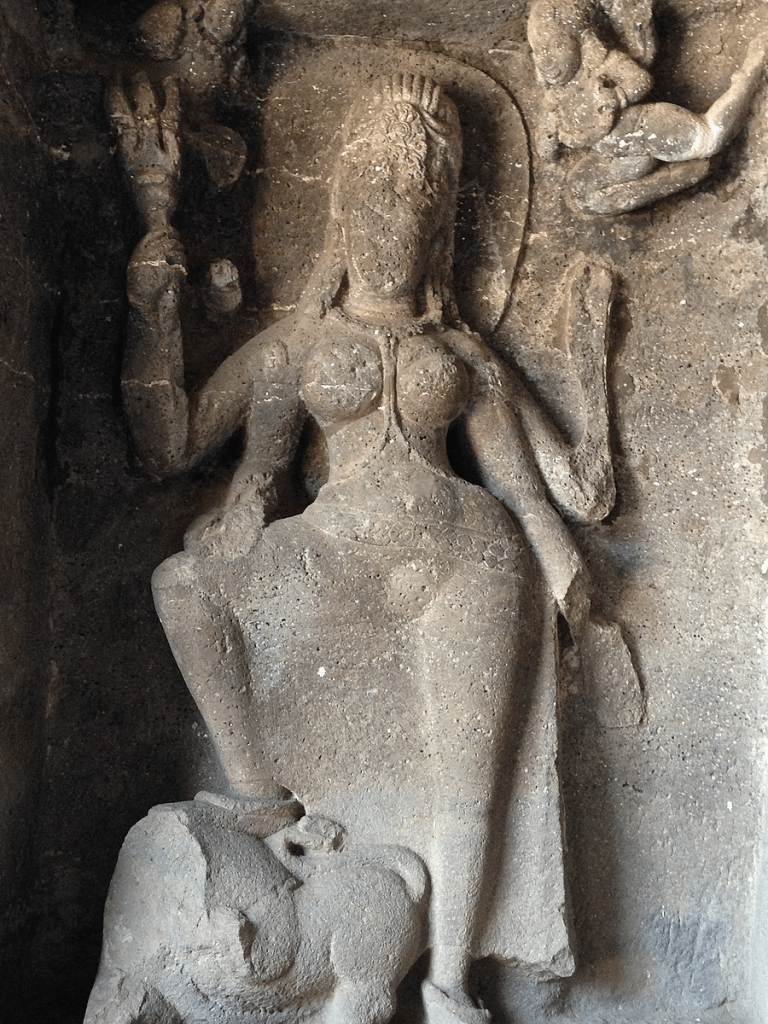

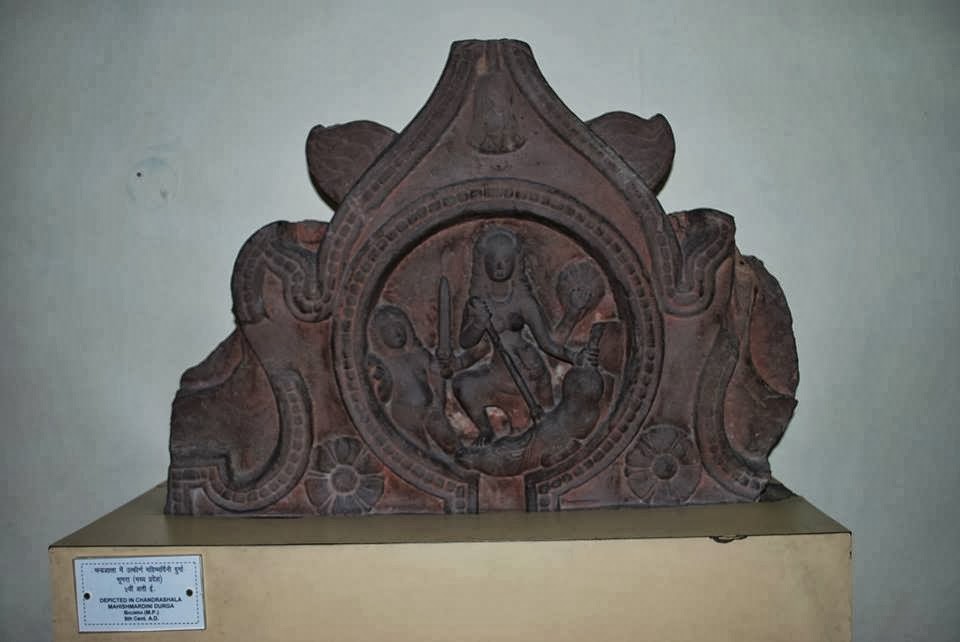

 Borderless