By Jeena R. Papaadi
I was sure I had kept a ten rupee coin ready. But, when he came around a second time, I was still fumbling. I looked up at him, embarrassed, shame-faced, and quickened my search. My hand travelled the same paths within my handbag that it had toured a few seconds ago, again encountering nothing.
He had no reaction. He had been at this job far too long. Seen far too many people. Heard far too many excuses. Listened impatiently to far too many stories. He looked away and moved on. Destiny would bring him back though. He would persevere until my journey ended. Then I would be erased from his mind and some other deviant passenger without exact change, with a bagful of tales, would take my place.
I gave up and pulled out a hundred rupee note. Something you should never wave at a city bus conductor. I was doing the unthinkable. I had no choice. My ten rupee coin had vanished within the folds of my bag, liberating itself from its inevitable fate. With one hand grabbing the railing for dear life as the bus dashed across the city, this was the best I could do. If one could pause life long enough, one would admire the lesson in philosophy thus presented before oneself. But one was busy going rather red before the conductor’s stern gaze.
No change, I muttered, my words and eyes dripping with apology.
He could shout. He could yell. He could ask me to leave the bus. No, he couldn’t, but he certainly could make us believe he had enough power in the world to extinguish our lives with one flick of his hand. No wonder small children aspired to be bus conductors.
He decided against violence and sighed deeply. The burden of the entire human race rested on his shoulders that morning.
Out of nowhere, a hand appeared between the conductor and me, with a sparkling, crisp ten rupee note crackling between the fingers. My eyes fell on it and on the hand holding it, and traced it back to the man who owned both.
For one long instant, all eyes of the people on the bus – except the driver, luckily – were on the man with the receding hairline and he began to look a tad uncomfortable at the attention.
It’s okay, he said, seeing me hesitate. It’s okay.
Now all pairs of eyes transferred themselves to me because it was my turn. He was offering to pay my ticket, to save me from the hundred rupee note embarrassment and possible eviction from the bus.
The conductor, still expressionless, leaning against a seat, immune to the insane race of the bus, waited for my response. To take the money or not to take it? He didn’t have all the time in the world. He had tickets to dispense and other things to do, I’m sure.
You can pay me back later, said the ten-rupee-note-man. Or not, he added hastily.
So I nodded, unsure of the etiquette and expectations in such a situation. I wasn’t taught how to behave when a stranger on a random bus showed generosity or kindness. Should I accept it? Should I be offended? Should I presume that he had ulterior motives? Should I refuse and go back to unearth my delinquent ten rupee coin? Or stubbornly insist that the conductor give me exact balance for my hundred?
The conductor sighed again. I was wasting his time more than the ten rupees demanded.
Everyone, and the bus itself, seemed to be holding their breath. I had to satisfy them all.
I took the ten rupee note, and handed it to the conductor whose patience was fast wearing thin, fairly certain that whatever I chose at this moment, I was going to regret later.
The situation defused, and everyone exhaled and went back to their own businesses of staring out the window, as the vehicle shot across the city.
I turned to my saviour and said, I’ll buy you tea.
He had an easy smile, one that makes you want to see it again. Oh, that won’t be necessary. But if you insist…
My eyes did insist, I suppose.
People seated next to this developing scene of action were listening without appearing to, some clearly appearing to, and hopping to conclusions on where this could lead.
I’ll get my change for hundred too, I explained, showing the note. This was mostly for the benefit of the listeners.
Of course, he said.
We now had a solid reason to have tea together.
So we got down at the stop where the ten rupees had led, and found a tea shop nearby. He was easy to talk to, easy to confide in, easy to befriend. He did not bore me to death with his stories, like most men did. He knew when he lost me, when to stop and when to pay attention.
One week later, we had dinner together. The strangeness had passed and we were comfortable as though we had been married for years.
And then it happened, on the third date… When he lost himself and I was abandoned, the gaps began to reappear, and the cracks which were merely glossed over, never fixed, broke open.
Just as it was when we had been married.
Another failed experiment. Come, let’s be strangers again…
If you change nothing, nothing would change.
.
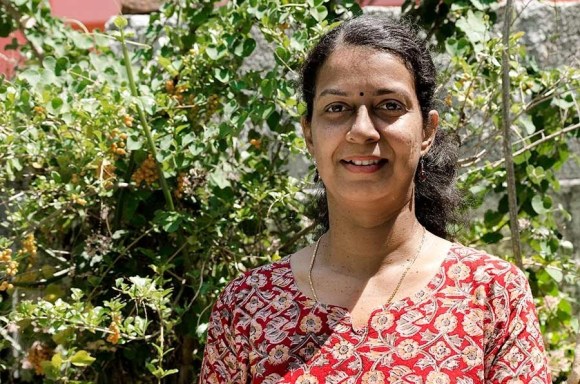
Jeena R. Papaadi is an author of fiction and poetry. Her articles and stories have appeared in several publications including The Hindu Open page, Kitaab, European Association of Palliative Care, Aksharasthree, etc.
.
PLEASE NOTE: ARTICLES CAN ONLY BE REPRODUCED IN OTHER SITES WITH DUE ACKNOWLEDGEMENT TO BORDERLESS JOURNAL
Click here to access the Borderless anthology, Monalisa No Longer Smiles
Click here to access Monalisa No Longer Smiles on Kindle Amazon International
 Borderless