Categories
Poetry

Poems by John Grey

Courtesy: Creative Commons

THE FOREST COMES BACK AFTER THE FIRE

I'm not the maple yet.
More of that tall pine from Norway.
or a fruit tree you wouldn't recognise
from your brief lessons in biology.
Already, in my branches,
fifty crows caw,
a thousand squirrels’ nest.
I face west where one dark lake
is my left hand;
and then east,
where a rocky escarpment
fills in for the fingers on my right.
My torso is, as yet,
a dark burnt patch
interrupted by a few green seedlings.
But soon enough
I'll boast a chest


A BOY THROWS ROCKS INTO THE LAKE

He'll never run out of rocks
and that lake is going nowhere.
And the splash is seductive, I expect.
It's not a loud noise but it's of his own making.
But, eventually, cold gray rock
won't be enough to satisfy his sense of touch.
And the lake will be such a lazy target.
Maybe he'll toss a leaf on the waters,
watch it float.
Or fish at its edge.
Or paddle a canoe into its center.
Or when he's old enough, he'll bring a girl here,
wrap his fingers around hers,
stare out at the glittering water together.
He'll hug her slim waist,
kiss her trembling lips.
The rocks won't move.
The surface won't ripple.
But the earth is a different story.


DARK OF THE DAY

When I learn to see,
the day will not be dark.
Maybe blue and green.

Like the blue and green of childhood.

When I had a voice.
And now I cannot speak any colour.
I can only write it down.

And when I learn to see,
the page will not be blank.
I will know what I have written. 

Like when I had a mind
and I could understand it as well.

I can only feel the words
and there is no blue or green in them.

They are colourless.

When I learn to see,
there’ll be payback
of a florid kind.

John Grey is an Australian poet, US resident, recently published in Sheepshead Review, Stand, Poetry Salzburg Review and Hollins Critic. His latest books are Leaves On Pages, Memory Outside The Head and Guest Of Myself, available on Amazon. 

PLEASE NOTE: ARTICLES CAN ONLY BE REPRODUCED IN OTHER SITES WITH DUE ACKNOWLEDGEMENT TO BORDERLESS JOURNAL

Click here to access the Borderless anthology, Monalisa No Longer Smiles
Categories
Poetry

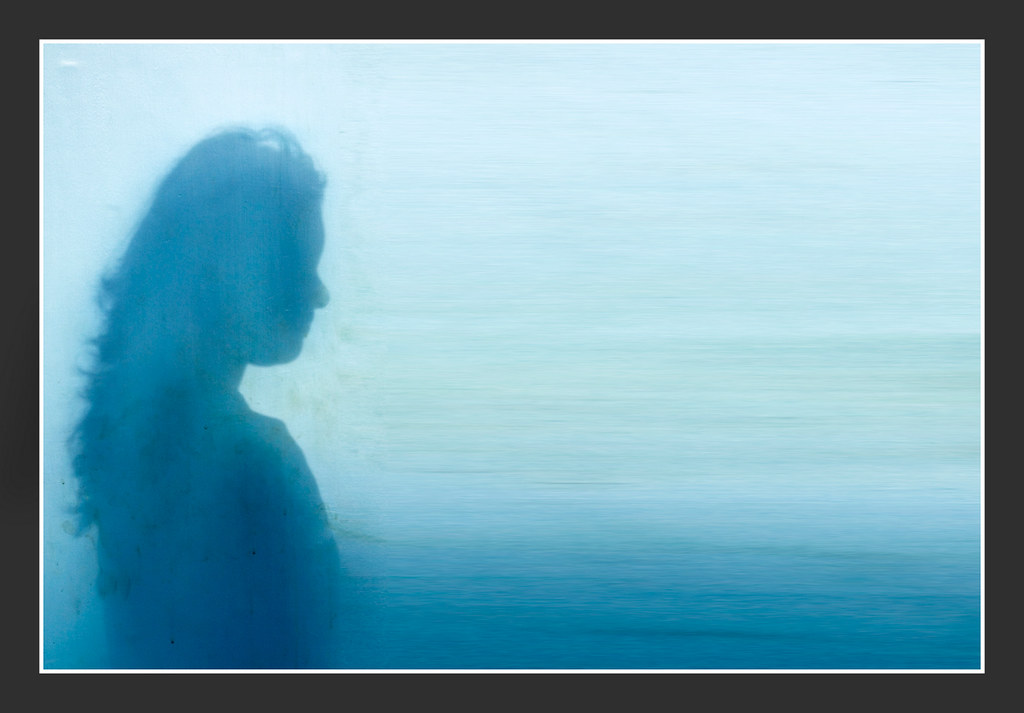
Shadow by Jared Carter

Courtesy: Creative Commons
SHADOW

Oh no, not so, and now you say
          that it could not
Have possibly occurred that way,
          the merest thought

It could be otherwise must be
          dismissed. It was
Illusion of some sort -- to see
          the moment pause,

That face appear. You knew how far
          she'd come, but when
You failed to speak, the way things are
          flowed back again.

Jared Carter’s most recent collection, The Land Itself, is from Monongahela Books in West Virginia. His Darkened Rooms of Summer: New and Selected Poems, with an introduction by Ted Kooser, was published by the University of Nebraska Press in 2014. A recipient of several literary awards and fellowships, Carter is from the state of Indiana in the U.S.

.

PLEASE NOTE: ARTICLES CAN ONLY BE REPRODUCED IN OTHER SITES WITH DUE ACKNOWLEDGEMENT TO BORDERLESS JOURNAL

Click here to access the Borderless anthology, Monalisa No Longer Smiles
Categories
Poetry

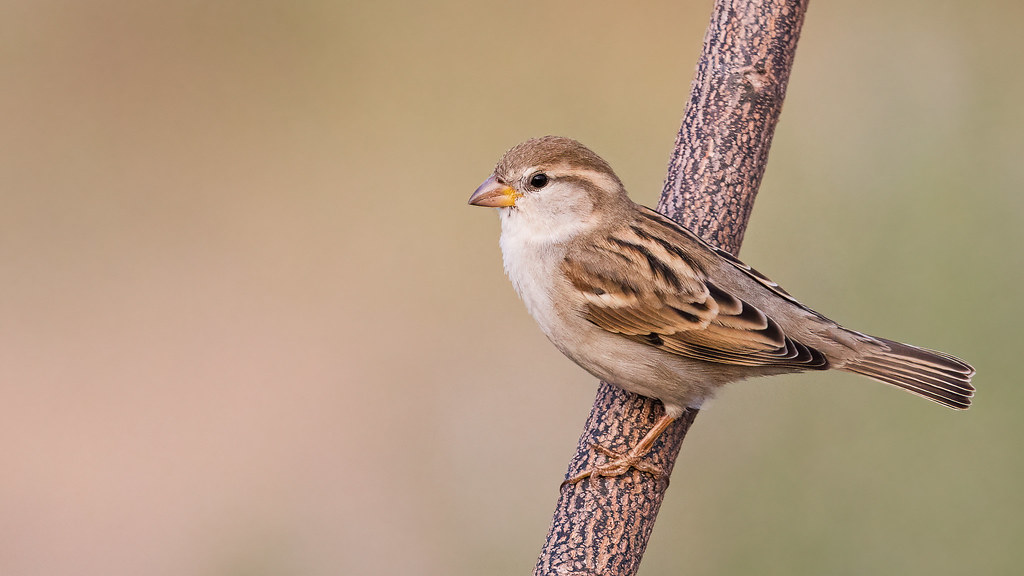
Hawk and Sparrow

By John Grey

HAWK AND SPARROW
 
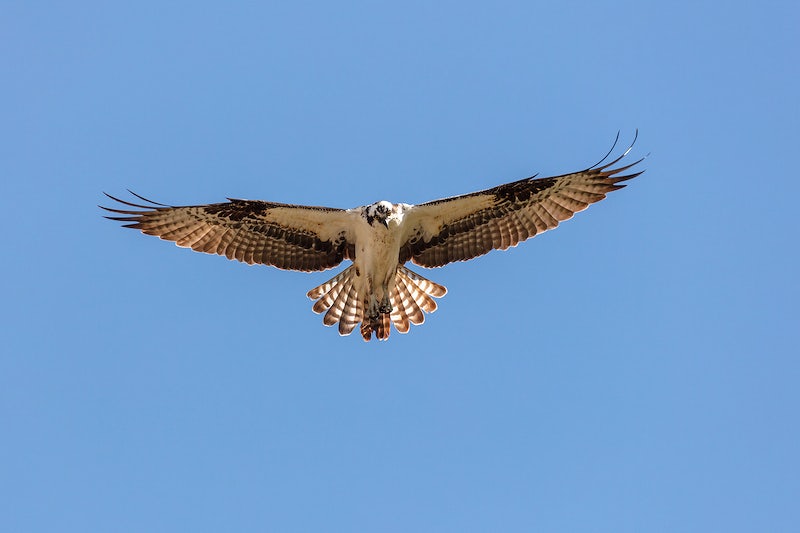
The hawk plunges.
I’m on the side
of the majestic, powerful hawk.
 
The sparrow reacts
with sudden panicked flight.
I’m on the side
of the tiny, defenseless sparrow.
 
The tussle in a nearby treetop
could mean the hawk snares the sparrow
or the sparrow eludes the hawk.
 
Whatever happens,
I win, I lose.

John Grey is an Australian poet, US resident, recently published in Sheepshead Review, Stand, Poetry Salzburg Review and Hollins Critic. His latest books are Leaves On Pages, Memory Outside The Head and Guest Of Myself, available on Amazon. 

PLEASE NOTE: ARTICLES CAN ONLY BE REPRODUCED IN OTHER SITES WITH DUE ACKNOWLEDGEMENT TO BORDERLESS JOURNAL

Categories
Poetry

Configuration

By Jared Carter

Configuration

(Glen Cooper Henshaw, American impressionist,
was born in Windfall, Indiana, in 1880 and 
died in Baltimore in 1946)

What I first knew of a life of art
was what he touched last -- the summer studio
where I was allowed to wander as a child
through high-ceilinged rooms, up stairways
lined with tapestries unraveling: bronzes
gathering dust, wrought candlesticks, rows
of Chinese vases, the August light shuttered
like strands of Aunt Carolyn's uncombed hair,
the huge easels with their unfinished seascapes,
the closets thick with stacks of pastels
where mice made burrows, and damp seeped.

Beginning there, at the last turn
of the stairs, at the view of the Salute
by moonlight, in its great gold frame –
beginning with the packets of letters,
the yellowed clippings, the photograph
with the calico cat perched on his shoulder –
I followed him from farm, school, bistro,
through the sketchbooks of Market Street
and the Lower East Side, the pushcarts
and railroad flats, the life classes
in the blue cold of the old Academy rooms
in Munich, the boat trains to London,
the first commissions and sittings,
the laughter in the salons, the bare shoulders
of the soprano who stands beside the piano,
the young women with braided, coiled hair
lifting their skirts as they come up the stairs,
the afternoons wandering among the bookstalls,
the cafe conversations with Matisse –

all this rippling from a single stone –
and the force that carried it gone, leaving
only the slow parchment whispering
of old voices in nursing-homes, recollections
of places where they met and talked, seances
around an oak table, a picnic at Fontainebleau,
the crowds in Maxwell Street before the War.
Gradually the surface resumes a smoothness:
second wife buried, paintings knocked down
and scattered, studio burned, each letter
traced, each name marked off, finally
only the quiescence of paperwork – index cards
and conjectures, learned comparisons, polite
notes of inquiry from graduate students,
the curator's handwritten invitation for brandy,
spools of microfilm humming in the machine.

What I first perceived, then, wandering alone
among those vanished rooms; what I last
have come to understand, having followed
that trajectory even as it began to merge
with my own: the face in the photograph, taken
when she left Boston to come to him
on the Rue Monsieur-le-Prince
in the springtime of that fresh year,
that new century.  Her long auburn hair
enveloping that nakedness, the purl
of gas jets turned down in the hallway,
the bell curve of the lamp chimney
by the bed, the swirled perfection
of her sleeping: the configuration
of time, of love, of youth, of art
like an elaborate watermark visible
only when held up to the light.

(First published in University of Minnesota Research)


Jared Carter’s most recent collection, The Land Itself, is from Monongahela Books in West Virginia. His Darkened Rooms of Summer: New and Selected Poems, with an introduction by Ted Kooser, was published by the University of Nebraska Press in 2014. A recipient of several literary awards and fellowships, Carter is from the state of Indiana in the U.S.

.

PLEASE NOTE: ARTICLES CAN ONLY BE REPRODUCED IN OTHER SITES WITH DUE ACKNOWLEDGEMENT TO BORDERLESS JOURNAL