By Abdullah Rayhan
“Do you hear the whisper of the shadows?
   This happiness feels foreign to me.
      I am accustomed to despair.”

-Forough Farrokhzad (1934-1967), Iranian Poet and Filmmaker
We seek psychotherapy to deal with the distress, sadness, depression, and psychological dimensions that are beyond our reach. Even after going through the medical procedure, we are seldom left with the satisfying sensation we deeply crave. This is where philosophy comes in.
To Socrates, philosophy was basically the way to live a life. He mainly observed how life functions and examined the influences that allocate life with certain affects. Other philosophical ideas too somewhat try to interpret the nature of existence in a similar manner. There are tons of such schools: from absurdism, to existentialism, nihilism, Hegelian, Kantian, and whatnot. But, apart from offering ideas and perspectives on existence, what else do they contribute? It can be a bit vague to trace the purpose of such philosophical ideas where the basic understanding, instead of leading toward fulfillment, can plunge us into the deepest pit of darkest despair. Existential philosophy will constantly remind you of life’s futility, ethical philosophies will keep painting idealistic portraits all to no avail. Finally, you are left with novel knowledge that does not necessarily help you deal with the struggles drowning your heart within a blurry tumult.
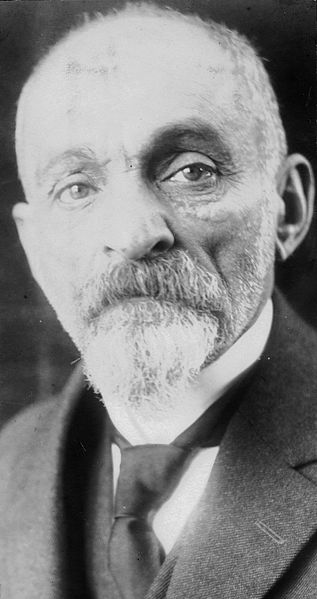
Fortunately, practical application of philosophy exists. Last year, when I was particularly at my lowest, estranged from everything I adored, all prospects of happiness ruined, abandoned to face monstrous adversities with a heavy bleeding heart, I found Boethius[1] comforting.
Camus, Sartre, and Nietzsche will comfort you with the assurance that you can construct optimism with your own effort. They tell your life has no inherent meaning, thus you are allowed to come up with your own sense of existence and give it any meaning you can conjure up at will. Bentham will tell you how to establish collective contentment. Kant will give you formulas to maintain peace. But none of them essentially gives a clear picture of what happiness really is. This makes Boethius unique. He doesn’t adhere to any false hopes, he rejects all things that are constructed, yet, through a transparent honesty, he shows a path that can lead toward organic satisfaction, not laced with any promises of universal fulfillment, just simple reasoning advocating for individual contentment.
Boethius basically inspires us to contemplate on our happiness. He directly questions the idea of happiness we so intimately endorse. Boethius asks you,
“Do you really hold dear that kind of happiness which is destined to pass away? Do you really value the presence of Fortune when you cannot trust her [Fortune] to stay and when her departure will plunge you in sorrow? And if it is impossible to keep her at will and if her flight exposes men to ruin, what else is such a fleeting thing except a warning of coming disaster?”
We consider ourselves lucky when we get our desired happiness. But, being lucky or ‘fortunate’ cannot be the standard that constructs happiness. In Boethius’ words, “happiness can’t consist in things governed by chance” mainly because there’s no guarantee it will last. He argues anything that is ephemeral, transient, and temporary cannot be of any value in terms of happiness as when that happiness evaporates, it is replaced by sorrow that is sometimes too much to bear. In this way, state of happiness is “a warning of coming disaster”. Happiness should not be the reason for despair and discontent. Thus, happiness brought by luck is not what it appears to be.
He further asks if something that is temporary can really be claimed as one’s own. Boethius’s voice renders one mute when he states, “I can say with confidence that if the things whose loss you are bemoaning were really yours, you could never have lost them.”
A significant portion of Boethius’s argument is surrounding the transience of happiness. If happiness lies in what’s temporary, then isn’t misery temporary as well? Boethius puts it with much clarity. He comforts you, saying: “If you do not consider that you have been lucky because your onetime reasons for rejoicing have passed away, you cannot now think of yourself as in misery, because the very things that seem miserable are also passing away.”
Boethius inspires you to wonder about the nature of misery. We are miserable, sad, melancholic usually because we had a taste of happiness sometimes in the past, which is missing at the moment. We were happy once. But happiness is no longer part of our lives, and this absence is what’s causing our misery. Had we not had that happiness before, we wouldn’t have the misery that chokes our heart with a suffocating grip. This is the reason Boethius called happiness “a warning of coming disaster”.
Think about it. Someone who is currently living the same life as you may not be in similar misery as you because, as they haven’t had the happiness you had, they are not burdened to deal with the absence that you are compelled to plummet in. Thus, neither happiness nor misery operate based on any strict blueprint, rather it is something formed by one’s own experience and are inter-dependent. Boethius puts it very eloquently saying, “There is something in the case of each of us that escapes the notice of the man who has not experienced it, but causes horror to the man who has […] Nothing is miserable except when you think it so, and vice versa, all luck is good luck to the man who bears it with equanimity”. We lose our ability to “bear it (despair) with equanimity” because of our past interactions with pleasant experiences.
Perhaps you would relate to Boethius in terms of misery though not in an entirely literal sense. Boethius had everything. A beautiful wife, two affectionate children, popularity, respect, novelty, an amazing home, and enough money to live without any worrying. Yet, because of some false accusation, he was suddenly deprived of it all and was imprisoned. His happy life suddenly became a dark den overpouring with impenetrable despair. Many of our misery too is born because of its contrast to the time when we were happy. Now think about it for a moment. Boethius was devastated in the cell because he previously had a satisfying life. Had he lived like a homeless person with nothing of his own, the confined space of that very cell would appear satisfactory because of the roof over the head and chunks of food on the plate no matter how dim and damp the dark roof or how stale the smelly food. It shows how subjective the texture of happiness is.
Boethius deconstructs the common perception of happiness, breaking it down to a rather ‘mundane’ prospect of life on the contrary to our belief of it being a significant one. He believes our idea of happiness itself is laced with misery. He proclaims, “how miserable the happiness of human life is; it does not remain long with those who are patient and doesn’t satisfy those who are troubled.”
So, if happiness indeed is of the nature that compulsorily leaves one unsatisfied, then does happiness deserves to be attributed with divine epithet? Boethius disagrees. He presents a compelling argument for this, saying, “[H]appiness is the highest good of rational nature and anything that can be taken away is not the highest good – since it is surpassed by what can’t be taken away …” It is the unreliability of our perceived idea of happiness that makes it a futile one with little or no value.
So, if happiness is something that is transient, unreliable, and can never offer the contentment it promises, then is happiness really something to chase after? “Happiness which depends on chance comes to an end with the death of the body,” propounds Boethius. Thus, to cling on to happiness is to cling on to a slippery rope dangling on top of a void filled to the brim with invisible abyss. You cannot do anything to make this notion of happiness fruitful in the sense you believe it to be. Boethius thinks it’s foolish to attempt to make this ineffective happiness endure and persist. He words it differently saying, “what an obvious mistake to make – to think that anything can be enhanced by decoration that does not belong to it.” Thus, again, the problem lies with the way we shape the notion of happiness.
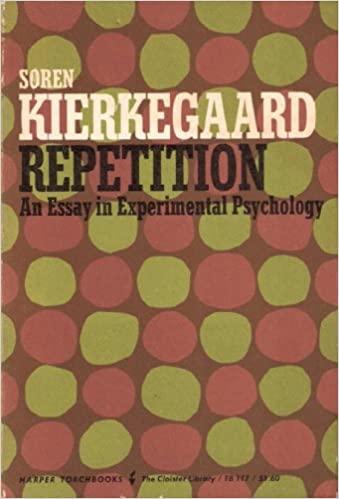
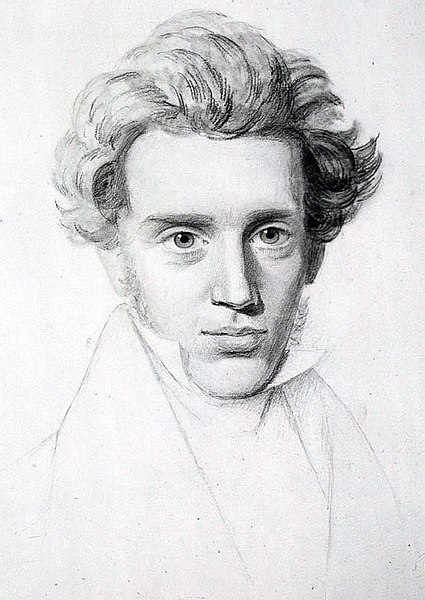
As our immediate cognition tells us, the most apparent formula of happiness is a combination of romantic love and successful career. But is it really true? If you have understood Boethius, you probably realise that these temporary agents (romantic partner and career) cannot make you content for long. Something that is not entirely yours own cannot get you that contentment you crave. Kierkegaard too agrees how things that are not inherently one’s own are subject to loss, thus misery. Kierkegaard delivers the idea with a touch of subtle humour,
“Marry, and you will regret it; don’t marry, you will also regret it; marry or don’t marry, you will regret it either way. Laugh at the world’s foolishness, you will regret it; weep over it, you will regret that too; laugh at the world’s foolishness or weep over it, you will regret both. Believe a woman, you will regret it; believe her not, you will also regret it… Hang yourself, you will regret it; do not hang yourself, and you will regret that too; hang yourself or don’t hang yourself, you’ll regret it either way; whether you hang yourself or do not hang yourself, you will regret both.”
Kierkegaard and Boethius clearly intersect at certain points. Having happiness too, with its transience and all, is always the cause of a constant despair. Boethius very wittily points out that when we don’t have happiness, we strive and struggle to attain it. Once we have attained it, we become anxious to preserve it because no matter how much we enjoy happiness, at the back of our mind, we are aware of its temporary and fragile nature. This is why Kierkegaard says all our prospects of happiness are ultimately fated to end up in regret. Michel de Montaigne words this human tendency more concisely saying, “he who fears he shall suffer, already suffers what he fears”. In other words, as being in happiness always contains the risk of losing the happiness, this fear actually prevents one from ever fully attaining that state of mind.
Kierkegaard reaches such a conclusion because he too believed happiness as we know it is transient and fragile. The reason, as he locates, is its inorganic essence. Happiness modified with external force will never be permanent or make one content. He imagined happiness as an inswing door. He says, “the door of happiness opens inward, one should keep aside a little to open it: if one pushes, they close it more and more”. This is to say that one should not put any external force to influence happiness. That way, it’ll only cause more damage than good, or as Kierkegaard words it, the door of happiness will “close more and more”.
This overall means, our understanding of happiness, which is generally tied to external factors, can never bring within our reach the happiness we idealise with transcended romanticism. Thus, we are putting so much value in that idea of happiness in futile attempts, not knowing what it has in store for us while in reality it does not deserve to be the glorified item that sits at the epitome of human desire.
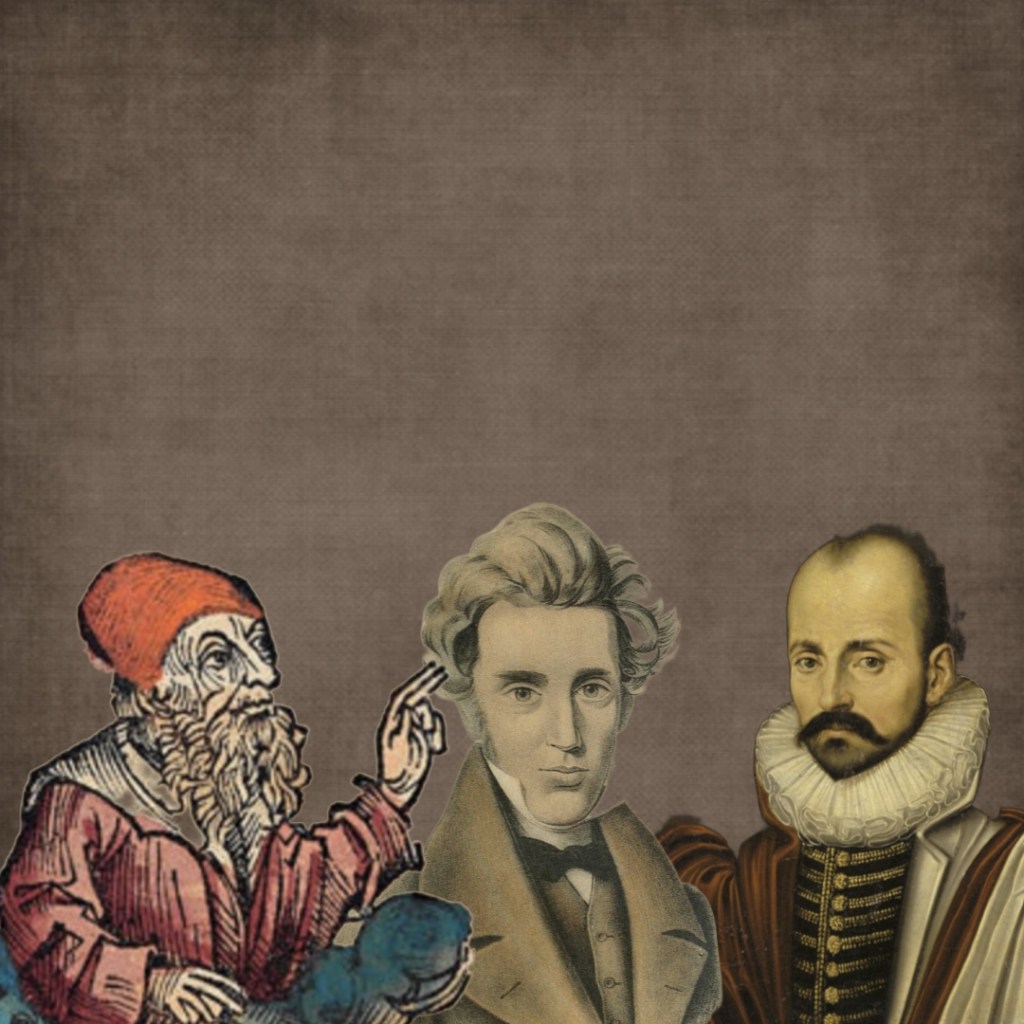
Interestingly, Boethius, Kierkegaard, and Montaigne have similar ideas on obtaining true contentment. They all agree that it’s not attainable with external properties and should be dug up from ones within. They commonly emphasise internal resources over external acquisitions.
Montaigne, for example, closely focuses on the nuanced foundation where the true happiness lies. Yes, material and metaphysical attainments can make us happy, he agrees, but not genuinely as we want it to be. He suggests, “[W]e should have wife, children, goods, and above all health, if we can, but we must not bind ourselves to them so strongly that our happiness depends on them. We must reserve a backshop wholly our own.” Similar to Boethius, Montaigne too recommends not relying our happiness on subjects that are subject to transience. Rather he advices to “reserve a backshop”. This “backshop” is the inner sanctum, a profound part of ourselves that remains untouched by the outer world, free from all kinds of external force. He designs this backshop as a space “wherein to settle our true liberty, our principal solitude and retreat”.
Kierkegaard too advocates for contentment that arises from within rather than from external influences whose essential nature is transient. In Kierkegaard’s perception, similar to Montaigne’s, it is silence, solitude, and introspection within us that can get us the contentment we idealise as happiness. He perceived all kinds of temporal gains as a reason for eventual dissatisfaction and advocated for things that remain untainted for eternity like intellect and truth.
Similar to Kierkegaard and Montaigne, Boethius agrees it is internal stability that overpowers the temporary shower of ecstatic sense of euphoria external fortune brings. Boethius advocates for this internal stability with better wording,
“If you are in possession of yourself you will possess something you would never wish to lose and something Fortune could never take away.”
This internal stability, according to Boethius, comes from one’s power of reasoning. Similar to Kierkegaard, Boethius prioritises intellectual resources because it has the ability to make one indifferent to their own fate. Intellect can make one recognise that there cannot be any prospect of contentment in things that are unstable, and everything that fortune brings is laced with this vicious instability. By fortune, Boethius does not mean a sudden stroke of good luck that potentiates all of our solvencies, but rather it’s everything good that happens to us without our own effort whether it’s a small gift from a loved one, or the smile of a baby. These make us happy, yet these are external forces. Fate intervenes in our life, leaving us with little to no control over our own selves. We can’t control a baby from smiling, and we won’t get out of our way and prevent a loved one from offering us a flower which they have invested so much thought in, but when babies do not smile at us, or when no one is left to offer even a stem of flower to us, that is when we experience a suffocation that could break our already shattered heart. Boethius asks us to realise all these with a clear conscience and allow our intellect and power of reasoning to locate what’s unstable and help us grip onto only what’s inherently ours.
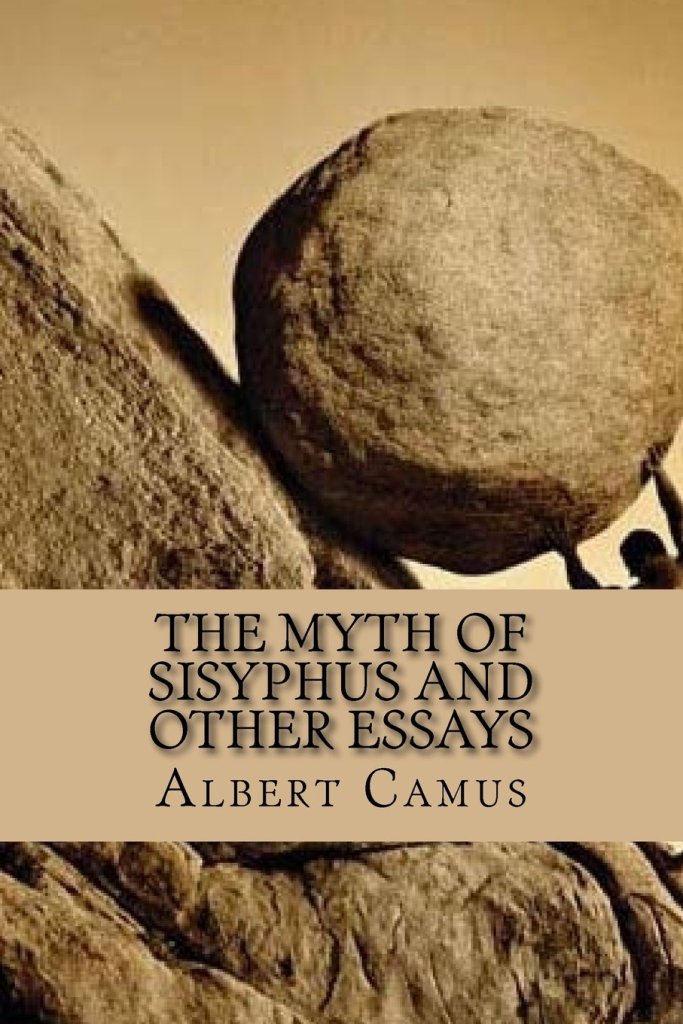
All these perspectives boil down to the fact that the reason we are not happy isn’t because we are constantly chasing it, but rather we have a wrong perception of what happiness is. Happiness is not the greatest good, nor is it anything to die for. It is, as clichéd as it may sound, something present within all of us with a very apparent eminence, and all one has to do to access it is have an open mind and reach ones within with honesty. Through this lens one doesn’t have to ‘imagine’ Sisyphus happy, rather Sisyphus is ‘happy’ for real and for eternity.
Works Cited:
On the Consolation of Philosophy by Anicius Manlius Severinus Boethius
Either/Or by Søren Kierkegaard
[1] Anicius Manlius Severinus Boethius (480-524), Roman statesman, historian and polymath
Essais by Michel de Montaigne
Abdullah Rayhan studies Literature and Cultural Studies at Jahangirnagar University.
.
PLEASE NOTE: ARTICLES CAN ONLY BE REPRODUCED IN OTHER SITES WITH DUE ACKNOWLEDGEMENT TO BORDERLESS JOURNAL
Click here to access the Borderless anthology, Monalisa No Longer Smiles
Click here to access Monalisa No Longer Smiles on Kindle Amazon International



 Borderless