Categories
Review

Dom Moraes: ‘A piece of childhood thrown away’

Book review by Rakhi Dalal

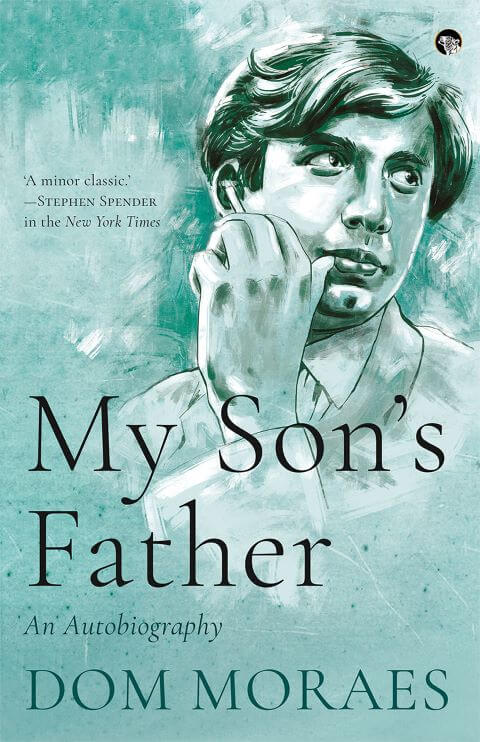
Title: My Son’s Father

Author: Dom Moraes

Publisher: Speaking Tiger, 2020

Dom Moraes (1938–2004), poet, novelist, and columnist, is seen as a foundational figure in Indian English Literature. In 1958, at the age of twenty, he won the prestigious Hawthornden Prize for his first volume of verse, A Beginning, going on to publish more than thirty books of prose and poetry. He was awarded the Sahitya Akademi Award for English in 1994. He has won awards for journalism and poetry in England, America, and India. He also wrote a large number of film scripts for BBC and ITV, covering various countries such as India, Israel, Cuba, and Africa.

“Between his Englishness and Indianness, the scales tipped to English.”

Wrote Stephen Spender in the Sunday issue of The New York Times on August 10, 1969 while reviewing My Son’s Father by Dominic Frances Moraes, an autobiography which was first published in 1968 when the author was only thirty years old. Spender’s observation came in view of the situation faced by writers of Indian origin writing in English in those times. He considered it fortunate that Moraes was brought up speaking English and not Hindi.

It is true that being born in an English-speaking Roman Catholic family of Goan extraction, the language came naturally to him and his affinity for literature sprung from his spending much time on reading books borrowed from his father’s library. Once he knew that he would be a poet, the decision to make England his home came logically to him. At one place in the book he writes:

“England, for me, was where the poets were. The poets were my people. I had no real consciousness of a nationality, for I did not speak the languages of my countrymen, and therefore, had no soil for roots. Such Indian society as I had seen seemed to me narrow and provincial, and I wanted to escape it.”

In this autobiographical account, a prominent role is given to the tussle in his mind, that kept him connected to his roots. This struggle, emanating from the memories of his early childhood years spent with his family and his relationship with his parents, is also the subject of this book. Interestingly, after this book was published in 1968, Moraes returned to India after spending nearly fourteen years of his life in England.

The book covers the period from his early childhood to when he became a father himself. The autobiography is divided into two parts with six chapters each. The first part titled ‘A Piece of Childhood’ covers the first sixteen years of his life with his parents. The second titled ‘After So Many Deaths’, deals with his own life, from leaving the house for London for further studies until he finds his place in the World. The thirteenth chapter is the Epilogue.

The name for first part is taken from these lines by David Gray, quoted on the title page:

Poor meagre life is mine, meagre and poor:

Only a piece of childhood thrown away.

In the first part, the choice of title reflects the content. For, it essentially deals with his troubled childhood years with a mother suffering from mental illness. He writes about witnessing the first signs of illness in his mother, about how his love for her first turned into indifference, then into anger and then cruelty with the passing years which were marked with increased incidents because of her illness which sometimes also posed danger to him and everybody around. Later when his mother was institutionalized, he blamed himself for it. However, it was the time spent with his father, reading, travelling and journaling, that made him turn to writing verses and to opt for living in London.

The narrative is enlivened by the keen and observant eye of a poet which missed nothing, whether it was the unsettling feeling of missing his father when he was a war correspondent in Burma or the joy of witnessing the beauty of nature. At such places, his poetic sensibility charms the reader and turns the reading experience into a joyful ride. His prose is lucid, interspersed with vivid imagery but with such a restrain that not a single word ever seems out of place.

Behind our flat was the Arabian Sea, an ache and blur of blue at noon, purpling to shadow towards nightfall: then the sun spun down through a clash of colours like a thrown orange, and was sucked into it: sank, and the sea was black shot silk, stippled and lisping, and it was time for bed.

The second part deals with his life at Oxford. His associations with poets like Stephen Spender, W.H. Auden and Allen Tate. He vividly portrays the English Literary scene of 50s London, bohemian life at Soho, his meetings with the likes of David Gascoyne, T.S.Eliot, Beat poets and Francis Bacon. He writes about his love affairs, about the kindness of Dean Nevill Coghill who always saved him from troubles at Oxford and about David Archer of the Parton Press who published his first poetry collection, A Beginning, which won him the prestigious Hawthornden Prize at the age of nineteen. But despite all this, he felt divided in his mind. Once while visiting parents of his friend Julian, he felt nostalgic.

It was a long while since I had been in contact with family life: it seemed familiar but distant, but snuffing at it as warily as the dachshunds sniffed at me, I felt a deep nostalgia for it. I thought for the first time in weeks of my mother and father and remembered the exact smell and texture of an Indian day. Driving back with my friend through the green and familiar landscape of my adopted country, I felt suddenly, and to my own surprise, a stranger.

Though he had put down his roots of work and friendship in London, where he knew he wanted to stay but there were moments, according to him, when some invisible roots pulled him to country of his birth. It was only around his twenty first birthday, while visiting his parents, he realised what it was. In a conversation with his mother, both of them wept in close embrace and suddenly he felt his troubles vanishing away.

I left India at peace with myself. Something very important to me had happened: I had explained myself to my mother, there was love between us, the closed window that had darkened my mind for years had been opened, and I was free in a way I had never been before.

The last chapter, ‘The Epilogue’, shows a thirty years old Moraes, a father to a newborn, finalising the manuscript of this book. For some reasons it doesn’t include his life events from the age of twenty one to thirty. As the ‘Epilogue’ closes, we see a father, pleased with his life, binding together the pages so that if his son reads them one day, he understands his father as the person he was.

.

Rakhi Dalal is an educator by profession. When not working, she can usually be found reading books or writing about reading them. She writes at https://rakhidalal.blogspot.com/ . She lives with her husband and a teenage son, who being sports lovers themselves are yet, after all these years, left surprised each time a book finds its way to their home.

.

PLEASE NOTE: ARTICLES CAN ONLY BE REPRODUCED IN OTHER SITES WITH DUE ACKNOWLEDGEMENT TO BORDERLESS JOURNAL. 
Categories
Review

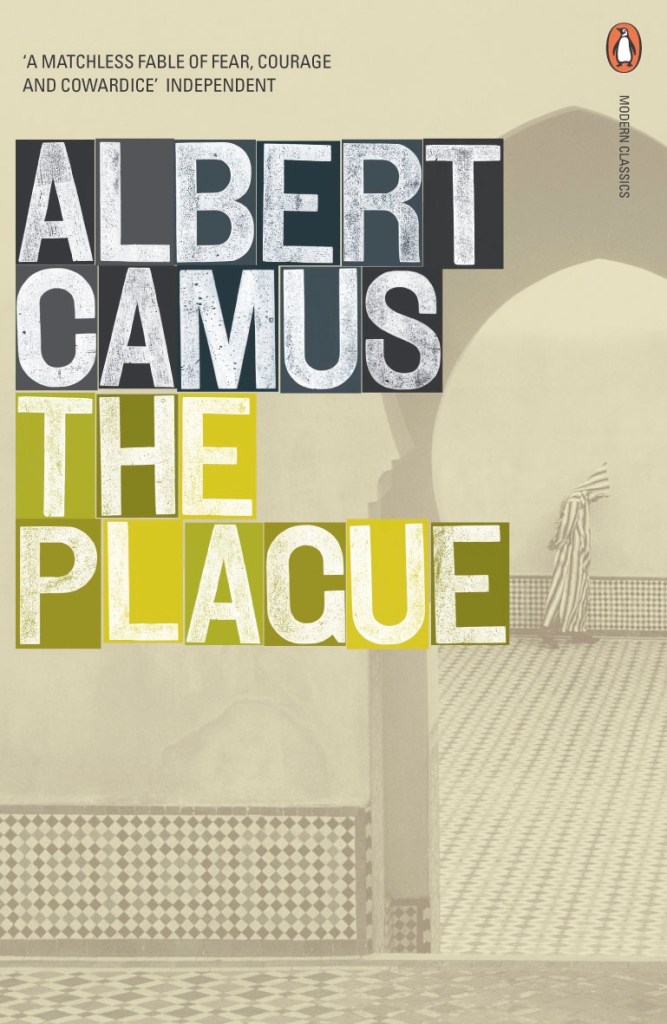
‘What’s true of all the evils in the world is true of plague as well. It helps men to rise above themselves’: The Plague by Albert Camus

Book Review by Rakhi Dalal

Title: The Plague (1947)

Author: Albert Camus

Camus’ La Peste has never been out of print. In the wake of pandemic that now sweeps the entire world, its sale has seen a surge quite unlike at any other time since its publication in 1947. What else can be a greater proof of the relevance of a work that seems to be an ageless parable of human condition.

The novel, most of which he wrote in confinement, away from his family due to his acute illness, is the story of a town suffering from bubonic plague. But this novel can also be seen as an allegory of human crisis brought about by moral contagion.

Camus belonged to a generation which was born either before or during the First World War, reached adolescence during the worldwide economic depression and turned twenty the year of Hitler’s rise to power. Next they saw the civil war in Spain, the Munich Agreements, the start of another World War in 1939, the fall of France in 1940 and four years of enemy occupation and underground struggle.

All of this, in his opinion, resulted in a human crisis where most people, disillusioned by religion or nationalism and wary of the traditional morality imposed upon them, lived in contradiction. They accepted war and violence which was given to them, which they had never wanted but from the consequences of which they could not escape. It was as if the entire generation was plagued by an indifference which led people to accept human suffering as a banal reality.

In one of his lyrical essays, The Almond Trees (1940), Camus wrote:

I do not have enough faith in reason to subscribe to a belief in progress or to any philosophy of history. But I do atleast believe that men have never ceased to grow in the knowledge of their destiny. We have not overcome our condition and yet we know it better. We know that we live in contradiction, but that we must refuse this contradiction and do what is needed to reduce it. Our task as men is to find those few first principles that will calm the infinite anguish of free souls. We must stitch up what has been torn apart, render justice imaginable in a World which is so obviously unjust, make happiness meaningful for nations poisoned by the misery of this century.”

He believed in human kindness and solidarity. He believed that if in the face of a crisis people could rise and act, not out of some heroic courage expected of them, but with reason and optimism, then it would be possible to reduce human suffering.

Written in the given context, the novel quite pertinently, became a tale of a persisting contradiction and subsequent human actions in overcoming the condition.

What’s true of all the evils in the world is true of plague as well. It helps men to rise above themselves.”

In the novel, after initially rejecting the plague, the people of Oran are forced to go into isolation and quarantine. In fact the whole city is closed down and its borders are sealed. There are people suffering from the disease, people in exile – away from their loved ones, people serving those ridden with disease and also people trying to make more money by smuggling goods. Here the depiction of illness, loneliness and separation is quite vivid – much that we can relate to as well at present?

Dr. Rieux, the one who detects the illness, assumes his responsibility and does what he must. He is an ordinary man doing extraordinary things, not out of a notion of valour but out of simple decency and a sense of moral obligation. His character personifies individual moral responsibility essential to make effective public choices in a society. At one point, he says:

When you see the suffering it brings, you have to be mad, blind or a coward to resign yourself to the Plague.”

Rambert, a young journalist who is exiled in Oran, tries to escape the city initially but later he realises that he shares a common fate with rest of the people and joins in serving those afflicted.

Then one fine day, the plague disappears as mysteriously as it had appeared but not without playing havoc with the lives of people. Later when the people celebrate in the streets of Oran, Dr. Rieux observes:

The plague bacillus never dies or vanishes entirely, it can remain dormant for dozens of years in furniture or clothing, it waits patiently in bedrooms, cellars, trunks, handkerchiefs and old papers, and perhaps the day will come when, for the instruction or misfortune of mankind, the plague will rouse its rats and send them to die in some well-contented city.”

Camus knew that even if a contagion, whether biological or moral, ends – one couldn’t be too sure of its absolute extinction. So in the absence of a clear moral lesson from this book, what is it that makes the book still relevant?

In the face of the present pandemic which lurks in the corners of our cities and stares at us from outside the windows of our isolated homes, this book not only brings to our notice the horrors such plagues can inflict but also the human will, solidarity and collective resistance that remain instrumental in overcoming such disasters. It puts our focus back where it should be – on assuming moral responsibility as individuals — on each act of kindness, on goodness which when collective not only helps combat a pandemic but also rouses our alertness lest our laxity make us miss the signs of an impending darkness. 

Rakhi Dalal is an educator by profession. When not working, she can usually be found reading books or writing about reading them. She writes at https://rakhidalal.blogspot.com/ . She lives with her husband and a teenage son, who being sports lovers themselves are yet, after all these years, left surprised each time a book finds its way to their home.

Categories
Review

Truck de India: An Epiphanic ride

Book Review by Rakhi Dalal

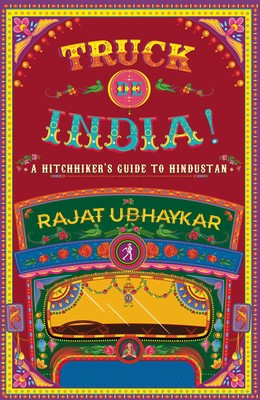
Title: Truck De India

Author: Rajat Ubhaykar

Publisher: Simon and Schuster, India, 2019

“Gaddi jaandi ae chhalanga mardi

(The truck goes jumping)

  Mainu yaad aaye mere yaar di”

(I remember my beloved)

The one image that I have always associated with the thought of truck/ goods carrier on Indian roads is a boisterous Punjabi driver driving the truck in abandon while singing this song full throttle. Part of the reason lies in my spending my early childhood years in Punjab and part in being enamoured by the bitter sweet song which is as much about love as it is about lamenting the distance between lovers.

But apart from this sweet image, one other image that has been deeply ingrained in my mind about these trucks is that of a formidable giant body on wheels which must never ever be overtaken on a highway.

This was one of the first lessons I was given while learning to drive – “Don’t ever overtake a moving truck or a bus, especially on Haryana Roadways.” So while I have adhered to this rule most of my life, sometimes I have indulged in the guilty pleasure of overtaking the giant on a highway, more specifically whenever I found it trudging painfully slow. It generated a sense of exhilaration when I beat the king of the highway on its own territory.  

But other than this, the sight of a truck never evoked much contemplation. That was not until I came across Truck De India.

Really, I thought? A book on trucks? WOW.

And then I read the subtitle – A hitchhiker’s guide to Hindustan

In the prologue of the book, the author narrates the incident which kind of seeded the idea of discovering the country through road:

Staring outside the window on that trip, the wind tousling my unruly hair, I remember being struck by a sort of epiphany, that India is bigger than the boundaries of my imagination, or anyone’s, for that matter. You didn’t have to go the scale of the cosmos to imagine something vast – India was enough.”

That the author, Rajat Ubhaykar, chose trucks to hitchhike to undertake the journey was at first kind of bewildering to think. But then as I read on, I realised what better way to discover a country if not through the eyes of one of the most vulnerable yet surprisingly one of the most underrated and suspected class in the workforce of the unorganised sector which forms the backbone of logistics across the country.

Another reason might be the mysterious air that hovers around the sight of a truck on a highway. It seems to be destined for discovering vistas unknown to commoners like us and so the experience of its riders may seem much richer than that gained through journeys undertaken by conventional means.  

Ubhaykar started the journey from Mumbai, moving all the way upto Kashmir and then Far East to Nagaland before finally reaching Kanyakumari in the South. A journey across the country hitchhiking thus with truck drivers and their helpers, gave him a first-hand experience of the many tribulations and dangers they face while transferring goods for people like us — the goods we eventually consume unthinkingly.

What I found immensely likeable about his hitchhiking with truck drivers is that he entered their world only when taken kindly in. Throughout, he maintained a respectful distance while asking questions about their lives, their experiences. He found that apart from paying “taxes” on road to braving harsh weathers, the threat of insurgents or evading highway robbers, the drivers also spent long periods away from family only to save a couple of thousands more. But none of the problems that they faced made them hostile as they conversed about these with a total stranger. In fact, as opposed to the commonly held notion, he found most of them very friendly and warm.  

Aap humare mehmaan hain” (you are our guest). How else can one define the gesture of the driver paying for a stranger’s meal where a single penny mattered to him? Or sharing the already cramped space for two to sleep with someone they had barely met? What held them together apart from the commonality of being part of the same journey from one destination to the next? Or was it the inherent human desire for the need to be understood, respected and treated kindly by fellow beings? In the journey of life each of us choose a path, most suitable circumstantially, and so, a comparison materialistically is not only naïve but also degrading.

While on his journey to initially discover the unseen India, Ubhaykar found what really mattered were the transits which characterise life. He has penned his experience to showcase what happens in the lives of the truckers who spend most of their lives behind wheels — away from their loved ones — to ferry goods and materials which not only run our country’s economy but also bring comfort to the lives of millions of strangers. 

It is fascinating to enter Ubhayakar’s world of truckers in India who live with the uncertainties of highways and circumstances to earn their livelihoods. Now, with this book by your side, are you ready to embark on the ride?

Rakhi Dalal is an educator by profession. When not working, she can usually be found reading books or writing about reading them. She writes at https://rakhidalal.blogspot.com/ . She lives with her husband and a teenage son, who being sports lovers themselves are yet, after all these years, left surprised each time a book finds its way to their home.