A found poem, consisting of various captions copied verbatim from descriptions of small figurines displayed in the Asian Wing of the Dayton Art Institute, in the state of Ohio, in the United States.
Menuki, sometimes called sword fittings, are matching or complementary pairs of tiny metal sculptures, traditionally secured to the hilt of a samurai sword and thought to improve the grip.
They were hammered from sheets of copper or alloys of silver and gold and were held in position on either side of a sword’s hilt by braids of silk.
— Jared Carter
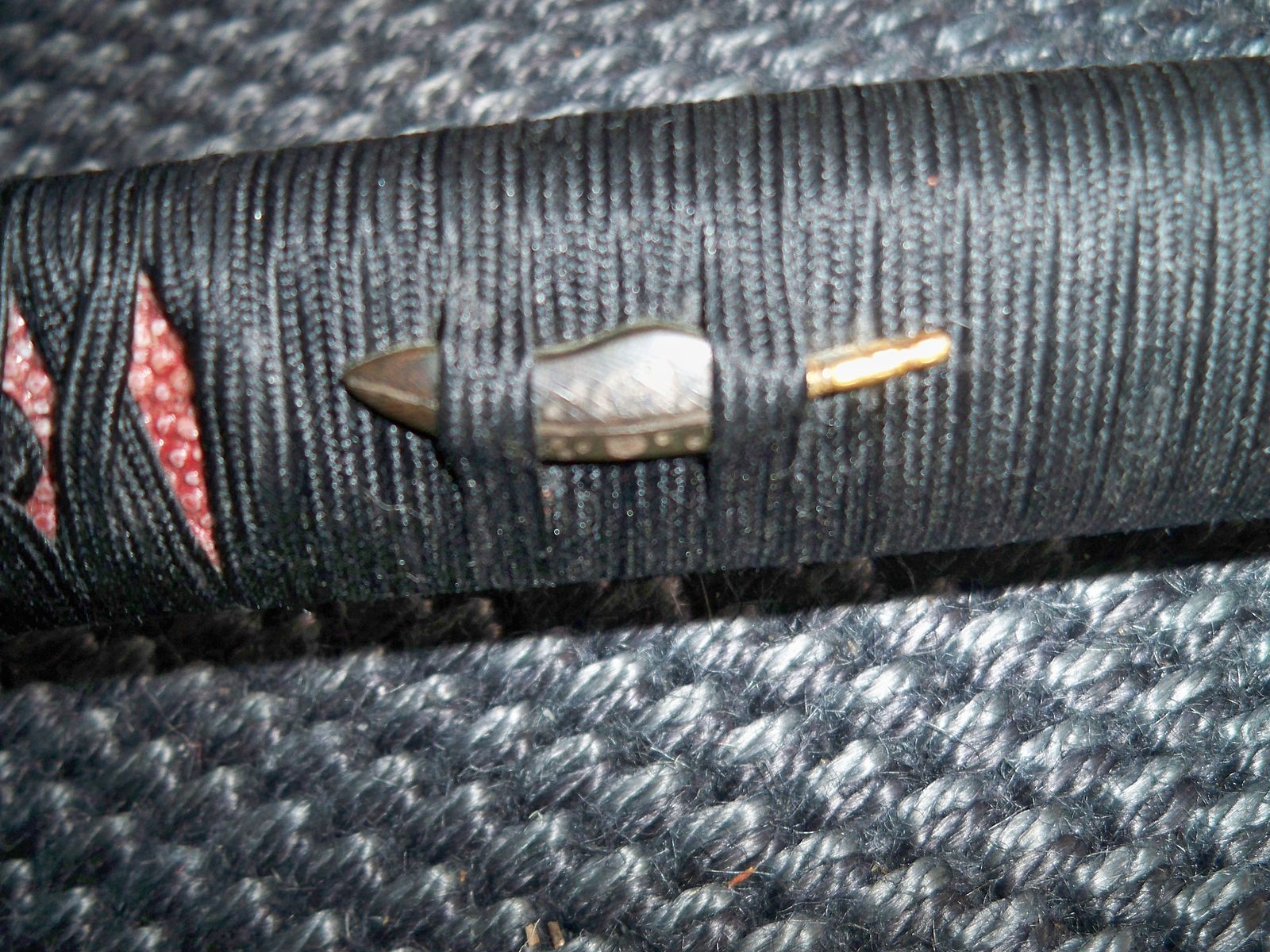
Antique Japanese sword handle tsuka showing the ornament menuki held in place by the binding ito.
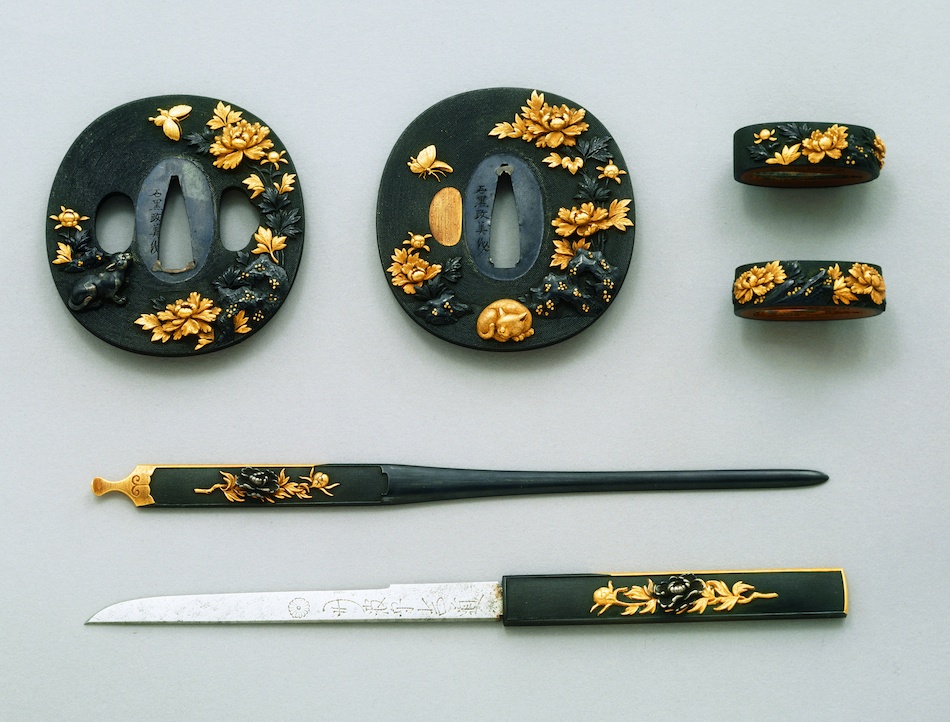
Sword Fittings, 18th-19th century, Edo period.
MENUKI

Each in the form of a cluster of branches and a flowering plum
Each in the form of celestial dragons
Each in the form of a cluster of flowers wrapped around a rolled mat
Each in the form of a crane with spread wings
            nestled amidst the upper branches
                        of an ornamental spreading pine

One in the form of a prancing stag
            the other in the form of a stag nuzzling a recumbent doe
One in the form of a cluster of grasses with a crescent moon
            the other of grasses with the new moon
Each in the form of Mount Fuji

One in the form of a court noble in military dress
           the other in the form of a sage holding a book
Each in the form of a woven basket filled with sprays of flowers
Each in the form of a cluster of eggplants
One in the form of a crane taking flight
           the other in the form of a heron

Each in the form of a cluster of peacocks
Each in the form of a crawfish and waterweeds
Each in the form of crickets and wildflowers
Each in the form of two galloping horses
One in the form of a nightingale in flight
           the other in the form of the moon
Each in the form of a horse cleaning itself
           beside a shallow stream

One in the form of a stalking tiger
           the other in the form of a seated tiger
Each in the form of a fisherman walking
           with a large wicker basket

Each in the form of a samurai astride a galloping horse
Each in the form of three Chinese sages playing go
Each in the form of a gold pheasant
            backed by a cluster of kiku, millet,
                        wildflowers, and grasses

Each in the form of a fisherman poling a boat
First published in Nexus.
Jared Carter’s most recent collection, The Land Itself, is from Monongahela Books in West Virginia. His Darkened Rooms of Summer: New and Selected Poems, with an introduction by Ted Kooser, was published by the University of Nebraska Press in 2014. A recipient of several literary awards and fellowships, Carter is from the state of Indiana in the U.S.
.
PLEASE NOTE: ARTICLES CAN ONLY BE REPRODUCED IN OTHER SITES WITH DUE ACKNOWLEDGEMENT TO BORDERLESS JOURNAL
 Borderless