Categories
Essay

Peace: Is it Even Possible?

By Candice Louisa Daquin
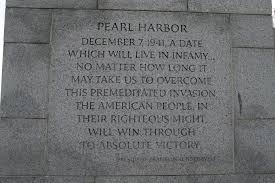
We’ve all heard the adage, those who don’t know history are bound to repeat it. Maybe like any good saying, it’s been over-used and we’ve forgotten to consider its core truism. But think about it. If we don’t remember, we tend to repeat former mistakes, because human-beings are very alike in their actions and reactions, and we have a horrible habit of thinking we’re so unique when we’re anything but that. The ego of is young. Occasionally, ignorance shields us from historical realities. When we get older, we sometimes stop caring and leave it to those younger to us. But both approaches have deep flaws. They abdicate the responsibility of living in this world.

What reason could any of us have for truly abdicating responsibility to our grandchildren, and those who will invariably come after we are gone? Is being young an excuse? Is being old? Or are we intrinsically fond of passing the buck, as American’s say, and not believing we’ll make enough of an impact in this world to even bother? I don’t think it’s that. I think it’s apathy and a childish belief someone else will do it for us. Just look at people who drop litter in the ocean, they don’t care that it will cause havoc on sea-life, they are not thinking of the future repercussion, they are thinking only of now. They don’t see how that one act has this deleterious knock-on effect that reverberates throughout our planet.

If you’re rolling your eyes and are about to give up reading, consider this: What is your value? What do you stand for? If you died tomorrow what would have been your legacy? Don’t think wealth or children, but your place in the chain stretching from the beginning of humanity to now. What have you done to help that chain? If you don’t think that is relevant, consider why this isn’t important to you and why being self-interested is justifiable to you when so many suffer, and the world is damaged by those like yourself who don’t care.

Maybe that sounds judgmental because of course, it is. Too often we can look back in time and see these pioneers and campaigners who try to make a change and be swallowed by disinterest on the part of the masses. Literally speaking then, the masses are the problem, because whilst a few good apples stand out and speak to things we need to do, the majority are thinking of just their survival and their immediate gratification. The concept of immediate gratification has taken deep roots in the current times.

Psychologists and thinkers have many ways to explain why the majority do nothing and seem apparently not to feel they have any obligation to improve the world we live in. Some say, it’s about human development; few attain that stage of self-realization where they feel a need to contribute beyond themselves. Others point to the hardship of life, and how when you struggle, you often do not have enough left over to help others. Of course, we all know notable examples of those who despite a hard life, gave in abundance to others.

If we remove religion and its dictate that people should help each other as part of being a good (Christian, Hindu, Muslim, Jew, Buddhist) would we have a lawless approach to giving and caring, that made social concerns null void? I would say it has less to do with dogma and religion and more to do with personal ethics. There are plenty of atheists who do a great deal for others and this planet, without any desire for recompense or a place in heaven. Therefore, it seems to be a deeply personal choice or evolutionary step.

If so, why do some evolve more than others? What do we need to do to achieve that selflessness and why do not many not want to achieve it? Those questions many never be answered, but they are part of a larger picture, that of our place in this world, and what we do to ensure there is a decent world for our progeny. I’ve been told this is a utopian way of thinking and human nature is baser, seeking only to procreate and thrive, sometimes at the expense of others. I am an idealist in that I believe there is intrinsic good in many (not all) people and that’s what gives being alive its deepest worth. Without helping make the world a better place in some way, we are just oxygen users, having too many children, using too many resources and trying to kid ourselves this won’t affect the future.

Growing up I was familiar with the peace sign so popular in the sixties, and we touted many of those symbols without really considering their history or how ‘working toward peace’ had actually played out through history. Maybe like many words, ‘peace’ is over-used and we don’t consider what it means in relation to today’s world. It’s as relevant as ever. If we think we’re not needed to increase peace, we’re living in cloud cuckoo land. Peace is one of the only consistent needs we have, aside food and water. It is the erosion of peace that causes the majority of our concerns, and the dismissal of peace that leads to some of our greatest strife.

So many continue to live in a part of the planet where peace doesn’t ever reign. Let’s stop and really think about that for a moment. Those of us who don’t live in those parts often try not to think about it, because it makes us feel guilty. What can we really do? Yet if we watch the news, almost nightly politicians debate about how best to deal with this issue. Or that’s what we’re led to believe.

What if we’ve been lied to? What if major world governments and thus, the puppet political system, do not wish for peace but thrive on discord because it permits them to do what they really want, which usually has to do with power, domination/control and profit. Think of all the wars since the second World War  America has been involved in. Not one of them has brought peace, not one of them has ensured or guaranteed peace. The money spent is unfathomable and would have been enough to resolve many countries crisis’s forever. The profit is hidden and often in the sole possess of those who really pull the strings and many lives are lost. For what? Peace?

The idea of going to war to promote or guarantee peace is not a new concept. Traditionally however wars were fought for one reason only, one side wanted to conquer the other side to gain something (profit, land, slaves, control) and war was typically a male endeavor and one that seemed to exist in every society where human beings existed. You could say, war was uniquely human. Similar fighting has been witnessed in other primates, and animals, and they often share the occupation or protection of territory as their prime objective, so perhaps it’s an instinctual thing within our animal psyches to go to war. However, wars in the modern sense of the word have not been as basic, and their motivations have increased with the complexity of our societies, to make what we understand by war, a thoroughly human concept.

A complex society, invariably thinks of many more strategies related to war than a simple brawl in the old days, with sharpened rocks. The more complex, the more devastating and wide-reaching and drawn-out wars, think of Rome and their stampede across the world, or Alexander the Great’s conquests. Wars have been the cause of so many negatives, not the least; sexual assault, slavery, subjugation of people’s, famine, destruction of land and property and livelihood, physical and mental suffering and the collection of extreme wealth by the minority. Does that begin to sound modern to you? It does to me.

Today’s wars are all about the optics, the phantom, the illusion. Countries go to war to act out their own strength to ensure other countries don’t forget how mighty they are. The people who get caught in these, die or suffer terribly, the displaced cause huge economic fallouts and a minority get rich. It sounds a lot like a pyramid scheme to me. I began to think of the military machine as a pyramid scheme when I began studying the wars America has been in since WW2. One could argue without America half of Europe would be speaking German now. I personally don’t believe this is true, but it’s a common myth that thanks to America, Europe wasn’t destroyed. It might be worthwhile considering how WW2 began, what part America had in it, and the specific strategies employed, because it’s never as simple as it seems, not least this repeated thirst for groups to condemn and persecute other groups. Everyone involved has an agenda, few are as civic minded as they appear, and so a war is, as I said, more complicated.

What we do know is this: The World Wars (which sadly are being phased out of being taught at schools throughout the world, begging the question, if future generations don’t know what happened and why, how can we avoid a repeat?) was a consortium of countries, spearheaded by Germany, seeking to over-run vast parts of the world, and to promote a new ideology. I can resolutely say this needed stopping and at any cost because within that, were persecutions towards groups that led to mass slaughter. This is true in most wars but the difference is, this was on a larger scale (comparatively speaking with the then-populations) and anything less than involvement would have brought disaster.

What’s different about the wars since?

World Wars one and two were world wars, they involved nearly everyone, aside from Switzerland who decided in their neutrality they could make a tidy profit, and Spain, who were having their own civil war, and made a deal to be left out of it. When everyone is involved in a war that involves everyone, we can argue, this is a war that cannot be avoided, defused or worsened by involvement.

Can the same be said of Vietnam? Were the involvements of France and then America beneficial? Could the war have been avoided? Was it necessary?

The same can be said for many other so-called necessary wars, from the smaller (Falkland’s and the UK) to larger Korean or Afghanistan. In every situation, the involvement of other countries that were not directly affected, only worsened the war and suffering, the involvement was not simply to ‘help’ others, that was never the intention, the involvement had many motivations, and only one was a true sense of ‘aid’ with a view to peace. So why is it, when we see the soldiers leaving out, or the declaration of war, we also hear the word ‘peace’ bandied around? Why do people truly believe ‘going to war’ will ensue peace when history tells us, this is rarely the case?

Too often I have heard that people have to go to war for peace, or that peace-keepers will be sent in. I find it hard to find any war that has led to peace and even then, everyone involved would agree, if it could have been avoided, that would have been a better strategy altogether. In truth, WW1 and 2 could have been avoided, if you consider what really caused them. The feelings of helplessness and loss of face, led the German population for example, to vote for candidates who promised them a better future. Nobody knew how bad this would become, but the feelings of resentment and despair were the fuel for why extremism won the vote. In that sense, it’s very much a domino effect.

If then, most modern war begins with issues that can be resolved if identified, isn’t true peace keeping, to deal with those issues, before a war begins, rather than after that? Of course, those people are called diplomats and to be fair to them, many have thwarted worse outcomes through diplomacy, but just as diplomats can be successful, they are also used as pawns in a bigger system, that of the war machine. Certain countries wish to go to war almost at any cost. Consider the war between Pakistan and India and how culpable the English were for their interference with both countries as ‘peace keeper’ when in reality it was all about subjugation, control and imperialism. If we think this is an old-fashioned term, consider the patronizing tone of Western societies when ‘peace keeping’ in other countries, taking the paternalistic approach instead of considering what got them there in the first place. Years of exploitation aren’t easy to undo.

While this is never acknowledged and is hidden behind rhetoric about trying to protect others and ensure peace, we should bear in mind the true motivation. This doesn’t make us conspiracy theorists or negative thinkers, so much as realists who see history and its repetition of such wars and quiet conquests. The homogenization of the media has seemed on the surface, a good thing, but if the ‘facts’ are controlled then it’s more of an illusion of information, although preferable to the situation in those countries where international news is altogether restricted. When I moved to America, I was surprised at how little international news was on nightly TV and of that, how they only glossed over the most salient points. But it seems the rest of the world has followed suit, with the once immutable BBC now expressing opinion rather than fact, it seems they’re all spurred on by the rush to entertain rather than inform.

The outcome of exploitation is today greater than ever. It is the reason why so many refugees seek refuge in countries overburdened with too many asylums for their fragile infrastructures. A no win situation, begun after WW2 where Jews were not permitted asylum and the Geneva Convention acted to prevent this ever occurring again, to displaced peoples, yet countries who do not possess the jobs or social infrastructure like Spain, could not realistically take in the numbers arriving.  War is not always the sole determinant for asylum seeking, but it remains the main reasons. Small wars unreported on daily newscasts, prevail in areas ravaged by gangs and corrupt governments. The West might consider themselves far advanced from this desperation but if we consider how many times the West has been implicated (or should have been) in foreign affairs that led to wars, it’s definitely a fully fledged partner in the root cause.

Take the South and Central American refugees streaming into Mexico as I write, seeking asylum in America as a prime example. Thanks in part to years of American meddling in local politics. We can wash our hands of it and say: This is their war! But we should be mindful of what led to the war. It’s never as simple as it seems. Years of erosion, weaponization and drug sales that would not exist if wealthy countries were not buyers, there are so many factors to consider, many of which originate outside of the actual country in question. When civil or border wars begin, they are rarely unprovoked and locally generated, but the result of years of exploitation and meddling from foreign interests.

Maybe we don’t want to admit that. And many times, that’s what politicians do, they simply refuse to see what history proves is true. By stating categorically, ‘this is not our fault or problem’ they tap into those people who desperately want to hear that, rather than take responsibility for something they feel they had no part in. Sometimes they genuinely didn’t have a part in it, but oftentimes we are a part of the problem, even if we aren’t willing to admit it. Every time we buy deeply discounted goods from other countries, we condone through our purchase, the maquiladoras where underaged women work for pittance, displaced from their home towns because NAFTA (North American Free Trade Agreement) created a bigger market and eroded the traditional farmers. They now make our Levi’s jeans which we want at a good price, and therein is our part in the exploitation cycle.

True, we don’t have to admit this. We can turn away from the oceans filled with debris cast off from giant containers routinely sunk poisoning the sea and sea life, even as those containers give us the affordable middle-class existence, we feel we are owed. We can turn away from child labour, gunrunning, drug-crimes, all related to things we set in motion from influential countries. We can say if we specifically didn’t sell Mexico a US gun, we’re not responsible for kids being shot; if we didn’t smoke a joint at college, we can’t be responsible for the drug-trade and its fall out; but the situation is far more insidious. No one trade is in isolation, they are all linked. So, when you smoke a joint from weed coming out of Mexico, you’re not just supporting the drug-trade, you’re supporting the heroin trade, the smack trade, the child-prostitute trade etc.

None of us want to own that kind of legacy, so it’s easier to just say: I have nothing to do with it. I find myself thinking that when I want to buy a cheap dress from a chain store that makes things in China, I should be thinking of the worker who made it and how little they were paid. I feel it when I go for a cheap taco for lunch or expect a Mexican local lawn cutter to charge less for their services, there are so-called levels of ‘innocent’ subjugation we permit because they’re enshrined into our system and only the most moral will ever have the strength to protest them. With regard to peace, we also turn a blind eye, instead of holding people responsible, perhaps because we don’t know how to, we condone non-peaceful interventions throughout the world, in the ‘name’ of peace all the time.

With 9/11 the outrage in the US was at an all-time high. It was the perfect timing for launching a war that in any other setting would have been pronounced doomed, foolish and already tried and failed many times. Yet based on emotion and rhetoric that’s exactly what America did and few protested, because fear, fearmongering and inaccurate emotive rhetoric rules the day. Now with social media, this tendency has run amok and very little fact exists so much as knee-jerk reactions, immediate- gratification and social outrage which is more false outrage than accurate. We feel good if we speak out about injustice as we perceive it, cherry picked by social media as the dish du jour and we don’t ever question how much social media manipulates us.

I find those who are not on social media have the vantage point of not being susceptible to this invariable bias. When we go back and check our ‘facts’ as we perceive them, we run into mine fields of websites littered with inaccuracies and who has the time to truly fact check? Today, the media en mass is less accurate, more reactive, more immediacy-based, and we’re junkies of the like button and click bait more than ever before. In fact, I just finished watching a documentary about how social media is specifically set up to emulate the impulses you have when gambling, with one example being that tempting ‘ding’ we receive when getting a message and how hard it is not to check. This is all psychological programming, and it’s deliberate, but who ever considers that and its far-reaching consequence on truth?

As long as we have our new iPhone (criminally expensive), we’re all good. The modern world keeps us too tired and busy to really muster lasting outrage about anything. In fact, we’re gaslighted if we do. Unless of course it’s the sanctioned ‘approved outrage’ that’s flavour of the week. We’re controlled in our responses more than ever before but believe we are freer than we’ve ever been. What a fallacy and what a stellar job those who control us have done. And before you say, “I’m not controlled!” Think about it – really think about it.

So how can we live in a peaceful world if our very notion of peace is perverted by the long-standing agendas of those who really set the schedule? How do we as individuals have any power for change?  If we send our cousin off to war with misgivings and we’re told we’re not patriotic if we question his/her service, how can we ever expose the lies behind the notion of ‘peace keeping’ and what modern-notions of peace really mean? Just like Missionaries who originally might have had good intentions but essentially forced their way into cultures and demanded they adhere to a foreign God, we’re going into countries that have problems, possibly historically caused by the West, and thinking we know best. But there is absolutely no proof we do.

In fact, there is ample proof we don’t and we don’t learn. Of course, there are worse offenders. Iran’s shameful human-rights legacy, their determination to build a nuclear weapon are terrifying. But on the flip side, whilst I will never condone their punishment tactics or human-rights violations, I can see why they would wish to have access to a nuclear weapon if others have. What makes one country have the right to be weaponized and not another? Personally, I wouldn’t want Iran to have nuclear weapons but I also think it’s wrong of countries like America, the only country to have used (and some would argue, abused) a nuclear weapon, to dictate which countries can have access. It’s also wrong when you consider it is the very countries with weapons and power who often have sold those weapons to the countries, they then sanction for trying to build said weapons.

Ultimately as a peace striving person, I would wish NO country had nuclear weapons but how realistic is that nowadays? I think it’s like the Smallpox scenario. We can all agree to get rid of our Smallpox because we have eradicated Smallpox but what if one country keeps theirs and then has the upper hand over the rest? Can we ever trust other countries? Ideals aside, history tells us human nature is such, we rarely can trust even those closer, even our own governments. So perhaps skepticism and mistrust aren’t so much a peace-breaker as a natural response?

I’ve never felt there could be an ideal of total peace. I don’t think it’s within our purview as humans to achieve that. I hope I’m wrong and I hope the day comes that’s proven. Meanwhile, with America and Russia acting like stupid cold-war frien-amies again, I pause before I trust any country totally, not least my own. As such, we invariably have weapons of mass destruction to act as ‘deterrents’ as a stale-mate to prevent out-and-out war. Whether this will be our undoing, remains to be seen. It only takes one nuclear accident to prove anything nuclear wasn’t such a hot idea. Surely, we’ve learnt this? I would argue the younger generations haven’t because it’s not being taught and it takes me back to the idea of those who don’t know history are doomed to repeat it. If you believe your generation is ‘better’ and won’t make that mistake, consider how many generations had the same (wrong-headed) concept and the consequences thereafter.

Is there really an answer? I don’t have it But I think if we all stop hiding from reality and try to figure things out, we have a greater chance. Certainly, having a pie-in-the-sky approach doesn’t work anymore than being too reactionary does. At the moment, America is stymied by its polarization of thought and its reluctance to think. Until those change, we’re just a bunch of fussy children wishing bad things didn’t happen. I believe we can be more than that. Even if we don’t attain total peace, we can get closer.

 .

Candice Louisa Daquin is a Psychotherapist and Editor, having worked in Europe, Canada and the USA. Daquins own work is also published widely, she has written five books of poetry, the last published by Finishing Line Press called Pinch the Lock. Her website is www thefeatheredsleep.com

.

PLEASE NOTE: ARTICLES CAN ONLY BE REPRODUCED IN OTHER SITES WITH DUE ACKNOWLEDGEMENT TO BORDERLESS JOURNAL.

Categories
Musings

I am a Jalebi

By Arjan Batth

Frying Jalebis

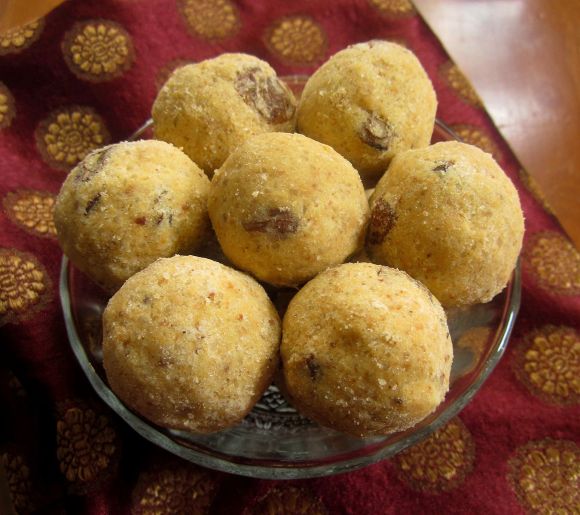
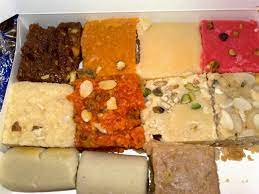
A jalebi, with a name as eccentric as its appearance, is made by a halwai (or a confectionery maker) with skillful etchings of concentric circular shapes of a paste of flour in hot bubbling ghee like a discerning painter with a brush. Oil simmers in unison with Lata Mangeshkar’s filmi voice, price bargaining, and noisy traffic — a distinctly South Asian symphony. The jalebi becomes fully congealed, eventually submerged in syrup and infused with its sweetened spirit. This delicate confection is then put in a basket on the side of a narrow street or in the midst of a chaotic bazaar, appearing as a platter of petite suns, seducing the occasional child like a syrupy siren. There are other mithai or sweets among it — barfis, ladoos, gulab jamun and more besan (gram flour) progenies. But the jalebi, like me, is markedly different from the rest. While it may be quite odd to describe oneself as a confection, I have inevitably come to the realization that I am, quite indubitably, a jalebi.

I am a jalebi not because I am saccharine, nor because of my lingering unpalatable aftertaste, but rather, because I am different, with my intricately eccentric swirls and peculiar oddities — a disorderly collection of twists that spiral infinitely into oblivion. I remain a vibrant enigma that is overtly incongruous, out of place in the world around me, a spectacle that can’t quite be made sense of. Seeing myself as a jalebi seemed the only way to make sense of the various oddities I have exhibited from a young age. It finally offered an explanation for my differences which seemed to have no tangible cause or explicable origin. And while it was a peculiar explanation, it was an explanation nonetheless, one that temporarily ended a search for an answer and brought with it a certain equanimity. Although I may not be appealing in the way a jalebi is, I am indeed the confection — a twisted, swirly, and overly orange one.

It was self-evident from a young age that I was not like most others. It was this feeling of being different that later blossomed into a profound estrangement. Most people are products of their environment and are thus well adapted to their surroundings. However, I seem to be the product of some other, indefinable forces. I feel irrelevant, always having the urge to be somewhere else, where others are more similar to me in a place that would make me feel a little more relevant. I am under the impression that I was born into the wrong life, in the wrong circumstances or context, the subject of a divine blunder and ridiculed by probability. I should be this rather than that. There rather than here. I am frustrated by the immutability of it all, the permanence of the things you are born into — religion, culture, language, and time. While it may seem futile to be frustrated by such things, they didn’t seem to fit in with who I was.

Inevitably, I remain pierced by loneliness. It is a paradoxical loneliness, not one due to physical isolation, but one borne out of my ability to see the world differently than most and my inability to see the world conventionally. One of the most distressing things that I felt knew, or at least believed I knew, that there were others like me, but just that they weren’t where I was, as if they were deliberately staying hidden away from me. While I have had some relationships before, most lack the intimacy and closeness that comes with genuine friendship. Compared to others, my idiosyncrasies and differences seemed magnified to a microscopic level, making me feel that there was something wrong with me clinically. This estrangement created an opaque silence within me, when I could no longer make sense of what was happening around me. I felt completely different, the discomfort and incongruity in the air around me, almost seemingly tangible and graspable, as thick and viscous as sea water. It is this certain “off” feeling, a discomfort, a malaise of some sort, a feeling of deep irrelevance, that I often felt.

My condition seems to be mirrored by the big jalebi in the sky, the Sun, the suraj, who like me, exhibits much jalebi-ness. The Sun’s interstellar solitude reminds me of my own alienation. It is the only star of its kind in the solar system; the next nearest star is 4.25 light years (24.9 trillion miles) away. And quite significantly, both of us are seemingly encumbered by the weight of the universe.

While I may seem outwardly peaceful because of my superficial reticence, I actually remain quiet because of the turmoil within me. I am pensive while my thoughts attempt to make sense of the confusing world around me. My mind is a spiraling jalebi that tightens and tightens, swirls and swirls, twirls and twirls into neurotic rumination. I often feel disordered, like a faulty machine. I am anxious and apprehensive about some things, fastidious about minor aberrations, and often despondent.

Some days, everything seems to be tinged in a certain sadness. A certain understood, yet unspoken hopeless injustice. My melancholy springs from a fusillade of realisations about the world.  Being exposed to the world’s harshness and its lack of hope and reason, my reality seems to have a propensity, an innate tendency, to be brutal. I anachronistically experienced the Romantic ennui that French teenagers felt in the 19th century, trying to find meaning in our capitalistic, success driven world. Like Nick Carraway from The Great Gatsby, “I was within and without, simultaneously enchanted and repelled by the inexhaustible variety of life.” I am a ghost of sorts, a specter of vicarious and passive living. But beyond my nihilism, I am disturbed by the unfathomability of concepts that govern our universe: the concept of time, the size of the universe, death, the sun’s brightness, human consciousness. But as a single living organism, the universe has no obligation to make sense to me and holds no obligation of any other kind.

I am also a jalebi because of my South Asian background. Even though I have grown up thousands of miles away from India, it infuses itself into my life, an  every day, colouring of a distinct shade of Indianness. It is in the food I swallow. The thoughts I think. The genes that materialize my body. Yet, there is a disconnect to “my homeland” not only due to the seemingly interminable physical distance, but because I have spent my entire life in the West. As such, I perceive India and the world through a unique lens. I see it as a Westerner, yet also as an Indian, making sense of the world through a complicated, paradoxical mosaics. 

The boundaries of a culture are always delineated by an “us” and “them”. But I struggle to define the “us” and the “them”. In India, the borders between ethnic, linguistic, and religious identity all simultaneously converge and diverge. In the modern post-colonial era with the ancient civilization partitioned and shattered, the definition of Indian is constantly questioned and changing. As technically a minority in India’s extremely diverse cultural landscape, I feel like a decimal point, a fraction not a whole, in a country with over a billion people. And in the US, I am not just American, but an Indian American — another “doctor” trying to uphold the coveted model minority status.

I have long felt like an outsider, a conspicuous jalebi, in both places, perpetually stateless and displaced, like a refugee devoid of a nationality. As I don’t know what to think of my culture, I don’t know what to think of myself. There is no dictionary that contains my name as a word entry. No particular space to define me or explain who I am. It is absent. Unwritten. Blank. And so, in an attempt to define the indefinable, I define myself as a jalebi.

Rather than ponder upon my loneliness, I muse on the big jalebi in the sky, my constant companion. I try to find the sun in other things. The suraj meets me. Sometimes in the grass. In a busy city. Or near the ocean. On a windy day. Or on a walk. In my mind. In my dreams. Wherever really — sometimes among the surajmukhis (sunflowers)thatsprout out of the ground, with the grimming expression of the sun. The suraj is in the juicy, citrus fruits hanging off verdant trees. And of course, the sun is in every jalebi. I realize that because of the sun, all colours exist. Because of the sun, I am able to see. And while the sun does illuminate a brutal world, there are some things that my eyes can find worth looking at. I try not to think of the sadness that everything is tinged with, but rather the colours of our world. People wear sunglasses to dim the radiance of the sun, but I fully embrace its blinding light — I find solace in the sol. I sit there, a petite sun myself in the light of a large sun, wistfully wondering.   

And while I may feel quite alone right now, I think that other jalebis in other places are waiting for me. Somewhere on this spinning planet. Under the radiance of the big jalebi in the sky. Somewhere in this jalebi-shaped galaxy.

.

Arjan Batth is a student from California. He has recently written a children’s book, ‘Dear Humans’, that tackles the issue of climate change. As a young South Asian-American, he is determined to represent Asians more in the writing field and has a passion for writing and literature. He can be reached at arjanbatth@gmail.com

.

PLEASE NOTE: ARTICLES CAN ONLY BE REPRODUCED IN OTHER SITES WITH DUE ACKNOWLEDGEMENT TO BORDERLESS JOURNAL

Categories
Musings

Notes from Singapore: Ordinary inspirations

By Ranjani Rao

“Walking is a pastime rather than an avocation.” Rebecca Solnit

In the weeks since social distancing measures were imposed and circuit breaker measures implemented in Singapore, despite having more time on my hands, my writing output has decreased. Have I been afflicted by the dreaded writer’s block?

By working from home, I save almost two hours of commute time every day. Instead of writing more, I find myself in a slump. Is my well of inspiration drying up?

Topics to write (mostly Covid-19 related) still buzz around in my head but I am surprised to discover just how much I depended on the world outside my home to stimulate not just my senses, but also to rouse my muse.

Unexpected encounters on the train, surprising conversations with colleagues at work, casual lunches with friends, all served as triggers for ideas, inspirations, and epiphanies. Without these avenues to spur creativity, I fret about wasting these precious extra hours that have landed into my packed schedule like a much-needed gift.

All that is left of my pre-pandemic life is the ability to step out of my home for a walk, as long as I wear a mask, walk alone, and avoid crowding. Not a bad idea, since walking is my favorite ‘sport’.

Walking has been my savior for as long as I can remember. Walking has rescued me, given me a respite from life, and a reason to continue with it. It has served as an exercise to maintain physical health, a mindful pause to collect myself emotionally, and as a conduit to receive guidance in turbulent times.

The wonder years

As lanky teenage girls, my friend and I walked hand in hand, two pairs of braids swinging around our shoulders, wearing similar if not identical clothes through busy Bombay streets. Some evenings we walked to the temple, on others we did some errands, or stopped for spicy street food when we had money.

Traffic fumes engulfed us as we navigated streets crowded with vendors pushing cartloads of bananas, people queuing up at bus stops, and beggars lining the pavements. We talked as we walked, trying to make sense of growing up, and understand the world of adults while we contemplated our future. We didn’t know then that she would get married young but remain childless, a lingering regret that she is yet to come to terms with. Neither could we have predicted the marital troubles that would plague me for several years before I took action.

Working mother

As a young working woman, I resumed walking in California during my lunch hour. Stuck in a laboratory all day, mothering a baby in the evenings, and catching up on housework on weekends left few options for exercise. I strolled around the one-mile periphery of the triangular campus in the mild sunshine. A gentle breeze blew around my face as I walked in my comfy Easy Spirit pumps, taking in the pleasant greenery of the beautiful site. Walking helped my body lose some of the pregnancy weight and enabled me to make peace with my decision to be a working mother without letting debilitating mommy guilt weigh me down.

It was an era before cell phones became appendages. Getting away from your desk meant truly stepping away from co-workers, computers, and chores. I made a new friend one afternoon, a young woman who had arrived from China. She seemed excited but bewildered by the world around her. Her lack of fluency in English was no barrier to our connection. We spoke about important things, matters that were hard to articulate to others but easier to say aloud to a relative stranger albeit one you met regularly.

An unexpected life trajectory

The terrace of the duplex house in Hyderabad that I moved into when my child was eight served as my walking track for several years. The large L-shaped structure overlooked a frangipani tree in the front yard. Although too big for just the two of us, the spacious house with a private gate shielded me from inquisitive neighbors and well-intentioned strangers curious about my life.

The moon would hang low on some nights, yellow and heavy with promises of better days. On dark moonless nights that reflected my somber mood, I wondered about the string of circumstances that had now made me a single parent. Managing a full-time job and holding complete responsibility for a growing child were clearly not compatible. Nightly walks along the edges of the small terrace gave me clarity and confidence that I could leave my job and still maintain financial independence. It would mean reconfiguring the career path I had planned, but in the long run, it would enable me to create a more balanced work life.

Lockdown blues

These days, instead of a nightly walk after dinner, I sometimes take another one after lunch, especially if the sky is overcast, or if it has just rained. The gently sloping street is lined with condos, many among them bearing some variation of the word ‘hill’ in its name. Not surprising, since I have a clear view of Bukit Timah Nature Reserve from my balcony. 

Each condo has a personality that is not as evident at night. Used to the seasonal lights that adorn the entryways, each condo trying to outdo the other for every major festival, I now observe subtle differences that I had not previously noticed.

One has an impressive two-level waterfall at the entrance that pours into a pool where koi fish and small turtles swim. A newly-constructed condo has terraced spaces in its outer walls where flowering plants bloom. From the opposite side of the road, they look like tulips, reminding me of a missed opportunity for a trip to Keukenhof, Netherlands for the spring tulip season.

The cemented court, a short distance from the community center that served as a gathering point for the gardening club as well as the tai chi class, is taped off. A lone collared kingfisher sits atop a light pole. Mynas chirp loudly and assemble on a small flowering tree and gobble all the seeds that are yet to flower before rushing off to their next halt.

Joys of walking

As we navigate these unprecedented days of the pandemic, I am grateful that I have the freedom to walk. Much more than mere exercise, walking is my moving meditation. Now walking is my catalyst for creativity. 

Through walking, I have once again learnt to zoom in on the things closest to me, the ones with the most significance. I am hyper-aware that time, like breath, simply slips away if we don’t give it our attention.

Even though the days seem interminable, sooner or later, life will return to normal. Before that happens, I want to make sure I observe and imprint the beauty of these ordinary days, and savor the pleasure found in simple activities like walking,

In the words of John Burroughs –

“I still find each day too short for all the thoughts I want to think, all the walks I want to take, all the books I want to read, and all the friends I want to see.”

.

.

Ranjani Rao, a scientist by training, writer by avocation, originally from Mumbai, and former resident of USA, now lives in Singapore with her family. She is co-founder of Story Artisan Press and her books are available on Amazon. She is presently working on a memoir.  Check out her writing at her website www.ranjanirao.com and receive a free ebook. Connect with her at Medium | Twitter | Facebook | Blog

Categories
Poetry

To Do list & Morna

To-do List:

Today I will fall out of love with you.

I’ll sweep out the motes of dust
that clung to your feet. 
Each speck a single story, 
of your worldly being. 
 
I’ll climb ladders for the distant corners, 
to clear out limp cobwebs of words, 
whispered and strung in secret —
prose patterns of our desire. 

I’ll pick out tea leaves caught in the sieve,
filtering out sweet and twilit memories. 
A steel scrubber for the grimy pits of pots, 
dredging out the darkness of difficult days. 

I’ll dig out from under my nails, 
the memory of your skin. 
Make sure to clean behind my ears,
the salt of your lips.

I’ll iron out the creases of your smile, 
and allow my heart to ache for a while. 
Stretch out my fingers in vain,
and tremble for your touch. 

I’ll cap love off with a shot of whiskey.
A quick fix for the spirit.
A cinder for my belly.
A reminder to never quit it. 
MORNA
The Cape Verdeans call it their national music
A balm for the dis-ease of seafaring journeys.
Destined as they are, these archipelagic folk,
to grow roots in stormy waters.

The lips of waves carry these drawn out sighs,
a thousand and more exhalations.
The ocean laps up these lamentations.
Swayed as she is by their mournful preoccupations.

It is this suadade that breaks upon our calloused feet,
tempting us to wade and wallow deep.
And we dive in —
hungry as we are for borrowed emotion.

By Himani Sood

Himani Sood is a middle-school Humanities teacher currently residing in Mumbai, India. From a young age, Himani has found cathartic relief in writing in a myriad of forms, ranging to the more austere conventions of academic papers (which, she wishes to add, she happily disobeyed) to a number of comedic school productions. These poems mark a return to an art form she long-neglected — it is an attempt to connect with a long-stifled inner voice. 

Categories
Essay

COVID-19: Governance And Scientific Temper In India

By K.P. Fabian

The media, the Indian as well as the international, have  covered the continuing plight of the inter-state migrants resulting from the nation-wide lock-down announced with a calculated abruptness, not uncharacteristic of the Government of India (GOI) judging from the disastrous demonetization and the hurried and thoughtless implementation of GST.

Yet, none in the media has given a proper explanation for the failure of the GOI to anticipate the plight of the millions of inter-state migrants. It has been pointed out that these poor citizens come to the attention of the government only when there is an election. However, there is another explanation which the mainstream media, more or less intimidated by the establishment, do not dare to say: Any such major decision should have been taken based on a cabinet paper as the Rules of Business of GOI mandate. Such a cabinet paper  would have been prepared by the relevant Department/Ministry and submitted by its Secretary to the Cabinet Secretary who would have circulated it to the departments concerned, and even consulted with the states, as they have to implement the decision. That paper would have argued the pros and cons, listed out the actions to be taken before the announcement, and thereafter. It would have listed the anticipable problems such as the plight of inter-state migrants, the supply chain management and more. It certainly would not have recommended an announcement at 8P.M. to be effective at midnight.

Therefore, we conclude that the lock-down decision is not an instance of good governance. The lock-down was necessary. But in government even a good and necessary decision has to be taken and implemented  in the right way. Government procedures are there for a reason. Unless there are extenuating circumstances, the procedure should be respected.

The Finance Minister said that she barely got 36 hours to come out with a financial package. Looking at the half-baked package, her complaint is legitimate.

Let us now look at the strategy of GOI to address the Covid-19 pandemic. The sad truth is that there was no strategy because no attention was paid to the looming disaster though we have a National Disaster Management Act enacted in 2005. On 30th January 2020 the first case in India was detected in the State of Kerala. The patient had returned from Wuhan where she was a student. By 3rd February, two more students who had returned from Wuhan tested positive.

Let us look at the response of the Government of Kerala (GOK) and GOI.  Five days before the first case, the State Health Minister K.K. Shailaja, set up a high-level committee. On 4th February, GOK declared a ‘state disaster’.

The GOI did not take note of what was happening in Kerala. Is there a system of a state government sending an urgent report on such matters to the GOI? Whether it is there or not, the media covered the cases in Kerala, and nothing should have prevented the GOI from asking for an urgent report. Whether such a report was asked for or not, sent or not, the Union Ministry of Health issued an advisory on travel to China only on 17th January. It said that Indians going to China should take care in view of the contagion. On 25th January, a second advisory said that travel to China should be for ‘essential’ purposes only. There was no advisory in February. The third advisory was on 5th March, advising against travel to China.

Question: Why was there such delay? Our Embassy in China would have reported about the raging contagion. Taiwan took prompt action by medically screening arriving passengers from Wuhan, initially informally, and formally after China informed the W.H.O. of the contagion on 31st December.  What is even more important is that Taiwan started making testing kits as a precaution. Surely, our trade office in Taiwan would have reported all this.  By 20th January, the W.H.O.  published the action under way in Thailand, Japan, and South Korea. Our missions in the three countries would have reported on all this.  Our Permanent Mission in Geneva would have reported on all this though the web site of the organization was giving the information.

We conclude that the GOI was not alert.  President Trump and P.M. had a five-hour long session on 25th February. Trump had disallowed flights from China in early February. Did they discuss this contagion?

A related question: Why did Trump come at all, if he had made up his mind to indefinitely postpone a trade deal? Was the sole purpose to get an over-choreographed reception in Ahmedabad to a large gathering who might not have understood what he said as there was no interpretation? What was the raison d’etre of this Wagneraian opera at some cost to the people of India? To show GOI’s support for the candidate Trump? If so, is it wise to pick a side in the election in another country? Good diplomacy advises against such action.

Another instance of the deficit of good governance is that the resourceful military has not been mobilized to assist with the supply chain and the manufacturing of testing kits, PPE (Personal Protection Equipment) and much more.

There is a basic confusion in the mind of the GOI. Lock-down is required only to the extent it produces the conditions necessary for social distancing. Lock-down per se is not desirable.  The imaginary cabinet paper would have had three lists of economic activities:

1) Activities compatible with social distancing with minor modifications.

2) Activities that need more modification to be made compatible with social distancing.

3) Activities not compatible with social distancing.

Talks with the sectors of the economy and its representative bodies would have started on day one of the lock-down if not prior to it.  We see that the corporate sector is finding it difficult to accommodate the workers inside the plant or even to arrange for their transport. Democracy implies dialogue between the government and the rest of the society the initiative for which should be taken by the former. India has an excellent, or potentially excellent bureaucracy and sadly it has not contributed as much as it can into decision-making and implementation. Why is it so?

Above all, we need a scientific temper to successfully deal with such crises. Such temper seems to be absent among a section of the Delhi elite as seen from a WhatsApp message that went around:

The candle flames have temperatures in the range of 400° to 500° Celsius. When so so so many candles will light for 9 minutes, imagine the impact on the environment and the heat so generated will decimate the virus. Why 9 mins, 9 P M and 5th Apr (5+4)?9 in the numerology is an adamant digit, which cannot be destroyed.

It was Jawaharlal Nehru who coined the phrase ‘ the scientific temper’ that he defined in 1946 in The Discovery of India as follows:

“What is needed] is the scientific approach, the adventurous and yet critical temper of science, the search for truth and new knowledge, the refusal to accept anything without testing and trial, the capacity to change previous conclusions in the face of new evidence, the reliance on observed fact and not on pre-conceived theory, the hard discipline of the mind—all this is necessary, not merely for the application of science but for life itself and the solution of its many problems.”

It will be most useful if the P.M. in one of his addresses to the nation draws attention to article 51 of the Constitution which requires the citizens to cultivate such a temper.

This is not the time to find fault for the sake of finding fault. But unity of action in a democracy comes only when the government is self-confident enough to listen to criticism and benefit therefrom.

Let us work unitedly under the leadership of the P.M and C.M.s. India is too large a country to be micro-governed from the capital.

K.P Fabian is a former Ambassador

This article was first published in Countercurrents.org