By Prithvijeet Sinha
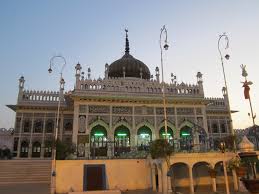
A land known and globally recognised for its mannerisms, poetry and an old-world graciousness that never seem to be at odds with the churning that defines our supercilious modern lives, Lucknow is exuberant and mildly attuned to the speed of hurtling motions. Amidst its chaotic hustle of life, the Chota Imambara is like a syncretic island of serenity in the tumult that thrives around it.
Built by Mohammad Ali Shah[1] around 1838 as a religious congregation site, it is both a mausoleum and a monument. This spirited inter-dependence often springs forth from Lucknow’s erstwhile Nawabi realm as in the Chota Imambara. But above all, it offers a tranquility that verges on the sublime, in no small part because of its architecture. A mere five minute walk from the inimitable Bara Imambara, it is adorned with Quranic verses in impeccable calligraphy on its outer walls. Sunlight beams through its surface against the silvery backdrop like a revelation to the senses; the eyes trained to its humble beauty are no less transfixed by it than the other sites on its way, the historic expanse of the Hussainabad corridor converging in this final corner. The historic Hussainabad corridor is the crown of Lucknow as it’s suffused with natural beauty that is visible and transcendent. The cobble stone roads, erstwhile havelis (mansions), gateways, a picture gallery, the iconic Clock tower and bridges with characteristic craftsmanship, Teele Wali Masjid (the iconic mosque on a hill) and ancient temples invite instant awe, a continuum for those who dwell within the city to avidly become guides for the uninitiated.
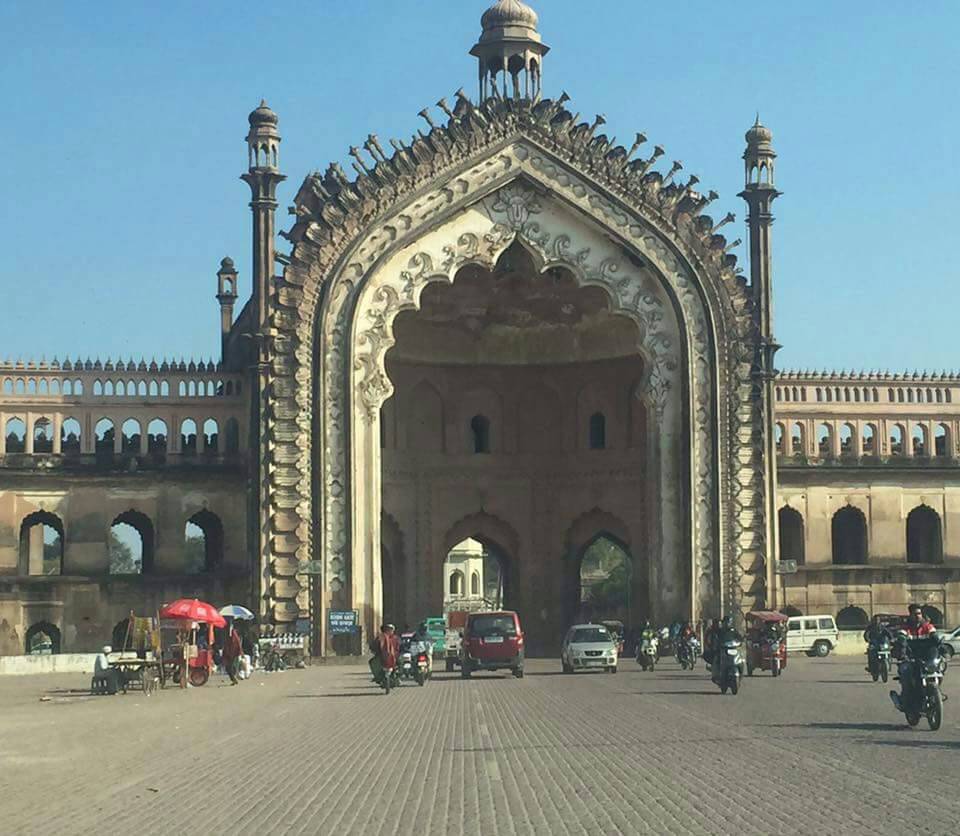
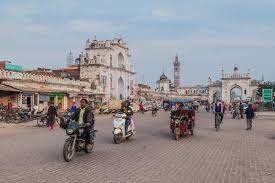
When you look at this mausoleum in the afternoon shaded by the sun, the turrets and intricate design of its gateway welcome you first as if receiving a weary traveller, offering him reprieve from the heat and the crowds that have preceded his journey to the Bara Imambara and Rumi Gate, the legendary doorway that is a sight for sore eyes. There’s a beauty to the colour of the Chota Imambara’s gateway, the golden anemometer(a geographical instrument used to indicate the wind’s direction) in the shape of the fish and an Anglicised statue in the middle of this compound that’s startling and comforting. Then there are the pond and the fountains further ahead. Something about the water, especially shimmering during hot summer days, already prepares one for the holy glint there is in the entire structure or in the Taj Mahal styled miniatures on both sides, one of which bears Muhammad Ali Shah’s beloved daughter Asiya Begum’s tomb. The symmetry of the place hence doesn’t overwhelm but is subdued in subtle colours and muted moods of light and shadows.
*
It’s the inner part of the Imambara that is a burst of red, green, yellow, blue and white, their variations dazzling and sensuous on account of the distinctive placement of Belgian chandeliers and tazias (religious processional items of great significance especially during Muharram). Both attest to a paradox- of luxury and faith coalescing. Both come draped in these bold colour schemes that delight the onlooker who soon beholds them. There’s also a throne and mirrors in this hall — indicating a rich past and illusions of grandeur that have now become mists, the air filled with memories yet redolent of individual stakes.
*
In essence, the Chhota Imambara maintains its privacy at the further end of Lucknow and when looking at its almost moon-like silver glow, the promise of Sham-e- Awadh ( fabled evenings of the city) gets more romanticised. These evenings where food, cultural activities, long walks and conversations with animated strangers and friends alike take centre stage diffuse its historic community where boundaries of faith and personal beliefs blur into a beautiful embroidered fabric.
The Chhota Imambara’s peculiarity is that despite so many elements to its structure including a hamam (bath) in the outer realm, there’s a simplicity to it all. Nothing screams out for attention. Each aspect invites individual perspectives shorn of tacky symbolism or a mishmash of styles. Every colour, every inch ultimately soothes.
It’s all about the aesthetics of grace and charm which is particularly unique to Lucknow. At the end of the day, there’s no humungous historical backstory behind Chhota Imambara or a grave precedent to its place in the Awadhi pantheon, Awadhi relating to both the region within which Lucknow stands and which it shapes ceaselessly into joyful forms. But it has always been here, rescuing itself from elusive murmurs and forgetfulness daily. Yet never adhering to overexposure. That is its greatest gift to the city and its loyal custodians.
Every visitor is a beholder here and his spirit becomes as free and unburdened like the pigeons finding home in this structure’s spires and dome, a picture of harmony.
[1] Nasser-ud-daula Mu’in ad-Din Muhammad Ali Shah(1774 –1842), was the ruler of Awadh, the former name of Lucknow.
Prithvijeet Sinha is an MPhil from the University of Lucknow, having launched his prolific writing career by self-publishing on the worldwide community Wattpad since 2015 and on his WordPress blog An Awadh Boy’s Panorama. Besides that, his works have been published in several journals and anthologies.
PLEASE NOTE: ARTICLES CAN ONLY BE REPRODUCED IN OTHER SITES WITH DUE ACKNOWLEDGEMENT TO BORDERLESS JOURNAL
Click here to access the Borderless anthology, Monalisa No Longer Smiles
Click here to access Monalisa No Longer Smiles on Kindle Amazon International
 Borderless