By Amir Zadnemat
The scent of ozone and damp earth, the particular weight of afternoon light filtering through old venetian blinds—these small phenomena often announce memory long before language does. A man sits in a borrowed room, tracing with his thumb the grain of a worn wooden desk. He is not summoning a triumphant episode from his past; he is grasping at a faint, persistent echo: his grandfather’s rough hands, smelling of linseed oil, guiding him to adjust the focus on a heavy, obsolete microscope. This tactile ghost, a pressure without a narrative, is memory in its most primordial register—somatic, unspoken, resistant to articulation. Yet across the same room sits a framed, slightly faded photograph of a military regiment from a war the man never witnessed. If the desk grain belongs to the biology of remembrance, the photograph belongs to its cultural architecture. The former is of the body; the latter is of the nation.
Between these two points—molecular trace and cultural inscription—memory unfolds as a dual phenomenon. One register writes itself into the nervous system or even into the regulatory architecture of DNA; the other composes itself through stories, monuments, rituals, and shared forms of collective identity. Human remembering, therefore, is never a single mechanism. It is a negotiation between biological predisposition and symbolic world‑making. While Maurice Halbwachs argued that memory exists only within social frameworks—familial, religious, national—the new sciences of epigenetics complicate this picture by suggesting that experience may inscribe itself directly onto the genome, altering stress responses and emotional baselines (Halbwachs 1994). Jan Assmann placed cultural memory within the realm of external media—texts, rituals, archives—through which civilizations secure continuity. But what if continuity also occurs beneath culture, silently, in the biological preconditions of feeling, reactivity, and vulnerability?
The humanities have traditionally claimed memory as their domain. For scholars of culture, memory is built, curated, stabilized, even dramatised. The frameworks of collective identity depend on ritual performances, anniversaries, museums, and the symbolic politics of commemoration. Pierre Nora’s notion of lieux de mémoire—sites of memory—emphasises the necessity of external anchors when living memory fades (Nora 1989, 18). Paul Connerton underscores how societies remember through bodily habits: the manner of sitting, mourning, greeting, celebrating (Connerton 1989). Paul Ricoeur goes even further, proposing that identity itself is narrative; one becomes a self through the stories one tells and those narrated about the person (Ricoeur 2004). In this tradition, memory is a fundamentally symbolic undertaking. It requires a community, a language, a form.
Yet parallel to this symbolic tradition runs a different kind of memory science—one that refuses narrative and instead concerns itself with molecular inscription. Michael Meaney’s research on maternal care in rats revolutionised the field by showing how early‑life nurturing modulates the expression of genes associated with stress regulation (Meaney 2001). In Meaney’s experiments, pups that received high levels of licking and grooming developed healthier stress responses as adults due to reduced DNA methylation at specific sites in the hippocampus. This was not metaphorical memory but biological history. Szyf (2007) argues that the epigenome serves as an interface between the dynamic environment and the inherited static genome, responsive to chemicals and social behaviors like maternal care, shaping phenotypic diversity and disease susceptibility. Under certain extreme conditions—famine, war, prolonged deprivation—some studies even suggest intergenerational effects, whereby descendants inherit altered physiological responses shaped by ancestral trauma (Zhang and Meaney 2010).
Here arises a philosophical friction: cultural memory is fluid, socially negotiated, and open to reinterpretation; biological memory is involuntary, material, and often silent. If one is authored by discourse, the other is authored by experience itself. If one requires narration, the other bypasses language entirely. And yet, human memory—actual lived memory—always seems to emerge in the space between these two registers.
Bruno Latour would likely say this duality is not a conflict but an illusion. Modernity, he argues, falsely separated nature and culture into distinct domains (Latour 1993). Epigenetic memory and cultural memory demonstrate that the separation was never real to begin with. Biological predispositions shape how cultural narratives are received, processed, and embodied. Cultural narratives, in turn, modulate biological baselines—stress responses, temperament, even the perceived meaning of vulnerability. The subject is always hybrid: part symbolic construct, part molecular history.
Tim Ingold’s idea that human beings do not “store” memory but rather live along unfolding lines—lines of descent, perception, and movement—allows a different perspective (Ingold 2007). In this view, memory is neither an archive nor a code but an ongoing negotiation between the environment and the self. Early experiences lay down tendencies, grooves, or vulnerabilities, while cultural forms offer scripts, languages, and interpretive structures. The resulting life is neither determined biologically nor invented culturally; it is braided, entwined, perpetually unfolding.
Consider inherited trauma—a conceptual laboratory for observing this entanglement. A child of survivors may inherit an altered cortisol response, a nervous system calibrated toward vigilance. That same child is simultaneously raised within a narrative tradition of survival, persecution, resilience, or victimhood. The cultural story does not cause the biological predisposition, and the biological predisposition does not dictate the cultural story. Rather, each shapes how the other is lived. The narrative frames the physiological feeling; the physiology lends weight and urgency to the narrative. Memory occurs where the body trembles at the threshold of meaning.
Even the politics of memory shifts when viewed through this dual lens. Nikolas Rose’s “politics of life itself” points to how biological knowledge—molecular, epigenetic, neurochemical—reshapes governance and identity (Rose 2007). Cultural memory stabilises collective meaning, while biological memory renders life legible in new ways: as risk profiles, predispositions, susceptibilities. One is mobilised for identity, the other for prediction.
What emerges from these entanglements is a model of memory as dual‑register: one symbolic, one material. The symbolic register is flexible, contextual, and discursive. It legitimises, interprets, and projects meaning. The material register affects moods, is pre-linguistic, and enduring. It inscribes, tunes, and predisposes. The two registers do not mirror each other; they modulate each other. Without the symbolic, the material remains mute. Without the material, the symbolic remains disembodied.
Human memory exists in the shimmer between the registers. It is neither pure biology nor pure discourse; it is the embodied narrative of a life being lived in time. The man at the desk, staring at the old regiment photograph, is not merely recalling. His body, shaped by ancestral stress and nurtured by familial narratives, meets an artifact shaped by national history. His interpretation of the photograph is guided by cultural frameworks, but the emotional charge with which he confronts it may come from deeper, older inscriptions—those written, silently, in the folds of his biology.
To remember, then, is to stand at the crossroads of matter and meaning. It is to inherit stories and methylation patterns, monuments and cortisol rhythms, photographs and tremors. It is to live as a site where culture meets biology, where the past becomes present through both symbol and cell. Memory is not a story we tell, nor a gene we carry, but the meeting point where the body’s predispositions encounter the world’s demands for meaning. In that meeting—fleeting, trembling, always becoming—the human appears.
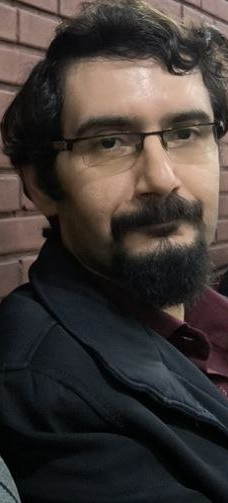
Amir Zadnemat is an Iranian writer and essayist with a master’s degree in literature from the University of Guilan. His work focuses on modern literature, cinema, and cultural criticism.
PLEASE NOTE: ARTICLES CAN ONLY BE REPRODUCED IN OTHER SITES WITH DUE ACKNOWLEDGEMENT TO BORDERLESS JOURNAL
Bibliography
Assmann, Jan. 2011. Cultural Memory and Early Civilization: Writing, Remembrance, and Political Imagination. Cambridge: Cambridge University Press.
Connerton, Paul. 1989. How Societies Remember. Cambridge: Cambridge University Press.
Halbwachs, Maurice. 1994. On Collective Memory. Edited and translated by Lewis A. Coser. Chicago: University of Chicago Press.
Ingold, Tim. 2007. Lines: A Brief History. London: Routledge.
Latour, Bruno. 1993. We Have Never Been Modern. Cambridge, MA: Harvard University Press.
Meaney, Michael J. 2001. “Maternal Care, Gene Expression, and the Transmission of Individual Differences in Stress Reactivity across Generations.” Annual Review of Neuroscience 24 (1): 1161–92.
Nora, Pierre. 1989. “Between Memory and History: Les Lieux de Mémoire.” Representations 26 (Spring): 7–24.
Ricoeur, Paul. 2004. Memory, History, Forgetting. Translated by Kathleen Blamey and David Pellauer. Chicago: University of Chicago Press.
Rose, Nikolas. 2007. The Politics of Life Itself: Biomedicine, Power, and Subjectivity in the Twenty‑First Century. Princeton, NJ: Princeton University Press.
Szyf, Moshe. 2007. The dynamic epigenome and its implications in toxicology. Toxicological Sciences 100, 7–23.
Zhang, Tie-Yuan, and Michael J. Meaney. 2010. “Epigenetics and the Environmental Regulation of the Genome and Its Function.” Annual Review of Psychology 61: 439–66.
.
Click here to access the Borderless anthology, Monalisa No Longer Smiles
Click here to access Monalisa No Longer Smiles on Kindle Amazon International
 Borderless