By Aparajita De
I first encountered the word in a B-grade flick of the same name. Ever since then, the word has struck my fantasy. Serendipity. My birth: serendipitously born after a son’s birth and death; coincidentally, even if a consolation prize, I am a cisgender[1] female. A girl child! What a joke. A substitute, but a girl version. I have often laughed, perhaps, loudly in my head at the joke that serendipitously played on my mother’s body. At the same time, another part of me wondered if that birth was serendipitous or the result of a deliberate quest that emerged from the nebulous grief of my mother. Was I a loss, a replenishment, or just serendipitous—just there? That is a conversation I have chosen not to have with the person who holds the secret of my birth. My birth mother. Some things are best left serendipitous.
Then came the best part of being in places I was never supposed to be found in. In family lore, always the darker-skinned, the book bug, the quieter child, who lacked the tall gait and the elegance of looks that one associates with class-caste. I was never that child. The second best and the serendipitous.
At best. I looked like my paternal grandmother; her broad forehead, dusky complexion, laborious quiet life, and ever-brooding absence in our growing up sealed her in my memory—a shadow without form. The faded yellow print of her pictures rotting in the corner frame above the walls in the rooms of my childhood held her in a stony gaze, looking over us. I looked like her, everyone said. Every mirror time, I tried to notice the resemblance and failed. Serendipitous. And so, I heard that she had died cooking for a family of 14 during the 1950s, in the heat and the labours of the kitchen and the birthing and rearing of children; she had gone just like that. Unnoticed. Serendipitously. At that reckoning, I had no idea what she might have thought of her life or its worth or if those thoughts were relevant and meaningful.
Yet, I looked like her, and by some strange rationale, I felt that I might start and end like her, except that I had to blot out that fatal certainty of her being absent. Her life’s work remained unmentionable, making her especially precarious and serendipitous among us siblings. But I had to do the erasing without any radical shifts. A bloodless coup over destiny. To live looking like her and yet living, unlike any of her days. It was as if my war with serendipity would have to be conducted serendipitously. Unseen. It was behind the covers of the book I was authoring—my life. Or so I felt at the time.
Our resemblances in looks took me to places far away in the books I preyed on. Sometimes, she became Bertha Mason[2], hovering over me, around me, hunting me down to consume my Self; some other times, I thought of the chances I could explore to blot her out and start owning me. I also wondered, somewhat fantastically, about who’d witness our meeting, our two entities fusing in a symphony unheard of. Sometimes, her emergence and eclipsing me seemed possible since I was not supposed to own any articulative space. At all. I was to gradually become the lady in the photo who was my father’s mother. I looked like her. And as my looks distanced me from my mother, I had to stay aloof, forever stuck in the picture, when the individual, my grandmother, was never a real presence in our lives growing up. She was gone before my parents were married. Gone before the serendipitous connection between the daughter of her sixth child could be made, and what would decide my fantasy with her.
Early on, like a gothic heroine coming to claim her rightful place after her travails were written by other men who decided for her, I figured I had to let her go out of that picture and claim space for her while allowing me the freedom where I was not the second best, the substitute child, the replacement, the accidental error. But the person who mattered. My paternal grandmother had not counted, and I did not either. But somehow, she had to come out of the picture so I could. Too. In my adolescence, there was this constant war against the serendipity of the accident of my birth, and it was shaping me from unnoticeable presences that shaped my sense of self at the time. A continual tug of war with the self.
In picture after picture, after adolescent year after year, the resemblances kept piling up. Anyone meeting me from my mother’s side noticed how I did not quite look like anyone they knew on their side. The voices noticing that I did look like someone long since passed crept up, ambushing me serendipitously. “You look just like her. Her forehead and complexion look just like hers.” I was aghast. What did she sound like? Are there stories I could find about her? Things she liked? Books she may have read? Stories of her girlhood she may have shared? Anything that took me back in time and let me feel her for real, like the person I looked like, but had never seen or felt a presence of. How can I think of her and me in me simultaneously? My thakurma[3] haunted me. And so did the fact that her granddaughter from her sixth child, whom she could not have foreseen, would become obsessed with her. She haunted me with her absence.
The lost child, the one lost in time, haunted my parents in his way. He came to live between us. Every time, a caress on a birthday, a milestone in life, or a decade past, I have been reminded that if he were here, we would be two years apart and that the gathering would only enrich itself if he were here. I was never enough. My decades, milestones, and being me were never enough. Either as the serendipitous birth or the look that outed me every time I stood before the parents or their side of the family, I became more and more distant from the people I came home to. Or I thought I had. While the people in the pictures, a dead person who birthed my father, who birthed me, became more defined in my life, and another dead person, a dead son, replaced me every time I tried being me.
A strange dilemma crept on me over time. The fantasy with the mingling of the pictures had disappeared, just like the stories that I had suddenly grown out of. A maturer self-reflected on the depression that came serendipitously to inhabit the space between my mother and me. My heart rumbled, and my eyes cried at the helplessness of that disorder. Was the boy child ever going to stop haunting my mom? If my thakurma were alive, could she steer my mother back to the present moment where she had her own children? Me? I reflected deeply as I entered my 30s at the time, torn apart by a conflict I could never quite diagnose myself, and a voice I could never hear, yet a presence that kept haunting us.
Both dead voices. Dead people. They were long gone in time. Yet never absent. Serendipitously creeping up on me. Ambushing me every time I peeked out.
[1] A person whose gender identity corresponds with the sex registered for them at birth
[2] Bertha Mason was the first wife (afflicted severely mentally) of Edward Rochester, the hero of Jane Eyre, Charlotte Bronte’s novel published first in 1847.
[3] Paternal grandmother
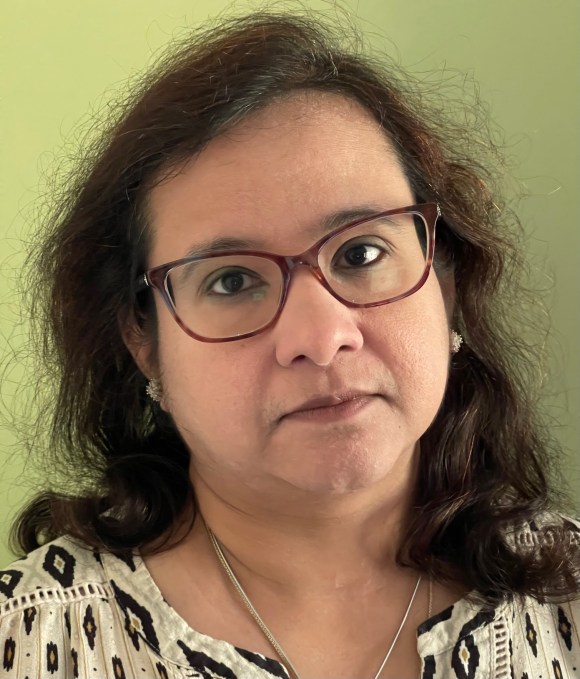
Aparajita De is a mid-career academic, trying her hand at creative writing. this short piece represents her efforts juggling to find a voice between academic writing and more accessible creative writing. Aparajita has been published in venues such as Kitaab.org, Tin LunchBox Minimag, and The Journal of Epxressive Writing. Aparajita also plants, walks, and organises.
PLEASE NOTE: ARTICLES CAN ONLY BE REPRODUCED IN OTHER SITES WITH DUE ACKNOWLEDGEMENT TO BORDERLESS JOURNAL
Click here to access the Borderless anthology, Monalisa No Longer Smiles
Click here to access Monalisa No Longer Smiles on Amazon International
 Borderless