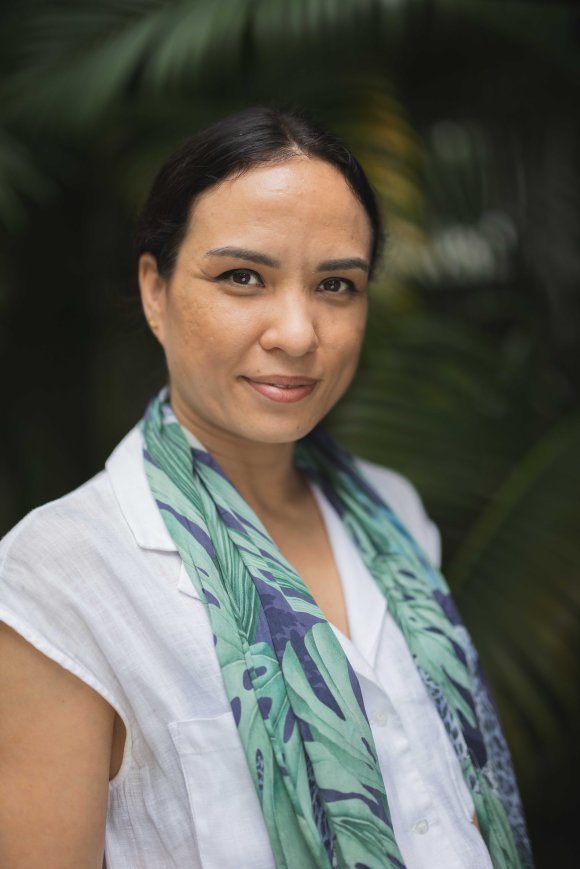
Amy Sawitta Lefevre from Bangkok writes an eyewitness account of the March 28, 2025, earthquake with it’s epicentre in Myanmar.
I had just finished an errand and was about to head home from downtown Bangkok. At the last minute, I decided that I needed lunch. I had barely sat down at a restaurant on the ground floor of a skyscraper when suddenly I felt dizzy, and almost about to black out. It felt as though a magnet were pulling down my head and my body.
Just then someone in the restaurant shouted: “Earthquake!”
Next thing, we were all running out of the building which was swaying. It felt like an apocalypse. The stuff out of Hollywood movies. People were pouring outside, and many started pointing upward at something with horrified eyes. As I turned my eyes in that direction, I was stunned at what I saw: the rooftop pool of the hotel in the skyscraper near us was splashing down like a mountain cataract.

A chill passed through me as I thought: “This building is about to collapse on us!”
Luckily for us, it did not. But we soon learnt that many others had not been so fortunate, as a 7.7 magnitude earthquake had just ripped through Mandalay in Myanmar, with shock waves in parts of Bangkok.
I tried to stand steady but felt as if I was on the deck of a ship on a stormy sea. I thought in a daze about the ferocious power of natural disasters. Incredible how something seemingly so far away could wreak havoc here. I’ve lived in Bangkok for more than a decade and nothing like this had ever happened.
My first thought was for my children. I tried calling the school, but everyone was using their phones, and I couldn’t get through. Eventually I saw a message pop up from the school saying the children had been evacuated. My next thought was to rush home and embrace my children.
I’m a former journalist and now a humanitarian, and I’ve been through many crises in my professional career, but nothing quite prepares you for having to live through a disaster, which for the first time, you realise could impact your own children. And it was a disaster in the sense that Thailand and Myanmar both declared states of emergency.
That day it took me 4-5 hours to walk from downtown Bangkok to my home in the north of Bangkok. The sky train was not working. The traffic on the downtown street was chaotic. My legs just kept moving because all I wanted to do was to get home to my children.
Along the way I met many people whose faces bore the same expression: kind Thai faces, or kind tourist faces, but all of them shell-shocked. Yet, despite everything, people tried to collect themselves in an orderly fashion and helped each other.
I met many angels: one man offered to buy me a cold sugarcane juice seeing the pallor of my blood drained face; a woman gave me her shopping bag to carry my bag as it’s handle had broken when I rushed out of the building.
As I kept walking down streets where the soundtrack was of wailing sirens, the rubber soles of the flimsy leopard print ballet shoes I had slipped on that morning were almost worn out. At one point, I couldn’t continue walking. I was dizzy and nauseated, and flopped onto the sidewalk to catch my breath beside a couple on holiday from Peru. We crouched on the floor together, trying to rest before continuing our journey. All around us people were spilling out of buildings, hugging each other, trying to phone loved ones, and in endearingly typical Thai fashion, smelling herbal inhalers!
Around 6 pm, I finally staggered home and embraced with relief and gratitude my two children and our nanny. We stood at the threshold just holding each other in a warm group hug. My husband was away from Thailand on work, and he called frantically, as did my mother from the suburbs of Bangkok, both relieved to hear our voices. Family and friends messaged with concern and prayers.
The weekend was a blur. We soon learned that the damage and death toll in Myanmar was significant. I spent Saturday in my role as a humanitarian media manager writing a press release, taking media interviews and coordinating interviews for others, while still processing what had just happened the day before.
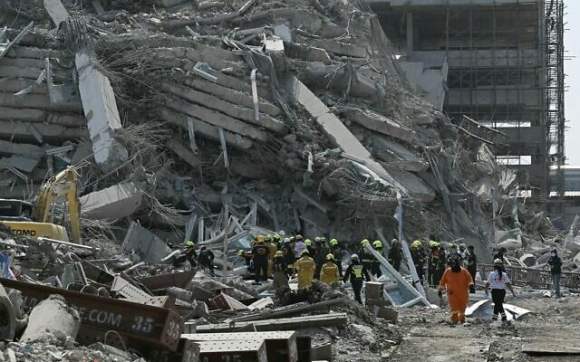
On the Sunday, the children and I were on a highway when we drove past the rubble of a building under construction, near the well-known Chatuchak Market. It had collapsed, trapping dozens of unfortunate workers under it. All I could think of was how massive the pile of rubble was, and how eerily quiet it was. Now I can’t bear to look at the photos or videos of anxious relatives of those construction workers who are waiting to hear news of their loved ones.
In Myanmar more than 3,000 people have died and more than 3,000 are injured but that figure will likely go up as rescue operations continue. In the light of such a massive emergency, my natural instinct was to sideline my own needs and to first respond to the call of duty. But by the fifth day after the earthquake, I had to see a specialist at the hospital because my balance felt completely off since that day.
Even though the doctor gave me the all-clear with some medicines and has advised me to rest, to practice focusing my eyes on still images, and to take walks and deep breaths, I feel as though my entire body has shifted to one side or is cracked, just like some of those buildings in central Bangkok. My city and I, both shaken to the core, trying to recover.
We’re told that another earthquake could happen in the next 30 days again and it fills me with dread. My children, six and eight, ask me what we would do if another one hits. They are scared and want answers. As do we adults. The earth is our home, and the health and well-being of its environment influences our own. If seismic activities are linked to climate change, maybe, by treating our planet with more kindness and respect we might mitigate future eruptions.
In the meantime, my children have me and my husband to talk to them and reassure them. But I’m also thinking of all the children in Myanmar who are sleeping in the open, who lost loved ones, who are feeling scared and alone, with no one to reassure them. Let us be there for them and other victims of natural disasters, in whatever ways we can, in solidarity with our common and vulnerable humanity.
My prayers for those for whom the ground shifted not just for a day, but whose entire lives may have turned upside down.
.
Amy Sawitta Lefevre is a former journalist and currently works at an international NGO. She has been based in Thailand for over a decade.
.
PLEASE NOTE: ARTICLES CAN ONLY BE REPRODUCED IN OTHER SITES WITH DUE ACKNOWLEDGEMENT TO BORDERLESS JOURNAL
Click here to access the Borderless anthology, Monalisa No Longer Smiles
Click here to access Monalisa No Longer Smiles on Amazon International
 Borderless