
By Madhuri Bhattacharya
Summer is a reality check that strengthens our resolve to survive each day, after a vacation. It is a sizzling 47 degrees Celsius outside. Even a simple task is a battle that needs to be won. My short morning walk almost finishes me, though I go in the very early hours. It becomes difficult to take it, making me sweat as in the gym. Even an urgent car drive can roast you. Going to the nearest market becomes an odyssey. The best thing about summer is that you can blame everything on it.
As I look back, from April through June, North India would descend into hell. As the mercury rose above 40C, the air turned progressively drier. Homes were cooled with curtains of the fragrant “khus”. This dried herb needed to be watered and the dry wind blows fragrance and moisture into the house. It was surprisingly effective. In school, students routinely suffered nosebleeds and fainted from the heat during morning assembly which held in the school grounds. Now we have air conditioners in some places.
There were sandstorms accompanying the heat wave from deserts around Delhi. People would shut their doors and windows but the dust would still find its way in. In this lower ring of Hades, students would battle their final exams. Summer always brought the sense of an ending.
What also ended, was the supply of good vegetables. Bhindi (okra), eggplant, gourds, sundry root vegetables were all that could be found in the shops. Everything else died from the heat. But there were cucumbers — long, slender, foot long cucumbers with very fine skin. These were referred to, poetically, as “Laila ki ungliyan; Majnu ki pasliyan[1]”. And there was Rooh Afza: A lurid pink “sherbet” which came in a glass bottle and was made with Unani herbs to counter the heat. Jugs of this were served with ice and slices of lime. There were “cooling” foods with coriander, limes and raw white onions. Icy cold lassi with mint and roasted cumin were invariably present at every meal.
What would summer be without mangoes? We didn’t get the King of mangoes, Alphonso, always but there was the Dusshehri and Langda and so many varieties. Mangoes in every way and in every variety– juice, pulp, fresh, fried, pickled, jams — sweet savoury.
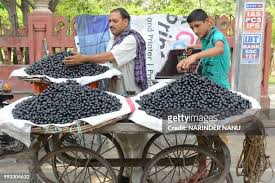
Occasionally, on the way out of town as kids, we would buy sugary honeydews and watermelons on the dusty road of Rajasthan. A tall glass of nimbu pani[2], watermelon juice, buttermilk were very welcome. Or relief of a cool shower at the conclusion of a punishing day. The soothing balm of an evening breeze. Sometimes, we bought deep purple Jamuns from handcarts. These stained our faces and dresses with its colour. The dresses would be thin cottons or muslin which turned into butter with repeated washes.
The summer was as cruel as it was generous. It sang a melodious tune — the cuckoo’s cry woke us up every morning.
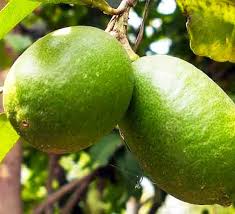
Many years ago, I had discovered in Bengal this marvellously rich, soothing, fresh scent which has become synonymous with the fragrance of summer for me. The scent lingered and I knew the sapling was coming home with me. The great gondhoraj lebu, lime, lemon — call it as you will — but it is the king (raj)of taste and fragrance (gondho). It has a distinctive flavour and aroma akin to its South East Asian, lumpy bumpy cousin the kaffir lime. Lime to lemon in size and really used more for its zest rather than the pitiful amount of juice, although its still worth the trouble, trying to squeeze every last drop of it out into your meal or drink.
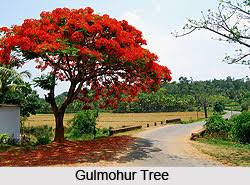
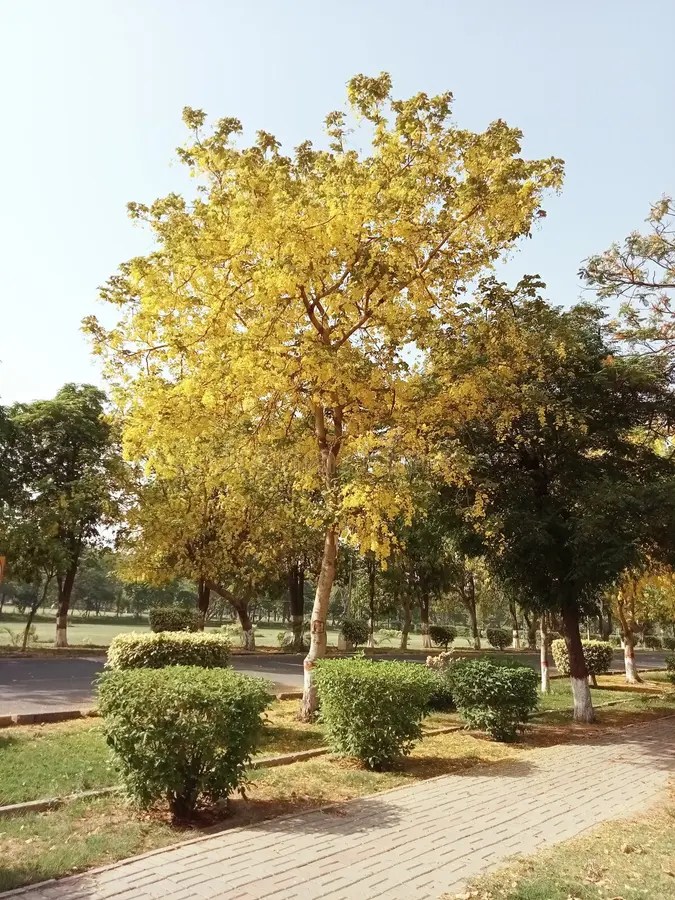
The streets stayed deserted all afternoon in the summer. There wouldn’t be a crow in sight. Though they stayed ablaze with the skies with flames of gulmohar and the gold of amaltas. The curtains would be drawn, the cooler, would be on. We would listen to music or watch television.
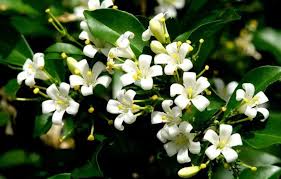
And the saga of summer continues. At night, we are greeted with intoxicating perfumes of nature. Though the garden completely shrivels, jasmines and tuberoses bloom in the tender moonlight. Madhukamini wafts like a hundred blessings around my senses. It seems all pervasive, and the light breeze seems to control its intensity in the night…
[1] the fingers of Laila, the ribs of Majnu: From the legendary love story of Laila Majnu
[2] Lemon water
Madhuri Bhattacharya is a closet writer and art enthusiast. She is interested in creative writing, translations and travel.
.
PLEASE NOTE: ARTICLES CAN ONLY BE REPRODUCED IN OTHER SITES WITH DUE ACKNOWLEDGEMENT TO BORDERLESS JOURNAL.
Click here to access the Borderless anthology, Monalisa No Longer Smiles
Click here to access Monalisa No Longer Smiles on Kindle Amazon International
 Borderless