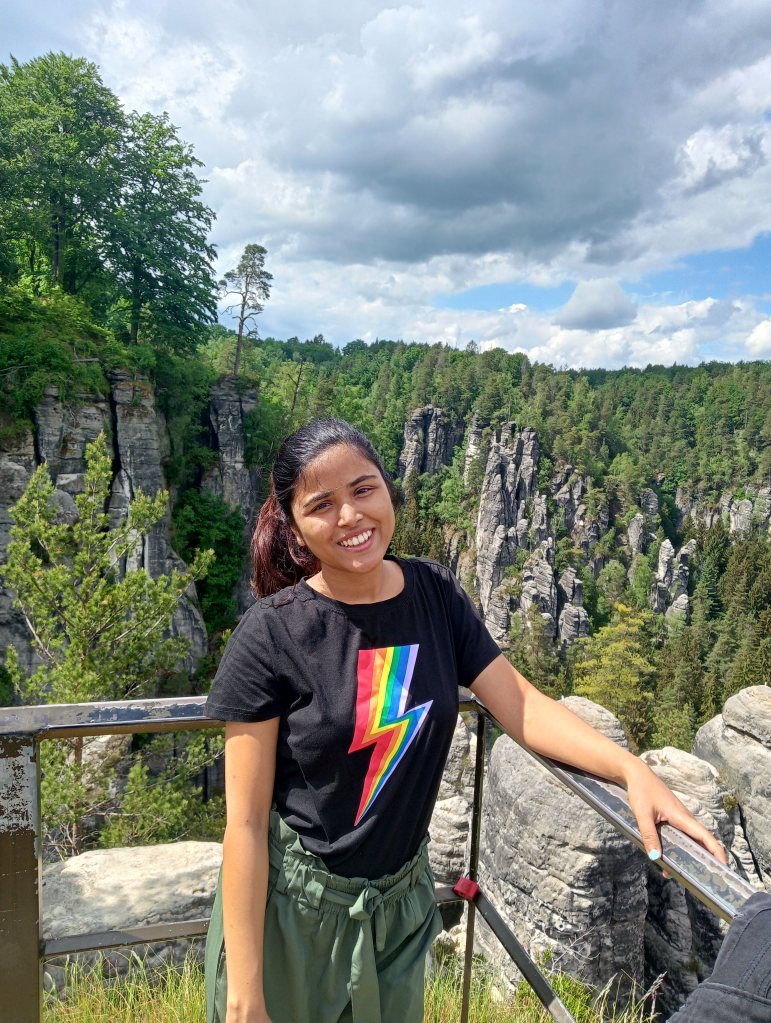
By Koushiki Dasgupta Chaudhuri
I often watch colleagues’ faces fill up with incredulous wonder when I talk about my childhood home. Most of them come from concrete jungles and can never imagine a childhood in the suburbs surrounded by coconut trees, ponds and vast green expanses.
When I mention the pond behind our house and the bamboo forest across it, they envision some sort of a utopian tropical paradise. Only, the pond isn’t much of a pond. It’s more of an algae infested sinkhole that turns into a breeding ground for mosquitoes every rainy season. When I was small, my babysitter had once ventured to swim in it and had rapidly retreated as burning red rashes started spreading all over her body like molten lava. Another time our help had been bitten by a non-poisonous snake while trying to wash some rags in its murky green depths. It was almost as if the pond had cast the curse of the Erinys[1] upon us for decades of crimes against the natural order.
When I was smaller though, before the pond started to spew out its vitriol in a volcanic rage, people fished there regularly. Often, I used to wake just before dawn hearing the fishermen call out to each other in the dark. My earliest memories of an alarm clock consist of the splashes they made as they went below the surface. As I would struggle to raise myself from the depths of a carefree child’s slumber, the men would dive into the turbid waters to retrieve the net they had fastened the day before. The sun would move across the sky to keep shining on my face till I could no longer pretend to my mother that I was asleep. I would wake up and sit with my books near the window, my attention being taken up by the huge steel drums in which the fishermen would bring in their day’s haul. Some days, our neighbours would offer my mother some fish if it was a good catch. My mother, with her obsessive hygiene and sanitary practices, would always politely refuse. By that time, the entire neighbourhood had started using the pond as the veritable dumping ground for all their leftovers. Waste management? What is that to people living in cramped bamboo houses in alleys too narrow for garbage trucks to enter!
But it wasn’t always like this, or so I have heard. Among other things, me and my mother share the same childhood home. When my mother was small, she used to swim a lot in the pond herself. Only it wasn’t a pond back then. Back then when there were a lot less bamboo houses and a lot more bamboo trees, the pond was a river. My father had once shown me an old newspaper advertisement which talked about the theft of a river. Eight-year-old skeptical me had wondered aloud, ‘How can someone steal a river?’ My father had explained that people had filled the river with sand, earth, rubbish wherever they could to gain a bit more land to live on. I had wandered about the other ponds in the area and slowly understood that it is possible to steal rivers, oceans, earth, even the air we breathe. I also understood that sometimes theft can be a gradual process. I stole the pond a little every time I threw my wrapped sanitary napkins into it under the cover of darkness. My neighbour stole it a little more the day he decided to give up fishing and open a cycle repair shop instead. In his defence, the pond had also stolen his livelihood, bit by bit, till one day it simply became unfeasible to sustain a wife and a kid on the meagre fishing yield.
The problem with gradual theft is that you can never tell when it’s over. When did the river turn into a pond? Was it the day the pankouris[2] stopped splashing about in the water? Or will it be the day when the last person forgets that this tiny strip of waterbody was once a mighty being joining the Ganges? It won’t be today, or maybe even fifty years from now, but eventually my descendants will one day look at the grazed land behind my childhood home and struggle to remember what lay there. Maybe the name will come to the tip of their tongues and dissolve – “Shonai Nodi”, a lovable river. In Bengali homes, “Shona / Shonai” is often used as a nickname, an endearing term gifted to children by ailing grandparents. I wonder who had bestowed this name on a river. Were they naïve enough to hope that the name would save it? Ageing parents around the world are thrown away to gather dust in old-age homes everyday. How then would a river survive, even one with a mawkishly sentimental name?
It has been a long time since I used to sit down with my books near the window and watch my beloved “Shonai Nodi”. The bamboo houses are almost all two-storied cement buildings now. I listen to people in the neighbourhood complain of the unbearable heat as they proceed to install their second or third air conditioner. Old women gather at dusk and wonder why living near a pond is not cooling their houses as much as it used to do twenty years back. They dump all their household waste in the water while wondering where all the kingfishers have disappeared. The alleys have become more cramped now with new buildings, each vying with the other to occupy just a bit more space. I see people looking hungrily at the narrow sliver of water left. I am perpetually afraid that one day I will return and see a bustling road there. Perhaps then finally the garbage trucks will be able to enter. And my successors will laugh when I tell them the story about the road that was a pond that used to be a river.
[1] The Erinyes (Furies) were three goddesses of vengeance and retribution who punished men for crimes against the natural order.
[2] Pankouri – Black cormorant, a fish-eating bird found mainly along the inland waters of the Indian Subcontinent.
Koushiki Dasgupta Chaudhuri is a software developer by profession. In her free time, she likes to read, write, travel and occasionally to try to shatter glass ceilings.
.
PLEASE NOTE: ARTICLES CAN ONLY BE REPRODUCED IN OTHER SITES WITH DUE ACKNOWLEDGEMENT TO BORDERLESS JOURNAL
Click here to access the Borderless anthology, Monalisa No Longer Smiles
Click here to access Monalisa No Longer Smiles on Kindle Amazon International
 Borderless