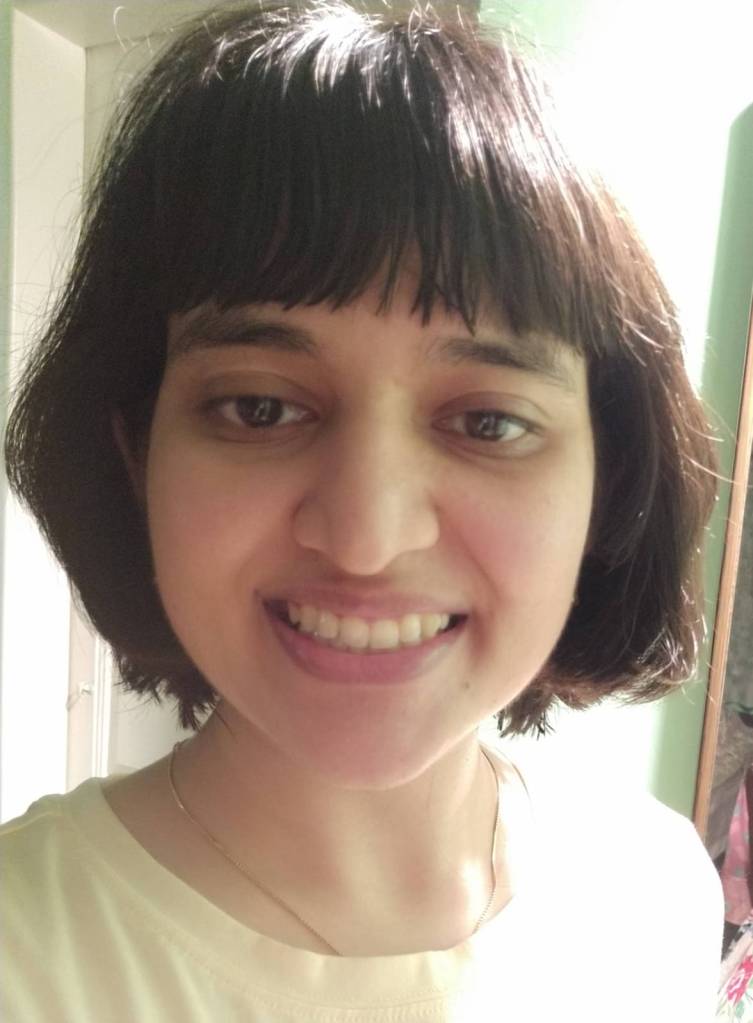
By Ramona Sen
I grew up on the periphery of the widely divisive Ghoti-Bangal[1] debate. I gathered, from snide remarks made by friends, that the east and the west of Bengal’s Radcliffe Line ate very differently. One disapproved of the other’s propensity to add sugar into savouries, the other complained that chillis should be garnishing and not the mainstay. Some friends were Bati — half Bangal, half Ghoti — who claimed to have the best (or worst) of both worlds. When questioning eyes turned to me, I mostly shrugged; I wasn’t sure. Inquiry changed to incredulity with “what kind of food do you eat at home?”
“Umm… just food.”
As a child, I didn’t think much of the food that was put on the table. For my mother, food was entirely functional. Everything was cooked just enough to be edible. The more items that could be served steamed or grilled, the better. Gravies were light, dals[2] were boiled, vegetables were lightly stir-fried. Bengalis typically have elaborate recipes for everything – even dhyarosh[3] can be cooked in a mustard-and-poppy-seed paste — but my mother wasn’t having (or giving) any of that. She disliked cooking and she simply wasn’t a “foodie”.
The effects of the Raj linger, even 76 years later, in the way many of us eat, speak, dress. It’s evident in our childhood reading lists and the movies we want to watch on loop when we miss home. But no matter how many variations of Egg Benedicts we’re ordering at newly opened cafes around town, food at home tends to remain dependably authentic to an era which predates invasion by the shepherd’s pie. In kitchens across Bengal, the choto maach or boro maach[4]sizzling in the pan can tell you a lot about which side of the border the antecedents of the residents lie, even if their speech patterns don’t immediately give it away.
The kitchen I grew up with refused to pick a side. Bland aloo sheddho[5], which was neither a buttery mash nor a spicy bhorta[6], sauteed borboti[7] which your average agent of the Raj would likely pass, and oven-roasted chicken (honed to perfection over the years) kept me supple and appreciative of the contents of other girls’ tiffin boxes. Our daily fish was nearly always a basic rui[8] which neither the Ghotis nor the Bangals could be moved to wage war over. Occasionally a dollop of mustard oil and a crunch of chilli to liven up the boiled dal might make my friends scream “Bangal!”, but the subtle flavours of the kosha mangsho[9] from my grandmother’s recipe book waved the Ghoti banner. Every now and then my mother used the oven to bake a light sponge cake which I doused with warm custard, negating both sides in favour of the Union Jack.
What makes people Ghoti or Bangal, I once asked a friend who was shaking her head at my inability to identify with either. I was the opposite of a Bati… what did that make me? Paati[10]? My friend’s classification was simplistic — those with ancestors who hailed from East Bengal before the 1947 Partition were Bangal, those who hailed from West Bengal were Ghoti, and the two camps were violent supporters of rival football teams. I wasn’t so sure that that was all there was to it. What I was looking for, was a feeling of belonging and cultural heritage that trickled down the generations — a feeling which made younger people resonate with the traditions of either side, even in an age where an acquired love for sushi (with perhaps an extra dollop of wasabi for the Bangals, perhaps) was beginning to bind us.
My mother’s family was in Chittagong before Partition but my father’s family was mostly from Calcutta. I was told the move from Chittagong was harrowing, as it was for everyone who was uprooted from their homes. I remember my grandfather as a scowling, angry man — he might have been 17 when they fled home and managed to reach Calcutta, relatively unscathed. His father, my great grandfather, had had the foresight to arrange accommodation, exchanging his house with another which lay on the right side of the new border. The family who had vacated this house were The Khans, and we referred to them as reverentially as the rest of the country referred to Bollywood’s leading families — who had vacated their house. I envision my ancestors, terrified and exhausted from the journey, staring up at the black gates of the sparkling white house I used to visit in my childhood — three red steps leading from the small front garden into a wide verandah beyond. I didn’t know then that the tall wooden doors with stained glass panes were a hallmark of Islamic architecture, I just thought it was cool. My grandfather’s eldest brother remained a silent man throughout his life, shaken by being uprooted from his plush life in Chittagong. The second eldest brother died soon enough, of heartbreak they said, not for the loss of a woman but for the loss of land. My great grandmother spent her last days painting the scenes she remembered of rivers and lush green farmlands. No doubt the busy market road in front of the too-small-but-actually-large house in Calcutta was not inspiring enough.
What did they eat? Just food?
My mother remembers her grandmother dressing for dinner — pinning on a brooch, clasping a string of pearls around her neck — seated at the head of the table, frail with cancer. Her trembling hands would pick up the knife and fork to slowly carve the fillet of fish before her. I have memories of my grandfather doing the same in the last year of his life, struggling to arrange a bib on his shirt, snapping at the nurse if she forgot to provide him with adequate cutlery for his bowl of Pish-pash — an Anglo-Indian one-pot chicken-and-rice dish. Through my mother’s childhood, the neighbourhood, dominated by Anglo Indians and Muslims, dished out biryani for Eid and plum pie for Christmas, making both biryani and pudding-with-brandy-sauce the highlights of my youthful eating.
My great grandmother’s memories of Chittagong dinners included chicken roast and mulligatawny soup. I was eating the same every Sunday inside dining rooms which demanded that the men, like my grandfather’s mother, dress for dinner. Here, I developed a palate for butter-oozing Chicken a la Kiev and Roast Mutton with Mint Sauce where I mixed the spicy green with the onion-brown on my plate, fascinated by the contrasting flavours. I was taught to tell the fish knife from the vegetable knife (and that eating with only a fork was an abhorrence), so I didn’t drive my cutlery-obsessed grandfather, Little Lord Fauntleroy, into a fury. This weekly enacting of colonial times made “just food” at home entirely worth it for the rest of the week.
If I couldn’t stand any more of pepe diye paatla maacher jhol [11] which even a Ghoti would balk at, I’d call my father on his office landline to ask, in whispers, if he wanted to bring something home for dinner. He’d make a noncommittal sound over the phone which nearly always meant alright. Those were days I couldn’t wait to dig into dal-bhaat[12] cheered up by burrah kebabs [13] or plain old omelette served with a side of fish and chips. The additions didn’t make my mother happy; she wanted her children to be reared on roasts and grills, not softened around the middle with too many fries and Tartar sauce.
My father, who had none of the baggage of displacement, had decided early on that only a bland “Continental” diet (a cuisine reminiscent of the Raj, which still prevails in Calcutta) could keep at bay the many digestive disorders the Bengalis are prone to. Grilled fish with varying condiments was the most ordered dish of my childhood, which I watched him cheerfully douse with lemon butter sauce, convinced it was better for his cholesterol levels than deemer devil[14]. If I was lucky to have him fetch me on report-collection day, he’d take me to a restaurant near school where they served grilled fish with a creamy spinach puree, which made me see why Popeye the Sailor Man could be hooked to green leafy vegetables. Years later, unable to digest hospital food, it was his turn to whisper if I could bring something for dinner. I knew the “something” would have to be fillet of fish, grilled and served with beurre blanc[15].
Despite my mother’s efforts to the contrary, I turned out to be quite the “foodie”. I have a deep interest in eating, more so than many people who grew up with distinctive flavours at their dining table. Conversations about food will keep me riveted. Feeling flavours come together in my mouth like art will always brighten up a bleak day. My mother, who continues to eat boiled pumpkin for lunch, is bemused by this turn of events. When I left home, my functional eating habits followed me to different cities. With no patience for cooking a meal, I stocked the fridge with cartons of milk, crates of eggs and loaves of bread. My friends, on the other hand, attempted to recreate the recipes they’d grown up with, spending their weekends trying to recreate aloo posto[16] or a malaikari[17]. Since food was functional for me, I took the path of least resistance before the stove — a sunny side up served me well, because what I really wanted was a fish supreme[18].
Friends who grew up eating elaborate home-cooked meals do in fact, have less polarised attitudes to food, rarely oscillating between a craving for steamed cabbage or salmon-cream-cheese sandwich. Some days I might land up uninvited for lunch where I know the regular fare won’t be disappointing and a friend’s mother will serve an aloo jeere[19]from her Bangal repertoire, which makes the jacket potato of my youth pale, like the coloniser, in comparison.
My palate, free of both pride for my own boring larder and prejudice against a particular tradition, is perennially ready to accept the offerings from other people’s kitchens. I’ll eat anything my friends cook; I watch in wonder as they spruce up a boring boiled dal with crackling spices and I appreciate the cauliflower in the rich gravy of the kalia. Of course, when I can, I still order a chicken Forriester [20]or a tipsy pudding (it wobbles). I’m Paati in that!
.
[1] Ghoti is a colloquialism that refers to people from West Bengal and Bangal are people from Bangladesh.
[2] Lentils
[3] Okra
[4] Small fish, big fish
[5] Boiled potato
[6] Mashed
[7] Beans
[8] Rohu or ruhi fish found commonly in rivers of South Asia
[9] A dry preparation of mutton
[10] Typical
[11] Papaya with watery fish curry
[12] Lentils and rice
[13] Indian lamb chops dating back to the Mughals
[14] Devilled eggs
[15] Butter based emulsified sauce, a French recipe.
[16] Potato with poppy seeds
[17] Coconut cream gravy with prawn
[18] Fish roll wrapped in egg and stuffed with bacon
[19] Potato with cumin
[20] Evolved from the French a la Forestière, which conjures up mushroom and pork strips
Ramona Sen has authored a novel, Crème Brûlée (Rupa Publications) and a novella, Potluck, (Juggernaut Books). Calcutta is the city of her soul, the backdrop of all that she writes.
.
PLEASE NOTE: ARTICLES CAN ONLY BE REPRODUCED IN OTHER SITES WITH DUE ACKNOWLEDGEMENT TO BORDERLESS JOURNAL
Click here to access the Borderless anthology, Monalisa No Longer Smiles
Click here to access Monalisa No Longer Smiles on Kindle Amazon International
 Borderless